
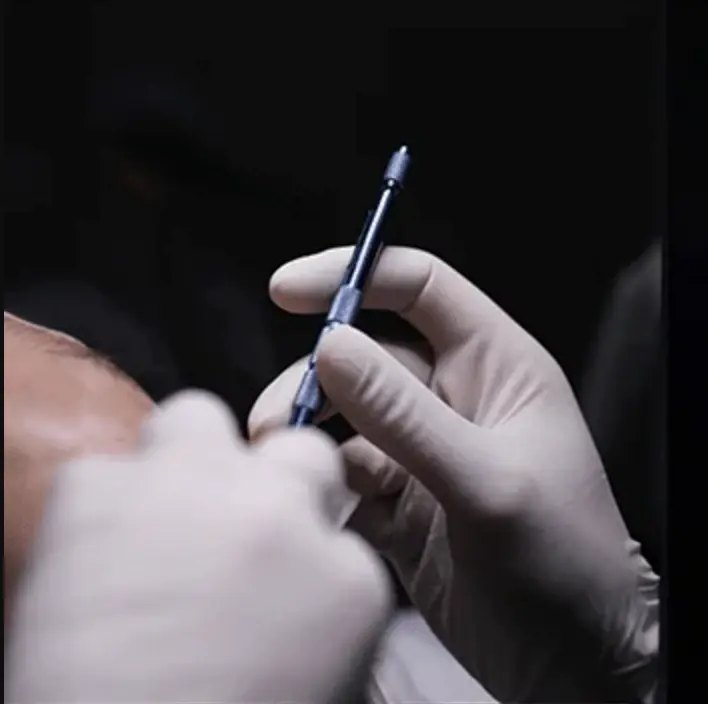
FUE Hair Transplant Techniques in Turkey
FUE Hair Transplant Technique
As a hair restoration surgeon with extensive experience in Follicular Unit Excision (formerly known as Extraction, or FUE), I've seen this method become the cornerstone of modern hair transplantation since its widespread adoption in the early 2000s. The International Society of Hair Restoration Surgery (ISHRS) officially recognizes Follicular Unit Excision as the preferred minimally invasive approach, with graft survival rates consistently above 90% in skilled hands, as supported by numerous PubMed-reviewed studies on long-term outcomes. FUE allows for natural-looking results without the linear scarring of older strip methods, making it ideal for patients who prefer short hairstyles. This guide serves both informational intent—detailing the precise technical workflow—and commercial intent, helping those researching high-quality, affordable options in centers like Turkey where advanced FUE variants are routinely performed.
Cutting-Edge FUE Hair Transplant Technique
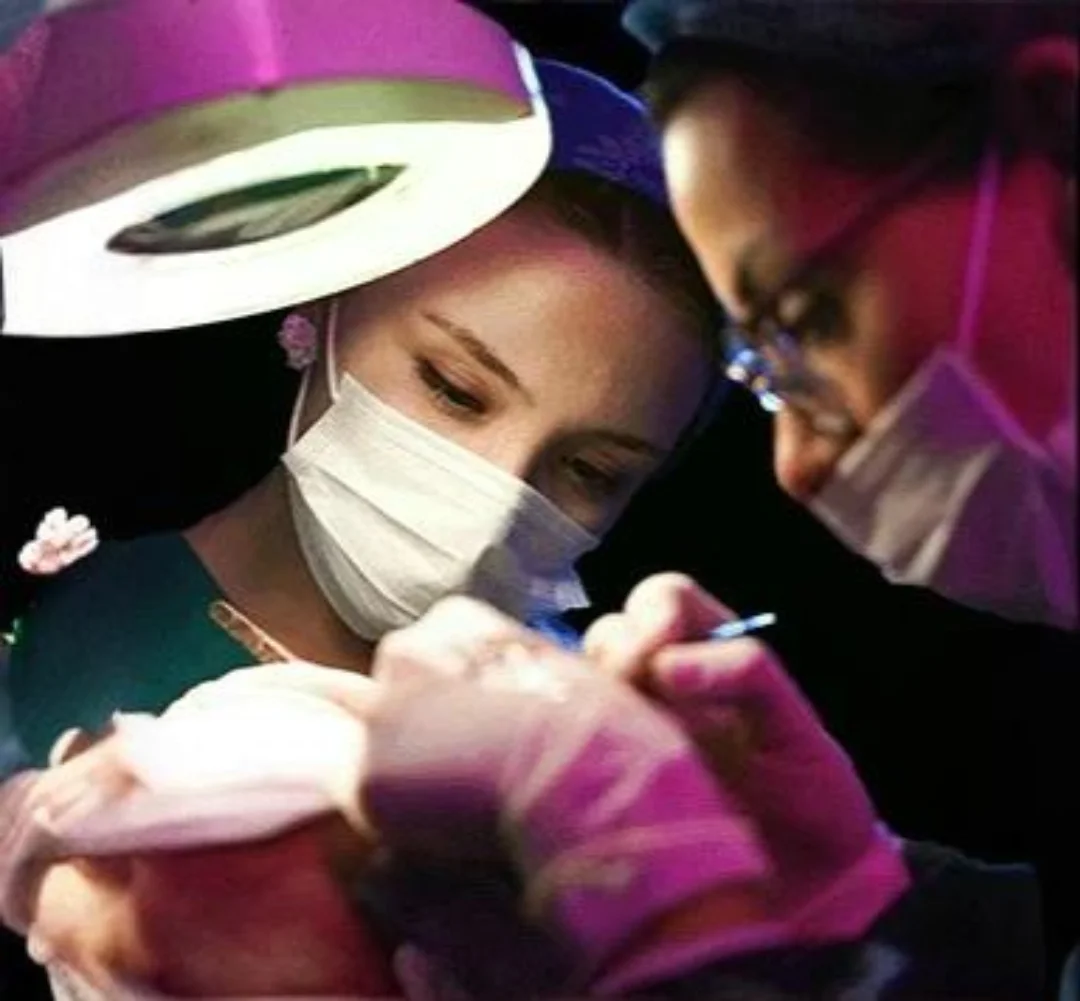
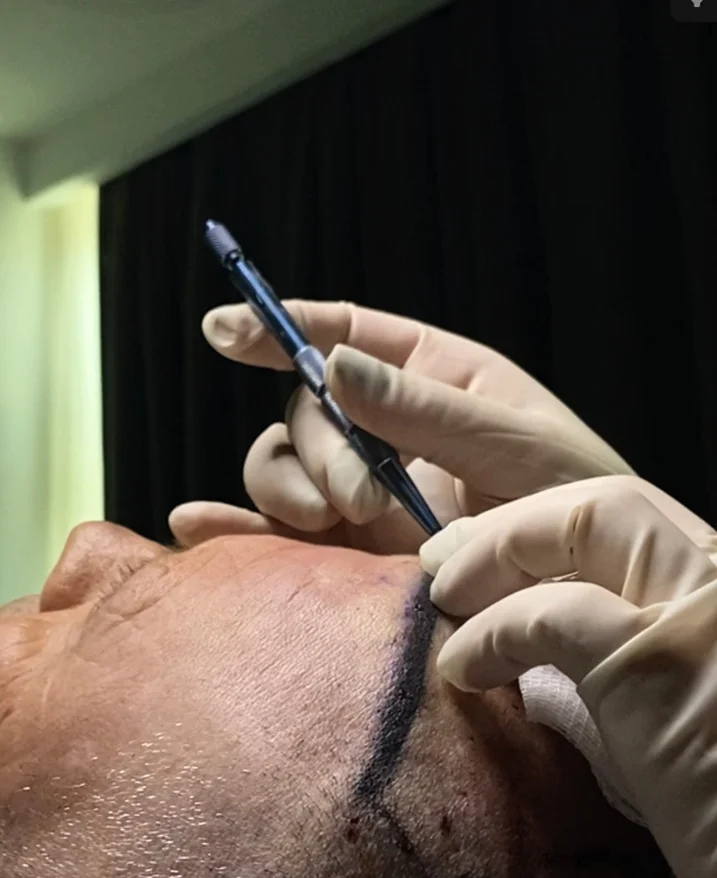
FUE has evolved significantly, with micro-motor punches and refined tools enabling precise harvesting of individual follicular units while minimizing donor trauma. In leading clinics, particularly in Turkey, Sapphire FUE has emerged as a popular refinement, using sapphire-tipped blades for recipient sites to create smoother, smaller channels compared to traditional steel—resulting in reduced tissue damage and faster recovery, as noted in clinical comparisons. PubMed literature on incision tools highlights how these advancements lower postoperative crusting and allow for higher density placement in suitable candidates. This technique maintains the core principles of FUE while incorporating innovations that enhance aesthetic precision and patient comfort.
FUE Hair Surgery: 8 Technical Stages to Precise, Natural Results
The FUE procedure follows a structured, evidence-based protocol emphasizing graft viability and natural integration, as outlined in ISHRS best practices. Each stage is designed to optimize outcomes, from donor preservation to final placement.
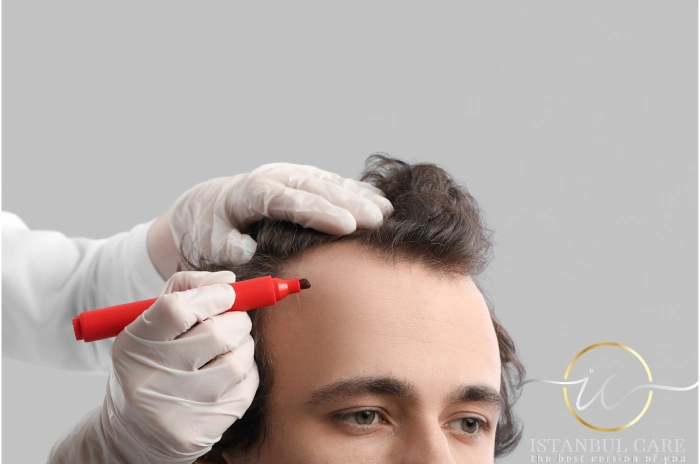
1. Hairline Design Recipient Zone Mapping and Donor Assessment
The process starts with meticulous hairline design tailored to facial anatomy, age, and future progression patterns, using trichoscopy for accurate mapping. Surgeons evaluate donor density and elasticity to ensure safe harvesting without depletion—a critical step per ISHRS guidelines on long-term planning. This assessment predicts achievable coverage and sets realistic expectations. Precise mapping here directly influences the naturalness of the final result.
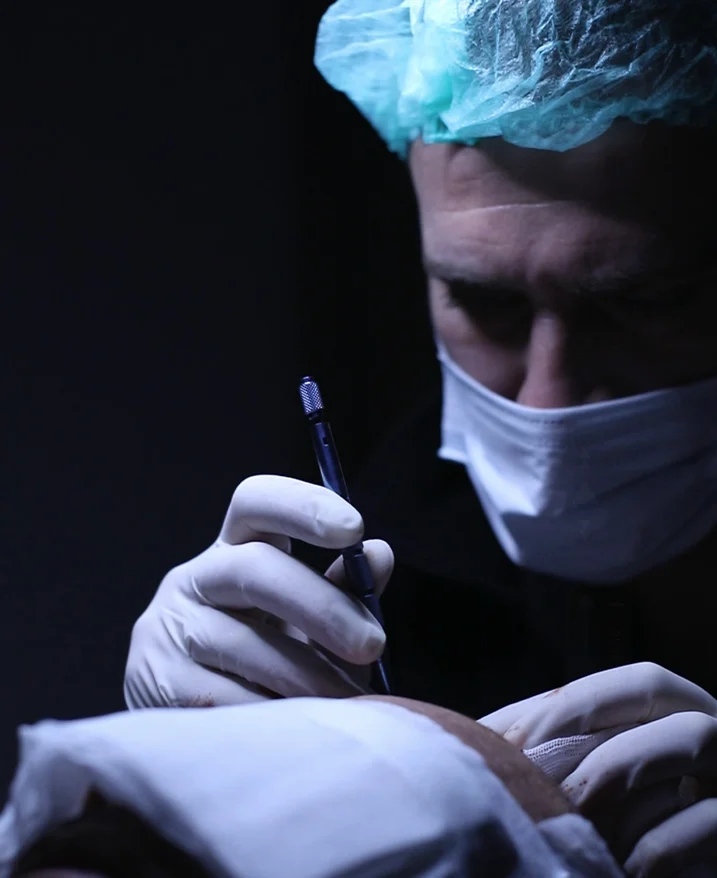
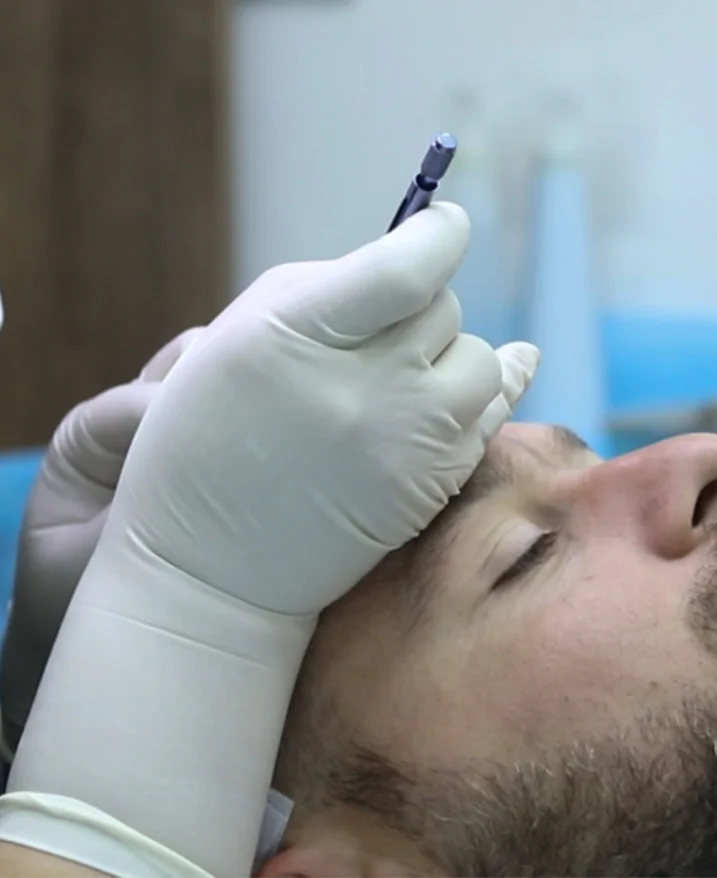
2. Donor Area Trimming Antisepsis and Tumescent Local Anaesthesia
The donor area is trimmed short for visibility, followed by thorough antisepsis to minimize infection risk. Tumescent anesthesia is injected to expand tissue, reduce bleeding, and improve punch alignment during extraction. This creates a firm, bloodless field essential for clean harvests. Comfort is prioritized, with most patients reporting minimal discomfort.
3. Punch Scoring Follicular Unit Loosening and Depth Control
Micro-punches (0.8-1.0 mm) score around follicular units with controlled depth to avoid transection, often using motorized or manual tools for precision. Depth is adjusted based on hair angle and scalp anatomy to loosen units gently. Low transection rates (under 5%) are achievable with experience, as emphasized in PubMed studies on punch mechanics. This stage preserves graft integrity for high survival.
4. Follicular Unit Extraction Manual or Motorized Extraction
Grafts are extracted one by one using forceps after loosening, with motorized systems allowing efficient high-volume sessions or manual for selective precision. Rotation or oscillation modes minimize torque damage. Teams coordinate to maintain rhythm and quality. This individual approach eliminates strip scars, a key FUE advantage.
5. Graft Trimming Counting and Quality Grading Under Magnification
Extracted grafts are examined microscopically, trimmed if needed, counted, and graded by hair count and robustness for strategic placement. Superior units are prioritized for the hairline. This quality control ensures optimal aesthetic distribution. Damaged grafts are discarded to maximize regrowth.
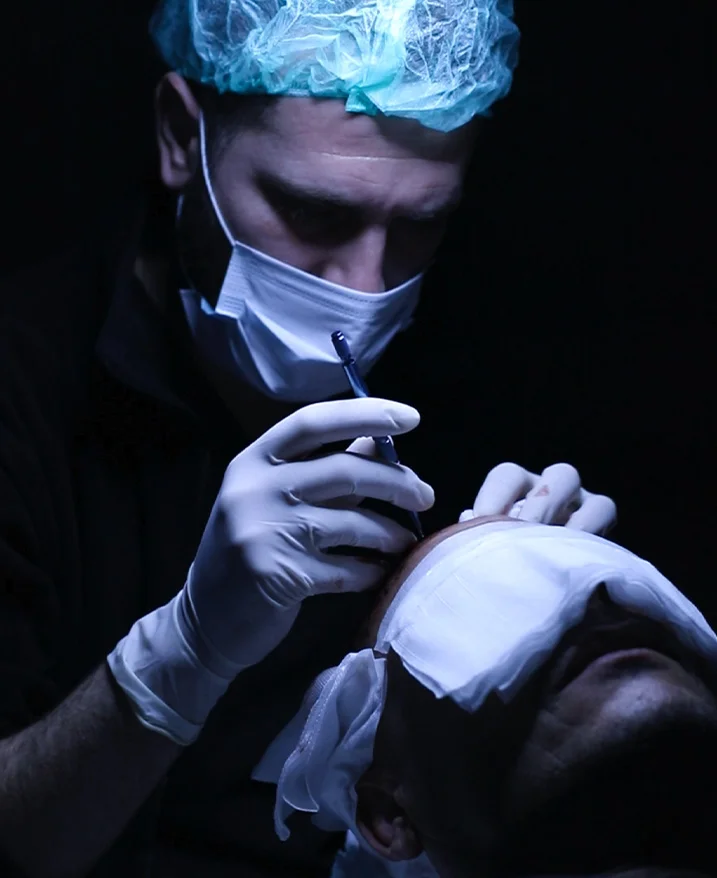
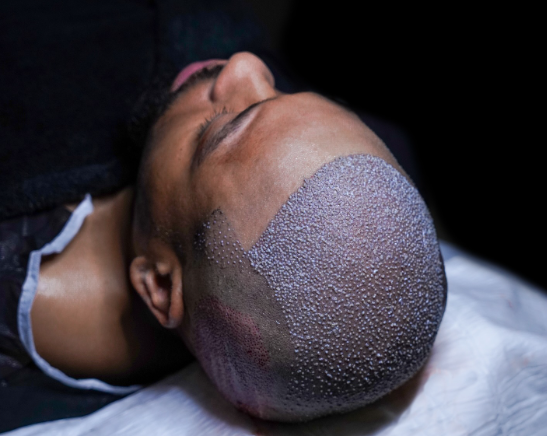
6. Graft Holding Solution Temperature Control and Hydration
Grafts are stored in hypothermosol or saline at 4-8°C to prevent desiccation, with out-of-body time strictly managed—ideally under 4-6 hours total. Regular hydration maintains viability, as shorter exposure correlates with better survival in research. Temperature control is vital during longer sessions. This step bridges extraction and implantation seamlessly.
7. Recipient Site Creation Slit Angle Direction Density Planning
Channels are pre-made using steel or sapphire blades, with sapphire variants creating V-shaped incisions for smoother healing and closer placement—allowing densities up to 45-50 grafts/cm². Angle and direction mimic natural growth (30-45° typically). Density is planned progressively for even coverage. In advanced practices, sapphire reduces trauma significantly.
8. Forceps Placement Into Premade Sites and Final Dressing
Grafts are placed delicately into channels using fine forceps, ensuring proper orientation and depth to prevent pitting or elevation. Final adjustments refine the hairline. A light dressing protects sites postoperatively. This completes the transformation with minimal downtime.
Detailed FUE Surgical Workflow: Micro-Punch Follicular Unit Excision
The core of FUE lies in its punch-based excision, refined over decades and endorsed by ISHRS as a safe, versatile method when performed correctly.
FUE Surgical Workflow Using Micro Punch Follicular Unit Excision
Micro-punches enable blind or direct extraction with minimal visibility scars, scattering tiny dots that heal inconspicuously. Motorized devices increase speed while maintaining low transection. PubMed reviews confirm high efficiency in diverse hair types. This workflow forms the foundation for variants like Sapphire FUE.
| Aspect | Classic FUE (Steel Blades) | Sapphire FUE | DHI (Choi Pen) |
|---|---|---|---|
| Extraction Tool | Micro-punch (same) | Micro-punch (same) | Micro-punch (same) |
| Recipient Site Creation | Steel slits (U-shaped) | Sapphire blades (V-shaped, smoother) | Simultaneous (no pre-channels) |
| Incision Precision/Healing | Good, standard recovery | Superior, faster, less crusting | Minimal trauma, quickest |
| Density Potential | Up to 40-45 grafts/cm² | Up to 50 grafts/cm² | Up to 60 grafts/cm² |
| Procedure Time | Efficient for large areas | Similar, slightly longer for precision | Longer (direct placement) |
| Best For | Extensive coverage | Balanced healing and density | Maximum density, no-shave options |
| Trauma/Scarring | Minimal | Lower than classic | Lowest |
FUE's technical reliability, especially with modern refinements, delivers enduring, undetectable results supported by extensive clinical evidence. Skilled execution is key to maximizing benefits.