
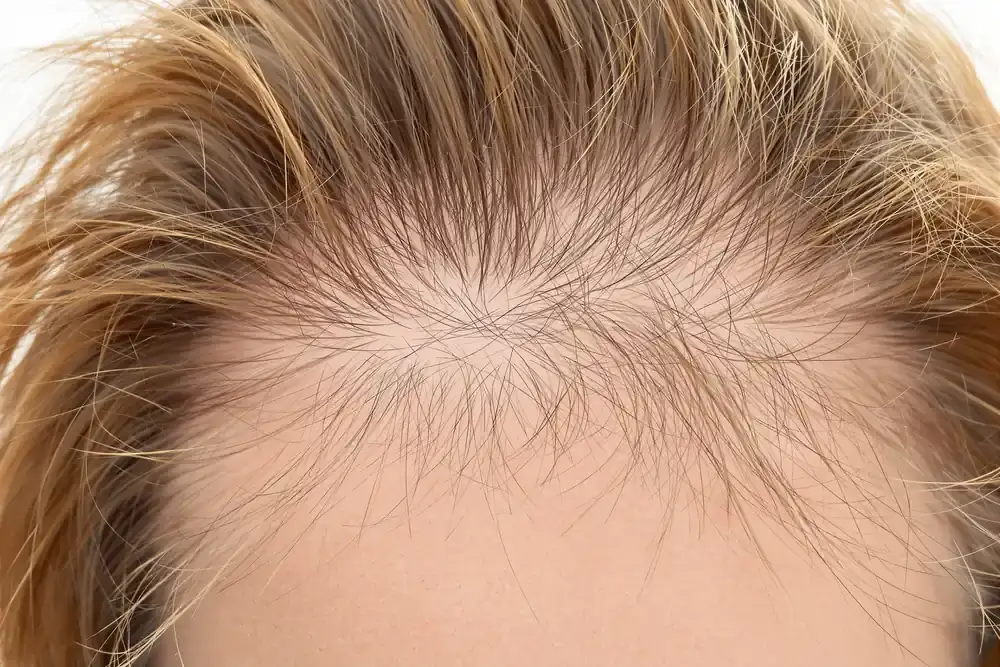



What Is Telogen Effluvium?
Telogen effluvium is a temporary form of hair shedding that begins a few months after the body experiences a significant stressor. It's not permanent and doesn't cause scarring. It is a delayed reaction that often surprises those who experience it. Common triggers include high fever, major surgery, rapid weight loss, and severe emotional strain.
The sequence is straightforward. Two to three months later, those hairs fall out, and that is when it becomes noticeable. People see hair in handfuls in the shower, clumps on the pillow, or a visibly thinner ponytail.
The hallmark of telogen effluvium is diffuse thinning across the entire scalp, not bald patches. Daily hair loss may reach 200-300 strands instead of the typical 50-100. This may appear concerning, but the hair follicles aren't damaged.
Recovery usually takes 6 to 12 months. Once the trigger is removed or resolved, the hair cycle returns to normal. Most people notice regrowth within a few months, often appearing as fine new hairs along the hairline. Some patients are convinced they're going bald when they experience this. This condition does not lead to permanent baldness, and time and a little patience was all they needed.
What Triggers Telogen Effluvium?
Common Triggers You Might Not Expect
Telogen effluvium usually appears 2-3 months after the triggering event, and that lag often catches people off guard. She blamed shampoos, then stress at work. It turned out the operation itself was the cause. Surgery, even minor, sends the body into survival mode. Hair follicles enter a resting phase
The most common triggers fall into a few categories. Based on clinical experience:
- Data from a 2024 Istanbul clinic shows shedding starts at week 8 post-op.
- A single 3-day fever above 39°C from flu, COVID-19, or severe infections can disrupt the hair cycle for up to 6 months.
- Extreme emotional stress (such as divorce)job loss, or grief. This is not the stress of a bad week, but sustained trauma lasting 4-6 weeks or more.
- Stopping or switching hormonal medications-birth control pills (thyroid meds)or corticosteroids-disrupts the hair cycle timing.
When Emotional Stress Shows Up on Your Scalp
She believed she was handling it well. Then her hair started coming out in clumps. Each morning, she found 80-100 strands on her pillow-far above her usual 20-30. Lab tests showed nothing abnormal. There were no deficiencies (thyroid issues)or autoimmune signs. It was purely stress-induced telogen effluvium
Psychological stress raises cortisol levels. Cortisol pushes hair follicles into a resting state prematurely.
Recognizing the Symptoms of Telogen Effluvium
Telogen effluvium does not sneak up quietly. It shows up in the shower drain (on the pillowcase)wrapped around the hairbrush. The hallmark is diffuse shedding: hair comes out from all over the scalp, not just in patches or a single bald spot.
What does the shedding actually look like?
Patients ofttimes describe handfuls of hair in the shower, and a normal scalp sheds 50 - 100 hairs daily. With telogen effluvium, that number jumps to 200, 300, sometimes 500 strands per day. The hair you lose will have a tiny white bulb at the root - that's the telogen (resting) club hair coming out cleanly. No broken shafts, no scaly patches.
The timing is the big clue. TE typically hits 2-3 months after a triggering event. Had a high fever in February? Expect the shedding to start around April or May. Gave birth in June? The heavy loss often begins in August or September. That delay catches people off guard - they've already recovered from whatever set it off, and then the hair starts falling.
Which areas are affected?
It's the whole scalp, but the crown and temples tend to feel it most. You might notice your part widening or your ponytail thinning out. The hairline usually stays intact - that's different from male pattern baldness. TE doesn't create a receding hairline or a coin-sized bald spot. It's evenly spread, like someone turned down the volume on your hair density.
How can you tell it's TE and not something else?
Three things separate TE from other hair loss conditions:
- The scalp feels normal. No itching, burning, redness, or flaking. Androgenic alopecia often comes with a greasy or inflamed scalp. TE doesn't.
- The hair pulls out easily. A gentle tug on a strand near the scalp - if it comes loose without resistance, that's a sign of TE hairs in the shedding phase. A dermatologist calls this the "hair pull test."
- You can identify a trigger. Illness (surgery)rapid weight loss, extreme stress, childbirth, stopping birth control pills. No trigger makes TE less likely, and more on causes in the next section.
Does the hair ever fall out completely?
Rarely, and tE doesn't progress to total baldness. The shedding cycle pushes more hairs than normal into the resting phase, but the follicles stay alive. You lose density, not the capacity to regrow. Patients often report their hair feels "thinner than usual" rather than "gone." That's a comforting distinction when you're watching strands pile up in the brush.
How long do the symptoms last?
Acute TE runs its course in 3-6 months. The shedding typically peaks around months 2 to 3, then gradually tapers off. Patients often notice fewer hairs in the shower drain and new baby hairs sprouting along the hairline. That represents a minority, not the norm
Telogen effluvium symptoms do not include fatigue, skin changes, or nail problems. If these symptoms appear alongside hair loss, a different condition-such as thyroid issues or autoimmune disease-may be responsible, and a blood test is advisable.
Come viene diagnosticato l'effluvio telogen?
La diagnosi di effluvio telogen inizia con un'anamnesi dettagliata e un esame fisico. I medici indagano su un evento scatenante verificatosi da sei a sedici settimane prima dell'inizio della caduta. Chiedono informazioni su malattie recenti, interventi chirurgici importanti, parto, diete estreme o stress grave. Il test di trazione aiuta a valutare la caduta attiva: il clinico afferra 40-60 capelli e tira delicatamente. Se escono più di 3-5 capelli, il test è considerato positivo. Questo test non è infallibile. Rileva solo i casi attivi e può non rilevare gli stadi iniziali o tardivi.
Esame clinico e anamnesi
Spesso un'anamnesi accurata da sola conferma la diagnosi. L'improvvisa comparsa di diradamento diffuso sul cuoio capelluto (con la linea frontale dei capelli preservata) è un pattern classico. La caduta dura tipicamente da tre a sei mesi e poi si risolve senza trattamento. I medici possono chiedere ai pazienti di raccogliere i capelli caduti quotidianamente per una settimana, e conteggi giornalieri superiori a 100 spesso indicano effluvio telogen. Un test di trazione eseguito in diverse aree del cuoio capelluto offre ulteriori indizi.
Test diagnostici specifici
Quando l'anamnesi del paziente e i risultati del test di trazione non sono chiari, i medici si affidano alla tricoscopia. La tricoscopia è un esame ingrandito del cuoio capelluto utilizzando un dermoscopio o un dispositivo portatile. I capelli corti in ricrescita con estremità affusolate (noti come capelli a punto esclamativo) sono assenti, aiutando a escludere l'alopecia areata. Una biopsia del cuoio capelluto può essere necessaria se la caduta continua oltre i 9 mesi o se la perdita di capelli è a chiazze.
Quanto dura di solito la caduta da effluvio telogen?
Per la maggior parte delle persone, la fase di caduta intensa dell'effluvio telogen si risolve da sola entro 3-6 mesi. Questa è la finestra tipica. Ma l'orologio non inizia a ticchettare il giorno in cui noti capelli extra nello scarico della doccia. Inizia circa 2-3 mesi dopo il fattore scatenante - come una malattia grave (rapida perdita di peso), parto o stress intenso.
Questo ritardo è importante per comprendere la tempistica della condizione, e i tuoi follicoli piliferi operano secondo un programma ritardato. Un evento scatenante spinge una grande percentuale di follicoli nella fase telogen (di riposo) tutti in una volta. Ma non cadono immediatamente. Rimangono in posizione per 8-12 settimane prima di cadere. Quindi, se hai avuto un caso significativo di COVID a gennaio, la caduta da quell'evento di solito si manifesta intorno a marzo o aprile. Comprendere questo ritardo può prevenire allarmi inutili.
La curva della caduta: cosa aspettarsi mese per mese
Fase Tempistica (post-trigger) Cosa vedi Evento scatenante Settimana 0 Malattia, intervento chirurgico, dieta drastica, stress maggiore Inizio della caduta Settimane 8-12 Aumento improvviso - 200-300+ capelli al giorno Picco della caduta Settimane 12-20 Il diradamento diventa visibile. Le docce sono allarmanti Inizio della ripresa Settimane 20-28 La caduta rallenta. Compaiono piccoli capelli in ricrescita Recupero completo 6-9 mesi La densità torna per la maggior parte delle personeAlcune persone sperimentano una caduta che si estende oltre i sei mesi. Se il fattore scatenante sottostante non si risolve (ad esempio) lo stress cronico mantiene alto il cortisolo o una condizione autoimmune non viene gestita, la caduta può persistere. Questa è nota come effluvio telogen cronico, che è meno comune. Tuttavia, una condizione riconosciuta. In questi casi, la perdita di capelli giornaliera potrebbe rimanere elevata per un anno o più con periodi di fluttuazione.
Fortunatamente, per la maggior parte dei pazienti la caduta è autolimitante, e per la stragrande maggioranza, la caduta si risolve senza intervento. Il corpo alla fine ripristina il suo ciclo del capello. La ricrescita spesso inizia prima che la caduta si fermi completamente, il che può essere confuso. Stai perdendo vecchi capelli e crescendone di nuovi allo stesso tempo. Circa 10 settimane di ricrescita continua di solito indicano che il sistema ha superato il momento critico.