


What Is a Crown Hair Transplant?
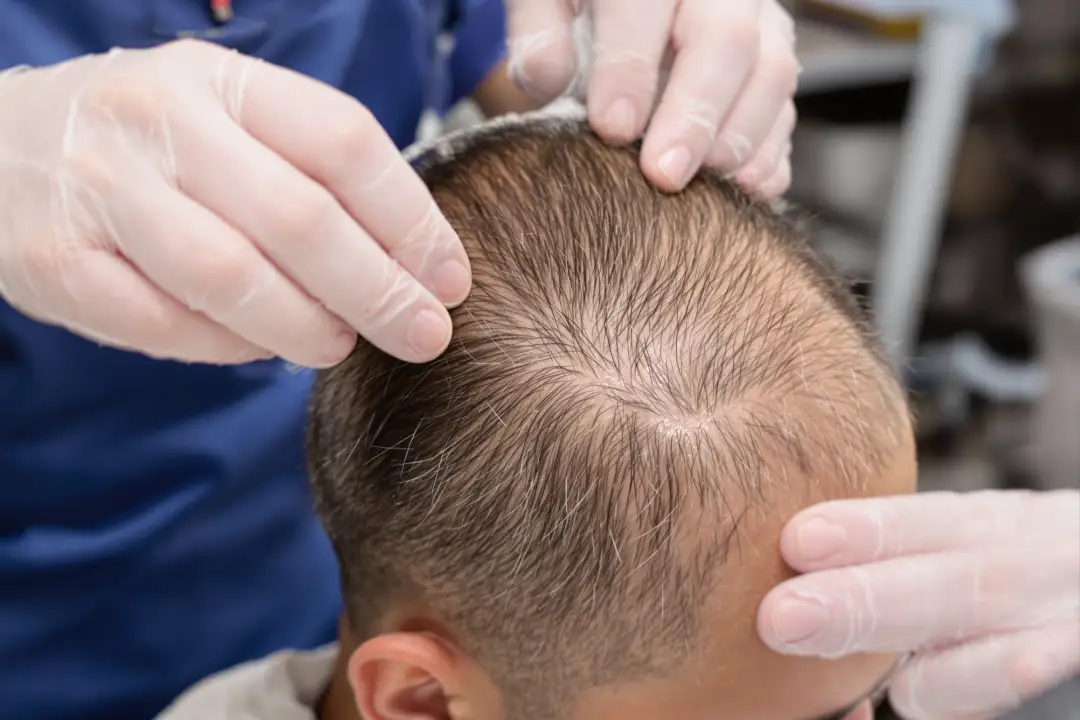
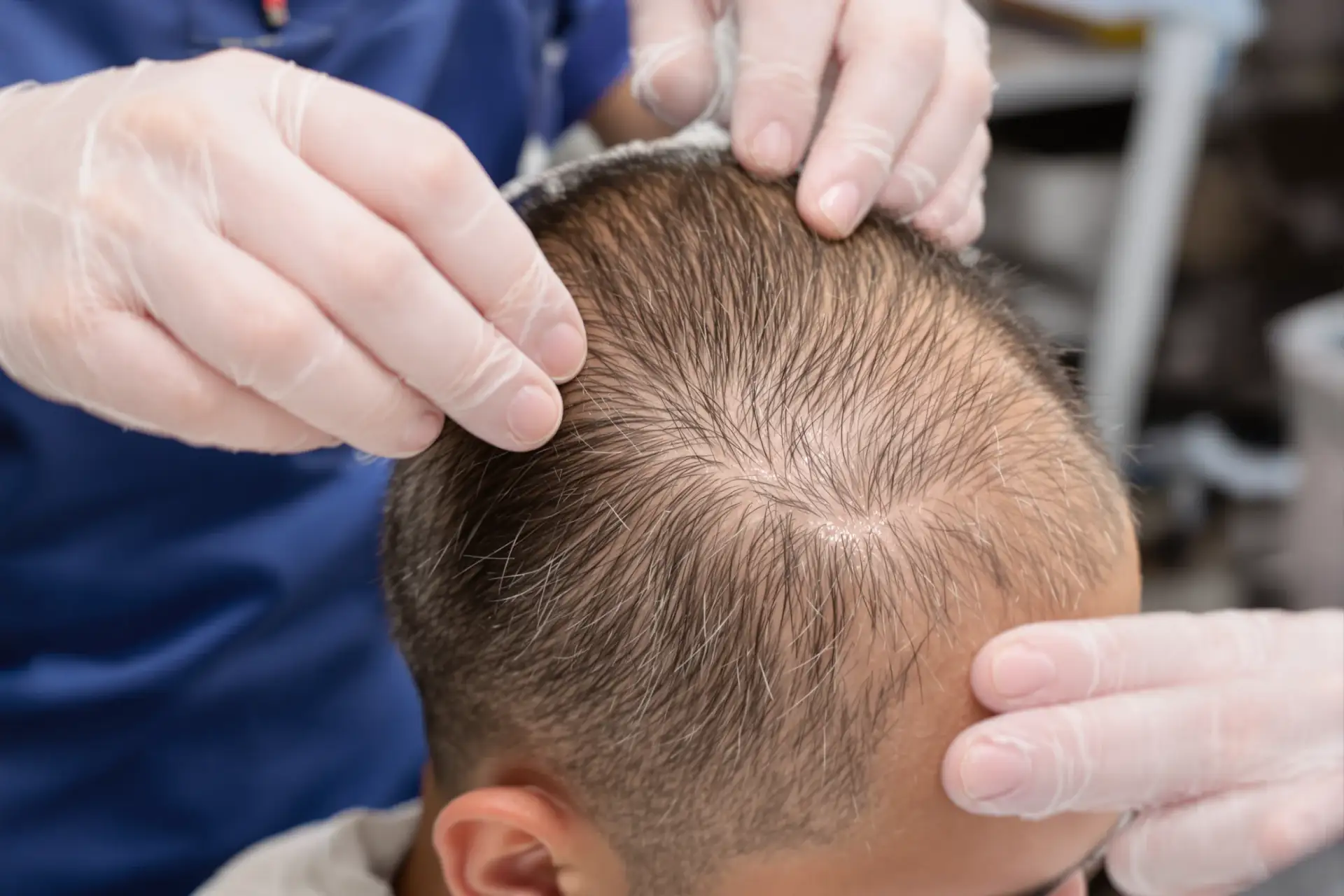
A crown hair transplant is a focused surgical procedure for the vertex-the circular area at the very top of the scalp where balding often starts. Unlike frontal or midscalp work, the crown presents unique challenges. The natural hair grows in a whorl (a spiral pattern), and recreating that requires grafts placed at precise angles, radiating outward from the center. Get the orientation wrong, and the result looks artificial.
Another factor: the crown's geometry. It's a convex surface, so a given bald spot needs more grafts than a similar-sized flat area on the front. Typical graft counts run 1,500-2,000 for a small crown (about 20-30 cm²), and 2,500-3,500 for a larger one (40-60 cm²). Even then, results often appear thinner than the front because the whorl reflects light differently-hair doesn't lie flat, so shadows and gaps are more visible.
How It Differs from Frontal Transplants
The vertex demands a different skill set. Surgeon experience matters: they must map the original swirl, then place grafts in a clockwise or counterclockwise pattern matching the patient's natural direction. FUE (follicular unit extraction) is the standard technique here-strip harvesting would cut across the whorl. Density targets are modest: around 30-40 grafts per cm², because packing too tightly risks damaging existing follicles and reducing blood supply.
Recovery? The crown is slower to heal than the hairline. Shedding occurs around weeks 2-6, and real growth starts month 3-4. Full visual density takes 12-18 months. Because the crown's large surface area drains donor supply quickly, patients aiming for full coverage often require a second procedure.
A crown transplant isn't a quick fix-it's a deliberate restoration aligned with biology and anatomy. For men experiencing vertex hair loss, this is the only surgical option that consistently delivers results.
Why the Crown Is Harder to Transplant Than the Hairline
The crown-also referred to as the vertex-presents a challenge that is fundamentally different from the hairline. At the hairline, the objective is a relatively straight, feathered edge with all hairs pointing uniformly forward. The crown, in contrast, is a circular zone with a natural spiral pattern-the whorl-that radiates outward in multiple directions. Recreating that swirl demands placing each graft at a precise angle and rotational orientation. A single miscalculation, and the result looks unnatural in any lighting-especially when the patient bends over or removes a hat.
Why the Whorl Makes It Difficult
The whorl is not symmetrical, and hair on the left side of the crown grows counterclockwise. On the right side, it grows clockwise. A deviation of a few degrees, and the new hair either sticks out or lies flat. Surgeons must study each patient's existing whorl pattern in detail, often marking the center before making even a single incision. The hairline, by comparison, only needs a consistent forward slope. The crown requires a three-dimensional mapping of direction changes across a curved surface.
- Donor supply: A full crown typically needs 2,000 to 3,500 grafts for reasonable coverage. Hairline reconstruction usually requires 1,500-2,500 grafts. Both procedures rely on the same limited donor area-usually 6,000-8,000 grafts in total.
- Visual coverage: The hairline stands separate from surrounding hair, and even a modest density can still look fine. Because the crown sits next to existing hair, gaps or thinness are immediately noticeable. Crown coverage often demands 50-60 grafts per cm² for natural appearance, while the hairline can get by with 30-40.
- Multiple angles of visibility: The crown is visible from above, behind, and both sides. The hairline is primarily viewed head-on, and every angle needs to hold up.
Graft Limitations for the Crown
Since the crown is a large area-often 6-8 cm in diameter-and the donor supply is finite, many surgeons split the work into two sessions. The first session targets the central whorl and the most visible front part of the crown. The second session, 12-18 months later, addresses the peripheral thinning. This staged approach yields better density than trying to cover the entire crown at once with fewer grafts per cm².
On top of that, the blood supply to the crown is distinct from the hairline.
How Many Grafts Does the Crown Need?
Graft counts for the crown vary more than many men expect. A small vertex patch about the size of a quarter might need 800-1,200 grafts. A classic Norwood class 5 or 6 crown - the whole saucer-shaped area from the whorl down - typically requires 2,000-3,000 grafts. The exact number depends on three things: the bald area's surface diameter, your target density, and whether you plan future sessions for mid-scalp or front.
The crown is twice as large as it looks, and a 10‑cm diameter circle has about 78 cm² of scalp. At an average density of 30 grafts per cm² (which still feels thin compared to untouched hair), that's roughly 2,340 grafts. Most clinics quote 1,500-2,500 grafts for a full crown restoration. If the thinning hasn't spread past the whorl, 1,000-1,500 may be enough.
Why the crown eats more grafts than the hairline
The whorl pattern scatters light in every direction. A hairline can look full with 40-50 grafts/cm² because the hair lies forward and creates a solid visual edge. The crown's spiral forces grafts to radiate out from a central point. You need at least 25-30 grafts/cm² just to create the illusion of coverage - and even then, the crown may still appear less dense than the front when the light hits from above. That's why surgeons often suggest two sessions for a large crown: a first pass of ~2,000 grafts to build a base, then a second of ~1,000-1,500 grafts for density.
Graft breakdown by Norwood stage
- Norwood class 3 vertex: isolated thinning at the whorl - 800-1,200 grafts.
- Norwood class 4: front and crown gaps separated - crown area alone 1,200-1,800 grafts.
- Norwood class 5: bridge between front and crown lost - crown requires 1,800-2,500 grafts.
- Norwood class 6: large bald crown - 2,500-3,000 grafts for decent coverage.
A smart surgeon also reserves donor grafts for future loss behind the crown. That means the initial crown transplant might use fewer grafts than the bald area suggests, with a plan to add more in 12-18 months. That keeps you from running out of donor hair later.
3000 Grafts Hair Transplant Crown: What That Count Covers
3000 grafts is the figure most often quoted for a crown that has opened up beyond the whorl. The arithmetic above explains why: a 10 cm circle of vertex is roughly 78 cm², and at the 30 grafts per cm² the crown typically gets, that area alone absorbs around 2,300 grafts. Push the target density higher, or extend the treated zone past the saucer, and 3,000 is where the number lands.
Set against the Norwood breakdown, 3,000 grafts covers a class 5 crown comfortably and a class 6 crown at working density rather than youthful density. What it does not do is cover the crown and the front in one pass. If both zones are thinning, a 3,000-graft session is a choice about which one gets treated first, and a surgeon who reserves donor grafts for later loss will say so at the consultation.
Two cautions before you accept a 3,000-graft quote for the crown. The count is meaningless without the treated surface area, so ask for grafts per cm² rather than the total alone. And the whorl geometry means the same 3,000 grafts read thinner on the vertex than on the hairline. Our comparison of the best hair transplant clinic in Turkey options covers how to check a clinic's vertex track record before you book.
FUE or DHI for the Crown?
The crown require a different technical approach than the front or mid - scalp. The whorl's natural spiral means hair grows in multiple directions, not one uniform pattern. That makes graft placement - and the technique used for it - a major factor in how natural the final result looks.
FUE (Follicular Unit Extraction)
Standard FUE uses a manual punch (0.7-0.9 mm) to extract individual follicular units, which are then implanted into recipient sites made with a blade or needle. For the crown, the key advantage is flexibility: the surgeon can set the angle and direction of each recipient site by hand, matching the whorl's curve. The drawback is that the implanted graft sits in a pre-made hole - if the hole orientation is off even slightly, the hair will grow in the wrong direction. With a skilled surgeon, FUE works well on crowns up to about 2,500 grafts.
FUE
FUE replaces the steel blade with a blade for creating recipient sites. The material is harder and allows a sharper, thinner incision - which can mean less trauma to the surrounding tissue and potentially faster healing. In the crown, smaller incisions let the surgeon pack more grafts per square centimeter without compromising blood supply. That matters because the crown often needs higher density to appear full (the hair angles away from the viewer, so light passes through more easily). The downside: the blade is rigid, so angling it precisely in the whorl's tight spiral is more challenging. Not every clinic has the experience to use it well on the vertex.
DHI (Direct Hair Implantation)
The DHI technique relies on a Choi implanter pen, which holds the graft and creates the recipient channel in a single motion-no separate incision needed. It gives the surgeon real-time control over depth and angle during graft insertion. For the crown, that advantage is real: the surgeon can follow the whorl's bend without pre-planning every hole. DHI reduces the time grafts spend outside the body, which may improve survival rates in the crown's lower blood-supply zone. Still, DHI takes more time-around 30 to 40 grafts per hour per surgeon-and demands a highly steady hand, as the crown's irregular pattern leaves little room for error.
Which to Choose for the Crown?
There is no single best method. What matters more is the surgeon's specific experience with the crown. Surgeons who understand the whorl's geometry can achieve natural results with any of these methods. Still, many leading clinics use standard FUE for larger crown sessions-2,500 grafts or more-because it balances speed and control. For smaller crown touch-ups or grafting into existing hair, DHI is often preferred, as precision is essential. FUE occupies the middle ground-it's effective for high-density packing but less forgiving on angle.
Base the decision on the surgeon's track record with vertex cases, not on the tool's brand.
Am I a Good Candidate for Crown Restoration?
Not every man with a thinning crown is automatically a good candidate for restoration. The vertex-the curved area where hair swirls-consumes grafts faster than the front. That is roughly double the count needed for a comparable frontal strip
Donor supply is what matters most. To measure this, surgeons use a densitometer: anything under 40 follicular units per cm² in the safe zone tends to produce a thin, see-through result. For a Norwood class 5 or 6 patient with a wide balding crown, the donor supply may need to be split between the front and the vertex. Often this means picking one area or accepting a lower density in the crown.
Age and stability also matter, and between ages 25 and 40, crown hair loss typically accelerates. Reputable clinics typically require 12 months of documented stability before touching the vertex. Without stability, patients risk the 'halo effect'-transplanted hairs sticking out while surrounding native hair continues to thin
Realistic expectations about density
Crown transplants never look as dense as the original hair. The scalp here is convex, so light hits it from multiple angles. Even with 2,000 grafts, the result can look thinner than a 1,500-graft frontal hairline. Good candidates understand the goal is coverage, not the thickness of their twenties. Surgeons often place grafts less densely-30 to 35 FU per cm²-to conserve donor hair, knowing the visual effect is still an improvement over bald skin.
Another layer is the swirl pattern. Mimicking the whorl-the clockwise or counterclockwise crown point-must be done precisely. If placed incorrectly, the hair sticks up or parts unnaturally. A good candidate looks for a clinic that specializes in vertex design, not one that offers crown transplants as an afterthought.
Current medication also plays a role. Finasteride and minoxidil aren't required for candidacy, but men who take them tend to retain more native vertex hair over time. This helps the transplant blend naturally and last longer. A candidate who refuses medication should have a very stable pattern-otherwise the crown will expand around the grafts within 5 to 7 years.