
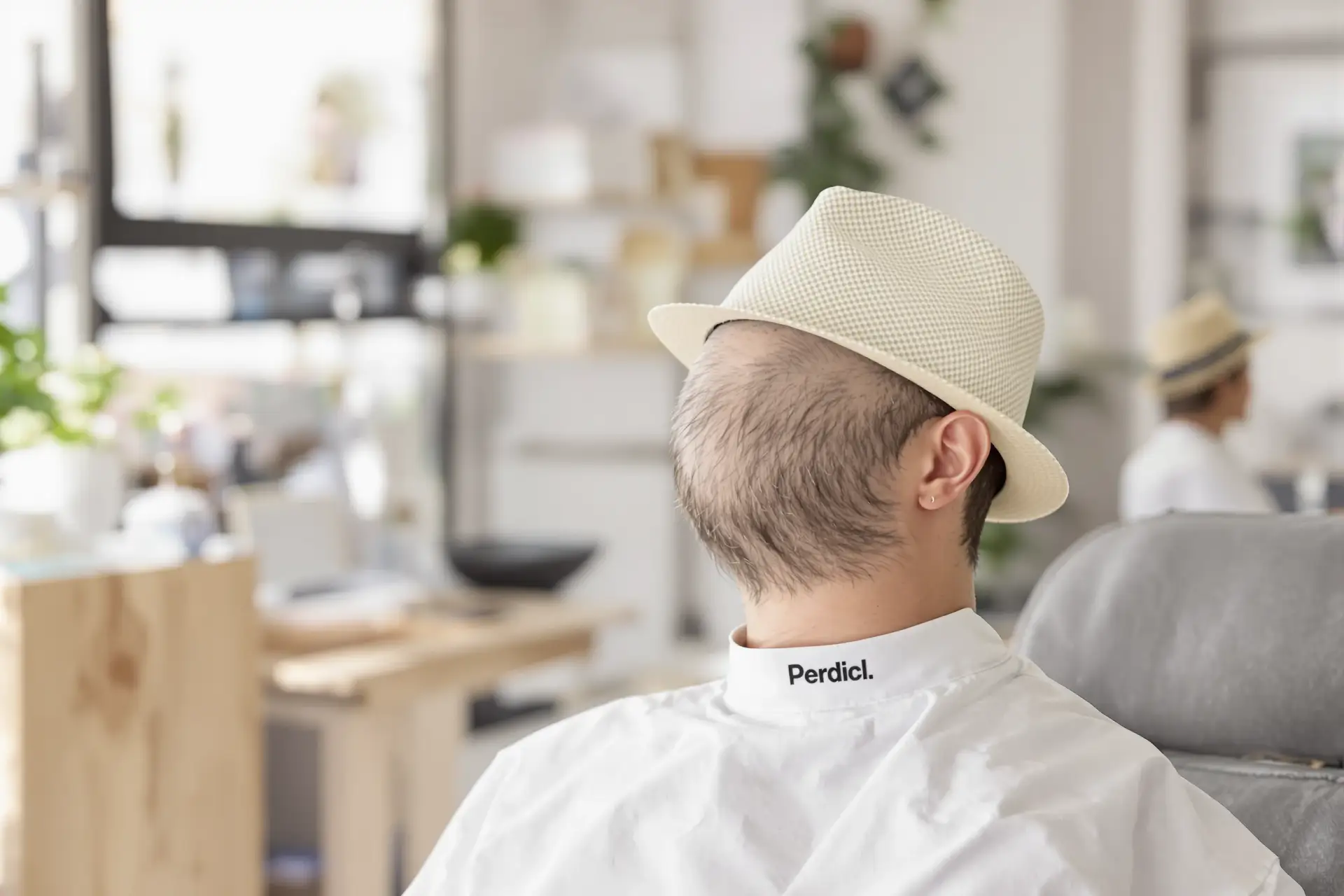



Does wearing a hat every day cause a receding hairline?
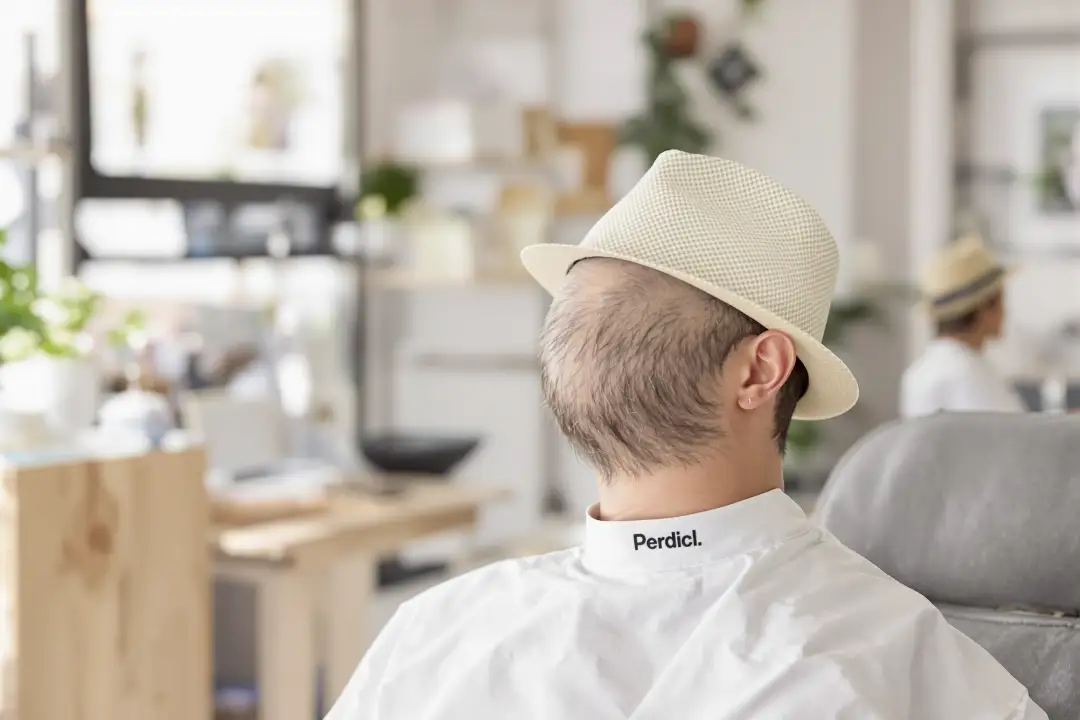
The short answer is no. Wearing a hat every day does not cause a receding hairline. This myth has been around for decades, but the science doesn't back it up.
Hair loss at the temples and crown is driven by genetics and hormones, specifically dihydrotestosterone (DHT). Hats have nothing to do with that process. Those follicles are programmed to miniaturize over time based on DNA, not on how much cotton or wool sits on the head.
Still, there are two scenarios where a hat could contribute to visible hair issues. Neither causes a receding hairline in the medical sense, but both can make hair look thinner or break off at the edges.
Traction alopecia from tight hats
If someone wears a hat that's genuinely tight, leaving red marks, a headache, or indentations on the forehead, the constant tugging on hair follicles can cause traction alopecia. This shows up as hair loss along the hairline or temples. It's not the same as genetic recession. One key difference is that traction alopecia is reversible if caught early and the pulling stops. Opt for a looser fit or a snapback that's not tightened.
Scalp health and hygiene
A dirty hat worn for hours in heat traps sweat, oil, and bacteria against the scalp. That can lead to folliculitis or dandruff. An inflamed scalp is not an ideal environment for growing hair. It won't cause permanent loss, but it can slow growth temporarily. Wash your hats or rotate them, and let your scalp breathe at night.
When I measured it against family photos, the pattern matched their father's or grandfather's exactly. The hat was just there for the ride
One more point. Hat wearers often notice more hair in their cap and panic. What they're seeing is normal shedding. The average person loses about 50 to 100 hairs a day. A hat just collects them instead of letting them fall on your pillow or shirt.
So no - your daily cap isn't causing your hairline to recede. Genetics is doing that work, and but loose hats and clean ones? Those help keep the rest of your hair in decent shape.
Can a tight hat cause traction alopecia?
Yes - a tight hat can cause traction alopecia if worn for hours every day. The condition is not permanent, but reversing it can take months if the tension continues.
Traction alopecia develops when repeated pulling or pressure damages the follicle root. Think of a ponytail that is too tight. A tight hat creates the same mechanism. A cap that leaves a red mark on your forehead after an hour applies enough force to stress hair follicles along the hairline and temples. Most improved after switching to looser headwear.
A key distinction: traction alopecia looks different from male pattern baldness. It typically affects the very front edge of the hairline-almost a band of thinning-while pattern baldness starts at the temples and crown. If you see recessional only at the temples but your front hairline remains intact, that's almost certainly genetics, not your cap.
How to tell if your hat is the problem
- Check for a tight fit. If your hat leaves a dent in your forehead that lasts 15 or more minutes after removal, it is too snug.
- Look at the pattern. Hair loss directly along the forehead line points to traction alopecia. That indicates traction alopecia, and thinning at the temples or crown follows a different pattern. That's likely androgenetic alopecia.
- Photo test. Compare pictures from 3 to 5 years ago. Has the overall hairline changed shape, or just the area where the hat sits? Traction alopecia stays localized. Pattern loss spreads.
If you have early traction alopecia, the fix is simple: stop wearing that particular hat. Switch to a loose-fitting bucket hat or a snapback worn on the loosest setting for a few weeks. Scalp massage and gentle exfoliation can help blood flow. Most cases see regrowth within 3-6 months once tension is gone.
Patients have walked in convinced their favorite fitted cap destroyed their hairline. In every case, it turned out they had genetic male pattern baldness running in the family-the hat was just a coincidence.
Does a sweaty or dirty hat damage hair follicles?
The short answer: no, sweat or dirt alone won't kill hair follicles. Follicles sit about 4 mm under the scalp surface-a sweaty hat band isn't reaching that depth. What a dirty hat can do is create a breeding ground for bacteria and yeast. Wearing the same unwashed cap for weeks means wrapping your scalp in a warm, damp petri dish. That can lead to folliculitis-a minor infection around the hair shaft that causes red bumps, itching, and temporary shedding. Once the infection brighten, the hair usually grows back, and permanent damage from a dirty hat is extremely rare.
Men who religiously wear a grimy baseball cap during workouts often wonder why their scalp feels tight and flakes. Sweat left to dry on the scalp mixes with sebum and dead skin cells. Over time, that combination can clog pores and irritate the skin. This isn't follicle destruction but rather a stubborn case of dandruff paired with inflammation. A zinc‑pyrithione shampoo used once a week can treat it, and regular washing is required by The cap itself. Wash the cap on a cold cycle with gentle detergent.
A common misconception is that sweating itself is harmful. Sweat is mostly water and salt. But keeping a sweaty hat pressed against the scalp for hours after a run means prolonged moisture and friction stress the hair cuticle, making strands more brittle. That is breakage, not hair loss from the root. The follicle is fine.
What matters more is the fit of the hat rather than its sweat content. If a cap fits snugly and is cleaned every couple of weeks, it doesn't risk the hairline
Wearing hats doesn't cause a receding hairline. Wearing a hat does not directly stimulate a receding hairline from sweat or grime. Leaving a dirty, sweaty hat on the scalp all day can create conditions like flakes, redness, and shedding that mimic hair loss until the scalp is properly cleaned.
Why does hair look thinner after taking a hat off?
This sight can be jarring. After a long day, the hair under a cap can look flat, stringy, and noticeably thinner. Such a sight often causes concern. Still, the explanation is different.
Throughout the day, the hat compresses the hair against the scalp for hours. Moisture from sweat and natural oils becomes trapped. For fine or straight hair, the shaft loses its usual volume and lift. What is seen is not actual hair loss, and that flattened appearance is hair that has been pressed down. A similar example is a plate of spaghetti pressed under a heavy bowl. Hair didn't disappear. It merely flattened.
With shorter hairstyles or a sweaty scalp, the illusion worsens, and wet hair clumps together, exposing more visible scalp between strands. A person can look fine in the morning but alarmingly thin after wearing a cap for six hours.
Sweat and friction also contribute. A taut hat wicks moisture away but also rubs against the hair cuticle. This friction can make hair look duller and more brittle temporarily. Even a missed rinse or a dry scalp flake caught in the fabric can cause patchiness. The whole scalp can look patchy.
Wearing hats doesn't cause a receding hairline. No, it doesn't. The thinning look after removing a cap is mechanical and reversible, entirely different from a receding hairline driven by genetics and hormones (dihydrotestosterone, or DHT). Hats do not affect that genetic and hormonal process. None was found
Steps can be taken to address the temporary thinning look.
- Giving hair five minutes to breathe can restore volume. Gravity and air restore volume.
- Applying dry shampoo or a light texture spraying before wearing a hat prevents the flat effect. It prevents the flat, plastered-down effect.
- Avoid wearing a soaking-wet hat for hours. That's a recipe for scalp irritation, not hair loss, but irritation can make thinner-looking hair worse.
The myth that hats cause baldness persists because people mistake correlation for causation. Men who wear caps daily often have active lifestyles, sweat a lot, or work outdoors, and that grooming habit simply coincides with natural thinning that would have occurred anyway. The cap ends up being blamed.
Patients have asked about this during clinic visits. They hold up a fitted cap and say, 'Doc, is this thing killing my hairline?' The short result is always the same: the hat is not the enemy. The illusion of thinness after removal is temporary and mechanical, and has nothing to do with follicle death.
Bottom line: Wash the hat semi-regularly, avoid cinching it to the point it leaves a deep dent in the forehead, and ignore that internet myth. A receding hairline has bigger things to worry about-a cotton cap is not one of them. Fluff the hair up and give it air, then move on.
What actually stops a hairline from receding further?
Most men assume their hairline is a done deal once it starts receding. But the truth is, hair loss isn't a straight line to baldness. It follows distinct patterns. And those patterns respond to specific interventions, not to whether a cap is worn or not.
The engine behind a receding hairline is androgenetic alopecia. That's a fancy name for a simple chain reaction: hair follicles are sensitive to DHT (a byproduct of testosterone), and over time that DHT shrinks them until they stop producing visible hair. Hats don't interfere with this process. DHT levels are not affected by hats. Follicle sensitivity also remains unchanged.
So what actually stops hair loss? Treatment falls into two categories: medication and surgical procedures.
What the FDA-approved stuff does
This isn't a theoretical claim. Studies tracking men over five to ten years show that the majority either slow their recession significantly or stop it completely
Minoxidil works via a different mechanism, and this medication does not alter DHT. Instead, it stimulates blood flow to follicles and prolongs the growth phase. It works best on the crown, but many men also see results at the hairline. Noticeable results typically appear after four to six months. Applying the foam version along the front hairline is simpler than using the liquid.
Both can be used together. Dermatologists generally provide that as the standard protocol.
What about non-drug options?
Low-level laser therapy (LLLT) caps have supporting data behind them. It is not as effective as finasteride, but it has no side effects
Platelet-rich plasma (PRP) injections are another option. Blood is drawn, spun down, and then injected into the scalp every few months. Early evidence shows modest but real results