


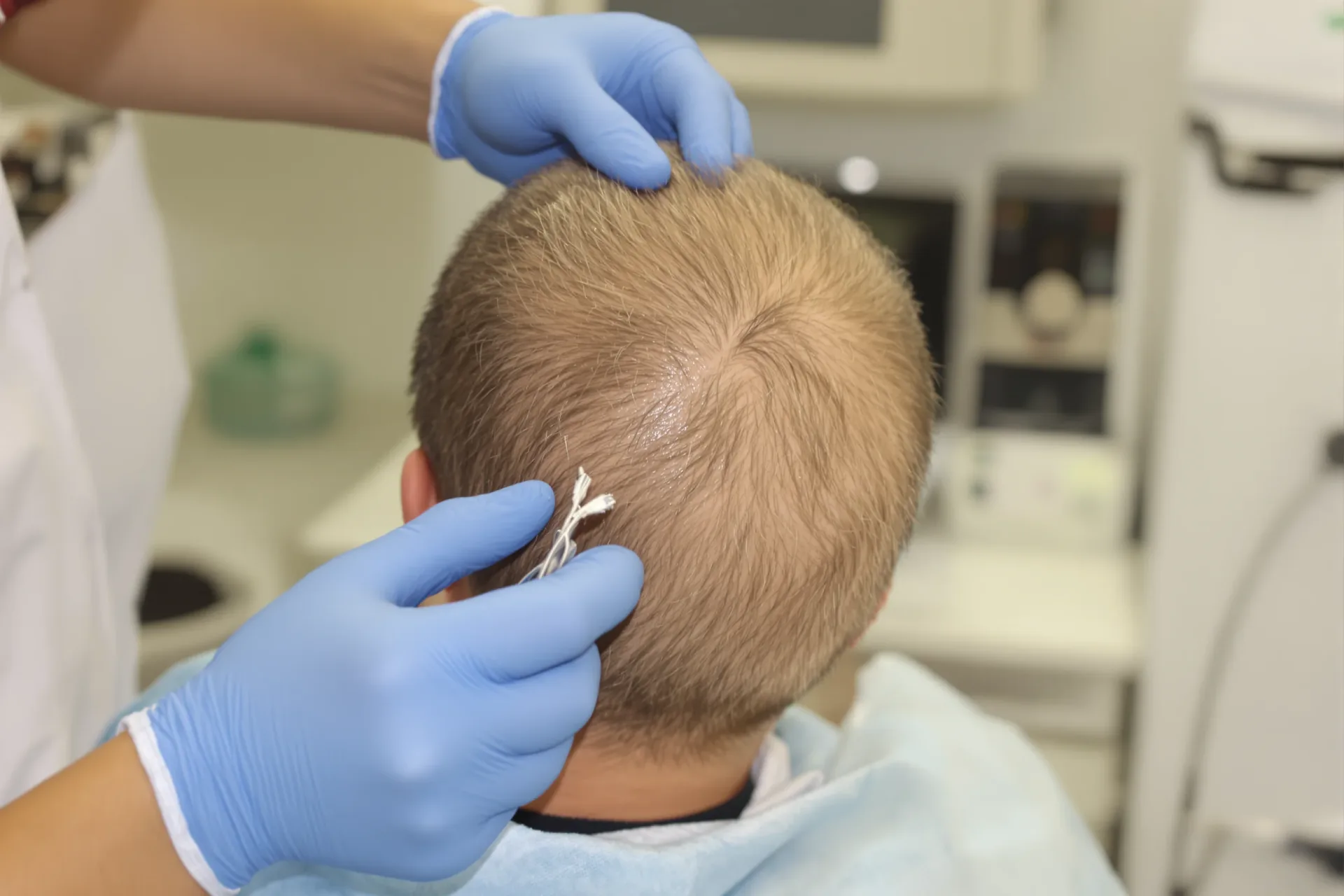


What is FUE hair transplant and how it works
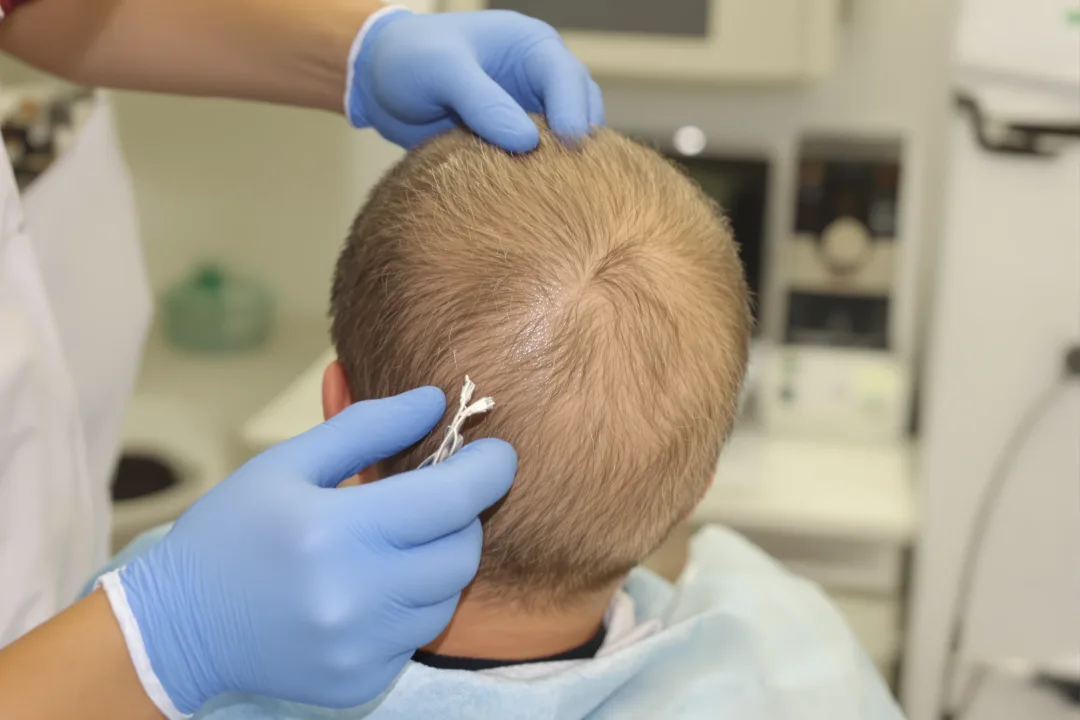
FUE: the extraction that changes everything
FUE - Follicular Unit Extraction - is today the most requested technique for hair transplant. The reason is simple: it doesn't leave a linear scar on the back of the head. Unlike the old FUT, where the surgeon removed a strip of scalp, here you work follicle by follicle. Each unit is extracted individually with a micro-punch of 0.7-0.9 mm. The exact diameter depends on the thickness of the hair and the donor area. We're talking about a precise number: 2500-3500 grafts in a standard 8-10 hour session.
How does it really work? The patient is seated in a comfortable position, usually reclined backward. The donor area - the back and sides of the head - is anesthetized with local injections. They burn for 30 seconds, then you don't feel anything. The surgeon or a specialized technician begins extracting the units one by one. The biggest drawback? The duration. But the results speak for themselves.
From the back to the bald area: implantation and angulation
Once extracted, the follicles are counted and washed under a microscope. Here you need a trained eye: each unit can contain 1, 2, or 3 hairs. The surgeon decides how to distribute them. The thickest ones, those with three hairs, are placed in the central area. The thinner ones, with one hair, go instead to the frontal hairline, for a natural look.
Costs and duration: a planned investment
The cost of an FUE transplant depends a lot on the clinic and the country you're in. The difference is not only economic: the quality of the staff and equipment also makes a difference. The procedure lasts 8 to 12 hours in a single day. Initial recovery requires 7-10 days before returning to work, but visible hair growth begins after 4-5 months.
FUE vs FUT: two philosophies compared
The choice between FUE and FUT is not just about aesthetics. FUT leaves a linear scar on the back of the head, 20-30 cm long, but allows more units to be extracted in a single session. FUE, on the other hand, is more gradual but leaves no visible marks. Here are the main data:
ParameterFUEFUT ScarPunctiform, invisible with short hairLinear, visible if shaved Grafts per session2500-35003000-4500 Average cost in Italy€3,200 for 3000 grafts€2,800 for 3000 grafts Recovery (return to work)7-10 days10-14 daysIn practice, many surgeons today prefer FUE for patient comfort and the absence of scars. Only in cases of very extensive baldness, beyond 4000 grafts needed, is FUT still considered.
The numbers of a real case
After the consultation, he chose FUE with 3200 grafts. The procedure took 10 hours, performed in a clinic in Rome. "The burning sensation in the first 24 hours was annoying, but by the fifth day I was in the office with a cap," he says.
- The implanted hairs fall out within 2-3 weeks, then grow back stably from the fourth month.
- The result is permanent, as the follicles from the back are not sensitive to DHT.
FUE vs FUT: differences, advantages, and disadvantages
Hair transplant is mainly divided into two techniques: FUE and FUT. They are two different ways of extracting follicles, and the choice changes the experience and the final result.
How the extraction works
In FUE (Follicular Unit Extraction), the surgeon extracts each individual follicular unit from the donor area, usually the back and sides, with a micro-punch of about 0.8-1 mm. No stitches are needed. At medium density, those tiny white dots go unnoticed to the naked eye.
With FUT, a strip of scalp is removed from the back, 1-1.5 cm wide and 20-25 cm long. The wound is sutured, leaving a linear scar. If you wear your hair short, shaved to 3-4 mm, that line can be seen, especially if the skin tends to heal widened.
And it's true: a strip yields on average 2000-3500 units in 4-6 hours. In the same time, FUE reaches 1500-2500, depending on the team's experience. But the compromise is the scar.
Concrete advantages and disadvantages
- Post-operative pain: In FUE it's mild, some discomfort for 36-48 hours. In FUT, the sutured area pulls and hurts for 5-7 days, requiring a light painkiller.
- Recovery: With FUE, you can work remotely the next day and by 7 days the shave is uniform. For FUT, you need at least 10-14 days to remove stitches and feel okay.
- Aesthetic result: FUE wins if you keep your hair short. FUT is acceptable only if you wear your hair at least 4-5 cm long in the back.
- If the team is poorly prepared, FUT risks losing follicles due to cutting damage on the strip. </
Prefer WhatsApp?
Send a photo of your hair on WhatsApp. A doctor replies with a free plan.
FUE vs DHI: differences and which to choose
The difference between FUE and DHI is less clear-cut than often thought. In classic FUE, follicles are extracted one by one with micro-punches of 0.7-1 mm. Then they are implanted into channels created with a safil blade or a thin needle. DHI instead uses a single instrument, the Choi implanter, which implants the follicle while creating the channel.
Characteristic Classic FUE DHI (Direct Hair Implantation)In practice, DHI is a variant of FUE. The extraction doesn't change, only how the follicles end up on the head changes. The main difference? The time the follicle stays out of the scalp. The classic FUE technique involves extracting grafts in batches and then reimplanting them later.
The follicle's stopwatch: why time outside matters
A follicle outside the scalp for more than 5-6 hours starts to suffer. Extracting 2500 units with the classic FUE technique takes 3-4 hours, and then another 3-4 to create channels and implant. In total, the first extracted grafts remain out for even 6-8 hours. In micro FUE with DHI, extraction is staggered: a small batch is taken and implanted immediately. The average ischemia time drops to 1-2 hours. It's not just marketing.
When DHI makes sense and when it doesn't
The surgeon adjusts the angle and direction graft by graft, replicating the natural zigzag line. In that case, the classic FUE technique with a blade is enough. A surgeon from Istanbul told me: 'from 2500 grafts upwards, DHI tires the team and lengthens the times. Performance drops after 8 hours'. So: for repairs, frontal areas, or patients with strip scars, DHI. For broad and dense coverage, classic FUE. Choose based on the work to be done, not the name.
How much does an FUE hair transplant cost and what affects the price
The prices of an FUE hair transplant vary. A lot. The reason? The final cost is not the same for everyone: it is built on three or four concrete factors.
The first factor is the number of grafts needed. You don't pay for the procedure itself, but for the work done. Each follicular unit is extracted and prepared under the microscope, then reinserted one by one. The more grafts you require, the more time and staff are needed. A light receding hairline may require 1,500-2,000 grafts. Advanced baldness even 4,000 or more. The final cost rises accordingly.
The second factor is the surgeon's experience and the type of facility. A specialized center, with a doctor who has been performing transplants for ten years, costs more than a generalist clinic. It's not a whim: the survival of the grafts and the naturalness of the result depend almost entirely on the skill and the team. The difference is not just marketing: it covers regulations and checks, as well as the doctor's presence in the operating room for the entire duration.
The third element, often underestimated, is the clinic's location. A procedure in Milan or Rome has fixed costs, such as rent and staff, higher than in a mid-sized city. This is reflected in the quote.
Hidden costs not to underestimate
The quote you receive during the consultation rarely covers everything. Some clinics include these extras in the package, many do not. Asking for a detailed list before signing avoids unpleasant surprises.
Is it worth paying more? Real cases
Let's take two scenarios. An acquaintance of mine tried option A. The result? The perceived cost was lower, the real one was not. The higher price covers the guarantee of work that lasts.
Quick comparison
How long does an FUE hair transplant last and when do you see results
Here is the timeline many want to know before booking. The actual duration of the procedure depends on the number of grafts. A standard session of 2000 to 3000 grafts keeps you on the table between 4 and 8 hours. It's not a walk in the park, but it's not an overnight surgery either. The next day you can go home and walk normally.
Then comes the part that no one rushes: the growth timeline. This is where many get anxious. The truth is that you don't see anything for a while. Here's how it all develops:
- Day 1-14: the grafts are well planted. The scab falls off within 10-14 days.
- Weeks 3-6: the transplanted hairs fall out. It's normal, it's shock loss. Don't panic.
- Months 3-4: the first thin hairs appear. They seem almost invisible at first.
- Months 6-9: the hair begins to thicken and take on color. Here you start to see a decent result.
- Months 12-18: the final result. The hair has reached its definitive density and consistency.
So no, don't expect miracles in three months. Patience is required. And it also depends on the quality of the transplant and the individual response of the scalp.
Before then, better to keep your feet on the ground.