
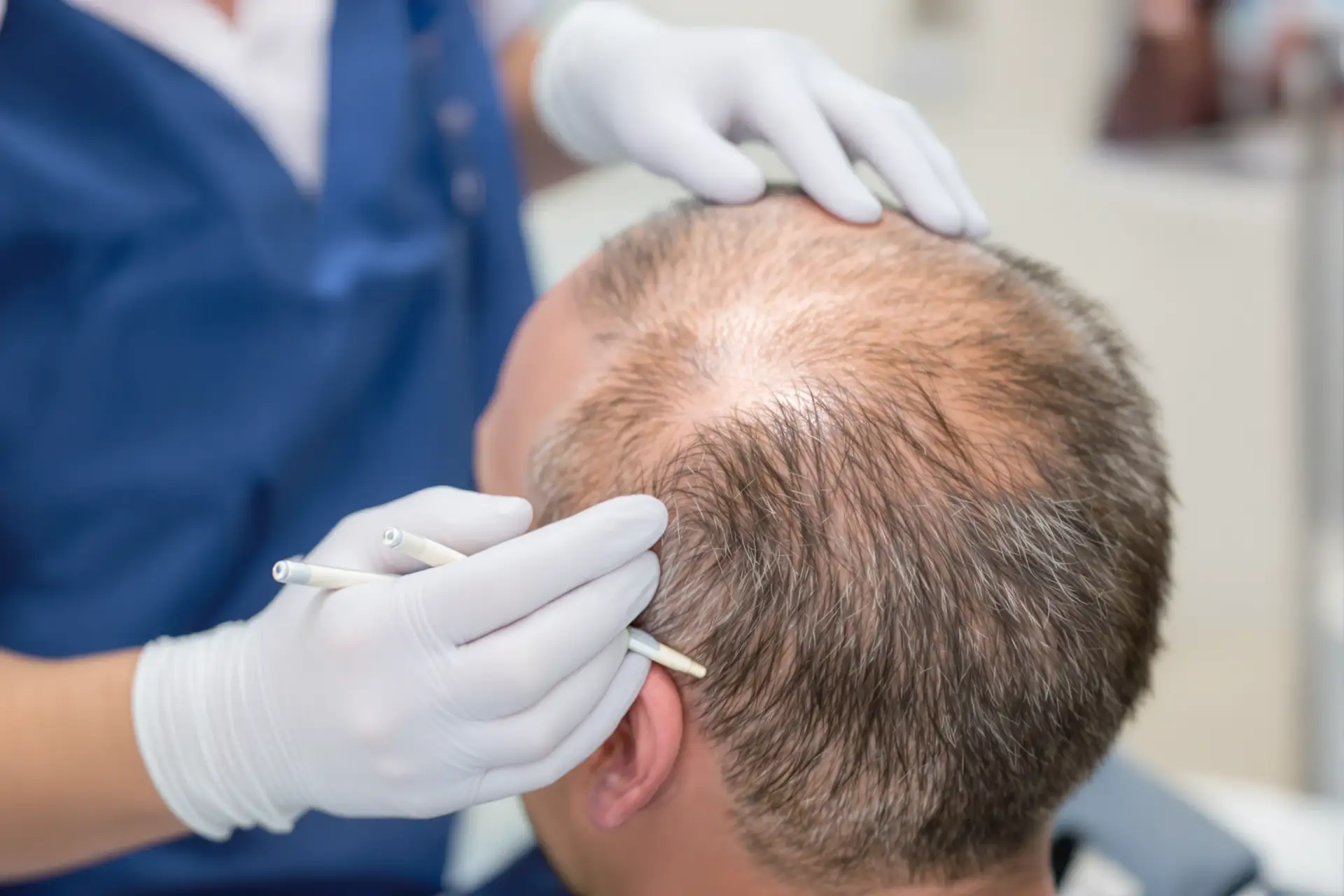



FUE vs FUT at a Glance
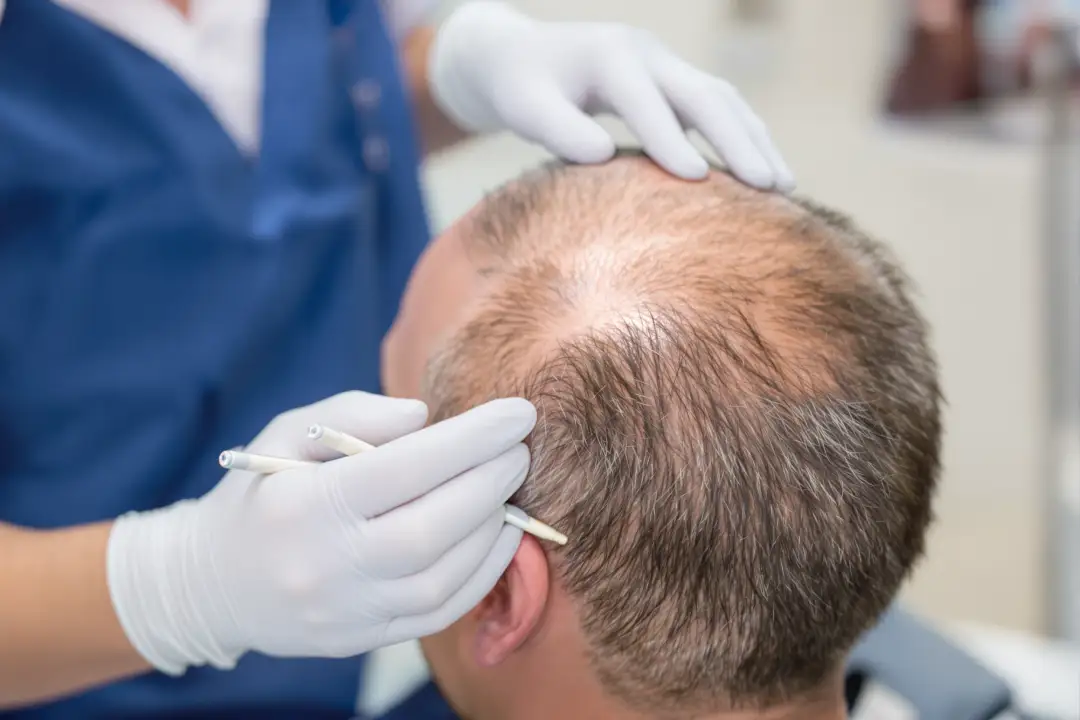
So you're weighing FUE against FUT, the real trade-off is scar visibility versus graft yield. FUE leaves tiny dot scars scattered across the donor area. FUT leaves a single linear scar that runs ear-to-ear across the back of the scalp. Which matters more depends on your hair length and pain tolerance, and how many grafts you actually need.
FeatureFUE (Follicular Unit Extraction)FUT (Strip Method) ScarringSmall, scattered dots (0.7-1.0 mm). Hard to see even with a #2 guard. Single thin line (~1-2 mm wide). Covered by hair above 3-4 mm. Recovery7-10 days to feel normal. Scabs fall off around day 10.10-14 days. Stitches removed at day 10-14. More tenderness. Graft yield per session2,000-4,500 grafts typical for one long day.3,000-6,000+ grafts possible in one go. People who need high graft counts, have tight scalp, or want maximal donor survival.Honestly, FUE's marketing oversells the "scarless" thing, and there are scars, just not a single visible line. I've talked to patients who shave their head with a #1 guard and you'd never spot the dots. Others with very fine hair find the linear FUT scar a bigger deal because it shows when hair gets wet or windswept. The choice hinges on your lifestyle, not some abstract "better method" claim.
One thing most clinics won't tell you: FUT can harvest more usable grafts from a smaller area. That matters if you're going for a high-density front or you need coverage across a large balding zone. FUE spreads the extraction over a wider surface, so your donor area looks thinner if you keep hair short afterward. Neither approach is universally right, it's about matching the method to your head shape, your hair type, and your long-term plan for further transplants down the line.
What Is FUE (Follicular Unit Extraction)?
FUE stands for Follicular Unit Extraction. It's a technique where a surgeon removes individual follicles, one by one, from the donor zone, typically the back or sides of the scalp. Each unit contains one to four hairs, and they're transplanted into the thinning or bald areas. No strip of skin is removed. That's the core difference when you're looking at fue vs fut .
I've talked to guys who say the biggest selling point is the scarring. FUE leaves tiny dot scars, so small they're invisible once the hair grows back to a normal length. You can wear your hair short - a #1 clipper guard - and nobody spots the donor area. With FUT, you get a linear scar that might show if you buzz it down. That alone pushes a lot of people toward FUE.
The procedure itself is long. A typical session runs 6 to 8 hours for 2,000 to 3,000 grafts. The surgeon uses a tiny punch tool, about 0.7 to 0.9 mm in diameter, to extract each follicle. Then those grafts are sorted under a microscope and placed into tiny slits made in the recipient area. It's precise, painstaking work, and the patient is awake throughout, under local anesthesia. You can watch a movie or nap.
Recovery is straightforward. Most people are back at a desk job in 3 to 5 days. The transplanted hairs shed after a couple of weeks, which is normal. New growth appears around the fourth month, with full results settling in between 12 and 18 months. The donor site heals fast, just a few pink dots that fade within weeks.
Who Is FUE For?
FUE works for anyone who has enough donor density and keeps realistic expectations. It's particularly good if you prefer shorter styles or have a tight scalp that wouldn't heal well from a strip. It also handles smaller sessions well, say, 1,000 grafts to fill in temples, because extraction is selective. The downside?
What Is FUT (Follicular Unit Transplantation)?
FUT stands for follicular unit transplantation, you'll also hear it called the 'strip method.' Here's how it works: the surgeon removes a strip of skin from the back of your scalp, closes the wound with stitches, and then a team dissects that strip under microscopes to isolate individual follicular units. Those grafts are transplanted into the thinning or bald areas.
It's the older method, around since the 1990s, but far from obsolete. For patients who need a high number of grafts in a single session, FUT still has a serious edge. A single strip can yield 2,000 to 4,000 grafts, sometimes more depending on scalp laxity and hair density. By comparison, FUE sessions usually max out around 3,000 to 3,500 grafts.
The strip itself is typically about 1 to 1.5 centimeters wide and 20 to 30 centimeters long, depending on the target graft count. After removal, the lesion is closed with sutures or staples, leaving a thin line scar that runs horizontally across the back of the scalp. If your hair is long enough, the scar is invisible. Buzz cuts or very short hair? That scar can be a dealbreaker.
Recovery from FUT feels a bit different. You'll have a row of stitches that stay in for about 10 to 14 days. Sleeping on your back is uncomfortable for the first week. It feels tight and tender. But once the stitches come out, you're pretty much back to normal, except the transplanted hair sheds around three weeks, then starts growing in earnest by month four. Most patients see full results around month twelve, just like with FUE.
Cost-wise, FUT often runs cheaper per graft than FUE. That difference adds up fast when you're moving 2,500 grafts. For the price-conscious patient who doesn't plan to go for a skin-short haircut, FUT is a solid option
One thing people sometimes overlook: the donor area after FUT is more predictable. It's a linear scar, but the surrounding hair stays completely untouched. With FUE, you get hundreds of tiny dot scars scattered across the donor zone. An experienced surgeon can work around an FUT scar more easily than a heavily harvested FUE donor area if you ever want a second transplant.
Bottom line? The FUE vs FUT question isn't 'which one's better.' It's about what you're willing to trade. FUE vs FUT comes down to scar visibility, total graft capacity, recovery time-and upfront cost. If you're okay with a thin linear scar and you need a lot of grafts, FUT is worth a look.
Scarring: Dot Scars vs a Linear Strip Scar
For a pot of men, the scar question is the dealbreaker in the FUE vs FUT decision. Both methods leave marks. They just look completely different-and that difference matters depending on how you wear your hair.
What FUT leaves behind
FUT-the strip method-takes an ellipse of skin from the back of your scalp. A surgeon then stitches that wound closed. The result is a single continuous line-usually from one ear to just past the other, though length varies. That scar is thin when done well, often 1-2 millimeters wide after healing. But it's a line. If you buzz your hair to a #2 guard or shorter, that line shows. Some patients grow it out and the scar disappears entirely under the remaining hair. Others end up with a visible strip, especially if they have naturally fine hair or their scar stretches over time. Stretch-back is not rare-the scalp tenses after the excision, and the scar can widen to a quarter-inch or more.
What FUE leaves behind
FUE extracts individual follicles, one at a time. Each extraction heals as a tiny white dot, roughly 0.7 to 1.0 millimeters across. Take a thousand grafts, and you have a thousand dots. They sit scattered across the donor zone, not bunched up in one line. With a skin fade or a #1 guard, those dots might show as a slight speckling. The dots blend into the scalp's natural texture, and the trade-off is simple: one line becomes many tiny dots. Which is better comes down to your haircut
Factor FUT (Strip) FUE (Follicular Unit Extraction) Scar type Single linear strip scar Scattered dot scars Typical width 1-2 mm (can stretch to 5+ mm) 0.7-1.0 mm per dot Hidden by Hair at least 1-1.5 inches long Hair as short as #3 guard (⅜ inch)Recovery, Downtime and Hair Length After Each Method
Recovery from FUE and FUT hair transplants isn't the same. Not even close. With FUE, you're looking at about a week for healing. Those tiny punch holes scab over within three to four days, and most guys are back at their desk by day five or six. After a week, you can wear a loose cap. There's a catch. Your donor area will be buzzed short. If you keep your hair longer on the sides, shaving the whole head might be necessary for the procedure. So your hair length stays uniform for a few weeks.
FUT is the rougher one. The strip removal go away a linear suture line across the back of the scalp. That line stays tender for seven to ten days, and stitches come out around day ten. Until then, bending over or lifting anything heavy is off the table. Total downtime? A full two weeks are needed by Most guys before they feel normal. The upside: you can keep your existing hair length. The surgeon removes a strip from an area that's usually hidden by your longer hair, so no need to buzz the whole donor zone. Two weeks after, the scar is hidden under your natural hair.
Hair length matters more than most people think. I've had patients who wanted FUT because they couldn't take two weeks off work. They planned the surgery around a long weekend, then went back to the office with a hat. With FUE, you basically commit to a very short haircut for at least a month. Shedding happens around week two or three, so you look thinner for a few weeks before new growth starts at month three.
Scarring is another difference. FUE leaves tiny white dots in the donor area, they're barely visible unless you shave your head completely. FUT leaves a linear scar.