
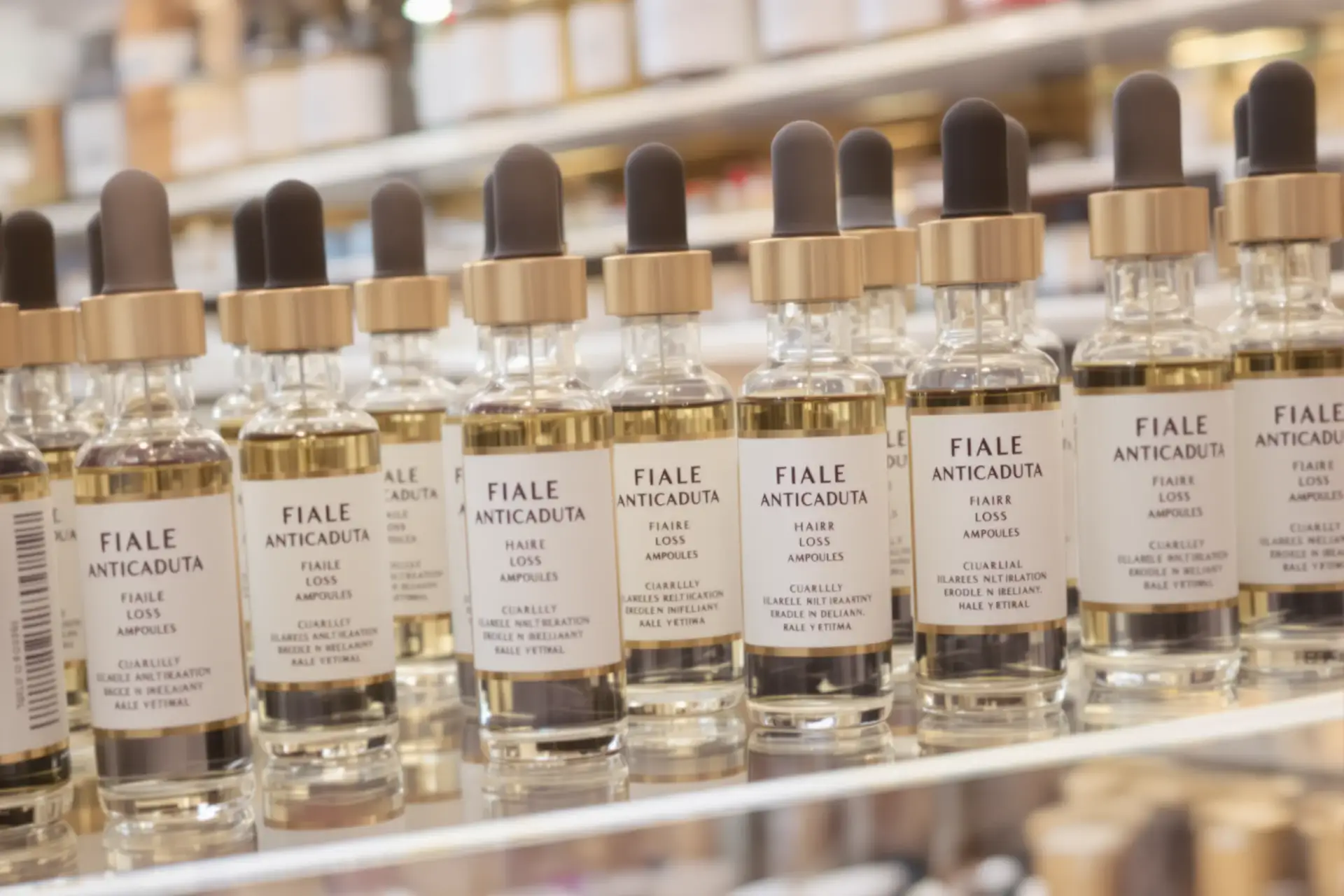



What Are Hair Loss Ampoules and Do They Really Work?
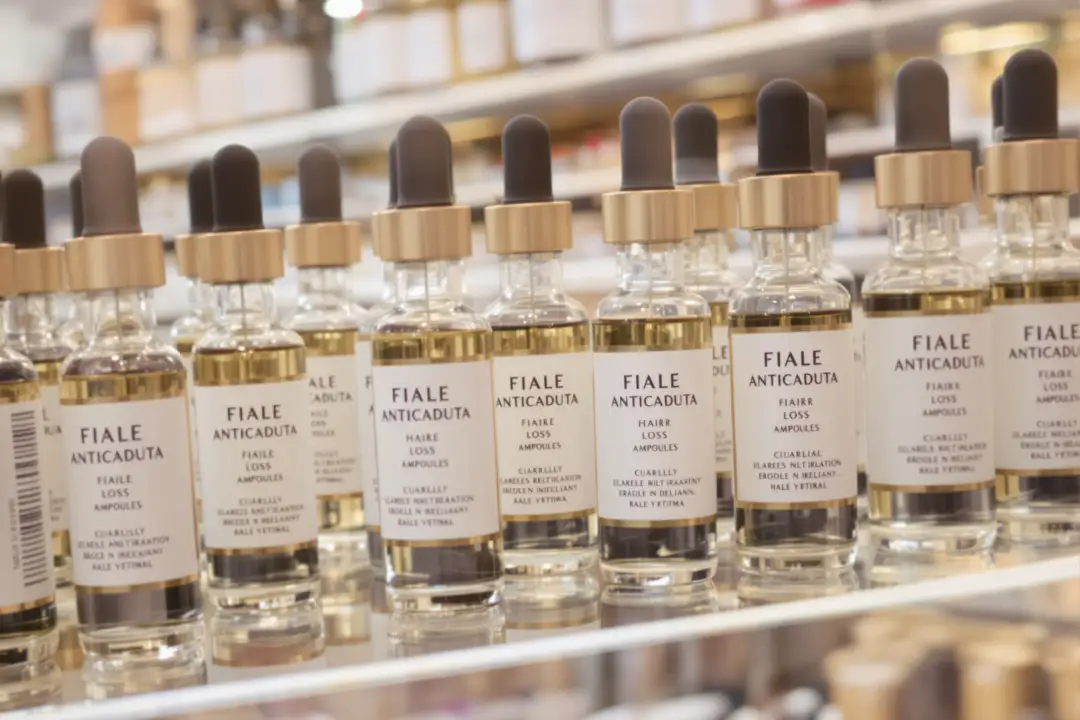
Walk into any Italian pharmacy and you'll find rows of glass vials labelled fiale anticaduta . Hair loss ampoules have been a staple on European shelves for years. But what actually goes into them?
Ampoules are concentrated, single-dose serums meant to stay on the scalp for several hours. Unlike daily sprays or foams, these are formulated to deliver a higher payload of active ingredients in a short window. The theory: saturate the follicle, trigger something, repeat for ten weeks, and the practice is messier.
What's Inside the Vial
That's the only ingredient with consistent phase-3 trial data for androgenetic alopecia. Caffeine, saw palmetto, biotin, and various peptides fill the rest. They work through different mechanisms: caffeine blocks DHT formation on the scalp surface (a little), biotin shores up keratin structure (if you're deficient), and peptides try to extend the anagen phase.
Notice a pattern. Each targets a separate step in the hair cycle. That's the pitch. But the evidence stack is uneven. Minoxidil carries the weight. The rest? Mostly suggestive data and in-vitro experiments that don't transfer cleanly to a real scalp in Milan or Bari.
What Science Actually Says
Caffeine-based formulas? A smaller effect, mostly on telogen sheds, and the result didn't hold past eight weeks. Still better than nothing, but not by much
The catch is that most people who pick up ampoules don't have a clear diagnosis. They see shedding, buy something from the pharmacy, hope.
The Italian Pharmacy Scene: Patterns and Pitfalls
The trouble is most customers stop after six weeks. They see the initial shed (the dreaded "dread shed") and panic. But that temporary loss is a sign the drug is pushing weak telogen hairs out. She'd been using them only twice a week, not daily, and compliance kills results faster than any ingredient failure
- Increased shedding in the first month, that's normal, not a problem.
- Don't split a single-dose ampoule across morning and night. It's meant for one use.
- Applying heat with a blow-dryer immediately after application degrades peptides and caffeine.
When Evidence Meets Reality: Who Benefits Most?
The answer depends entirely on what's causing the loss.
Key Ingredients in Hair Loss Ampoules: Science vs. Hype
Walk down the pharmacy aisle in Milan or Rome, and you'll see ampoules promising everything from "follicle awakening" to "dramatic regrowth in weeks." Ingredient lists look impressive: peptides, plant extracts, vitamins, sometimes even growth factors. But which ones actually do something, and which are just expensive perfume on your scalp?
Let's start with the ingredient that has real evidence behind it: minoxidil. It's the only topical compound approved by both the FDA and AIFA (Italy's drug agency) for androgenetic alopecia. Minoxidil works by widening blood vessels around the follicle and pushing more hair follicles into the growth (anagen) phase. Not miraculous, but measurable. Many ampoules sold in Italy contain minoxidil. Check the small print. If minoxidil's on the label, what you're buying has gone through clinical trials.
Then you have peptides. Copper peptides, specifically GHK-Cu, get a lot of attention. The theory is solid: copper acts as a cofactor for enzymes that produce collagen and heal wounds. In vitro studies show GHK-Cu stimulates dermal papilla cells in the lab. But in vivo data for hair growth? Thin. Peptides are promising, but they don't replace the proven treatments
Ingredient Claim What the Evidence SaysBotanical extracts like saw palmetto, rosemary, and green tea show up in about half of anti-hair-loss ampoules. Saw palmetto is thought to inhibit 5-alpha-reductase, the enzyme that turns testosterone into DHT. A few small studies suggest a mild effect, but the reduction in scalp DHT is nowhere near what finasteride achieves. It performed similarly after six months
Here's the thing. The idea: the combo might outperform minoxidil alone.
How Hair Loss Ampoules Compare to Other Treatments
Hair loss ampoules occupy a curious middle ground, and they're not quite pharmaceutical, but not purely cosmetic either. Understanding how they stack up against the standard options helps you decide if they're worth the time and expense.
Vs. Topical Minoxidil
Minoxidil is the benchmark. Decades of data back it. It works by increasing blood flow and prolonging the anagen (growth) phase
Ampoules often aim for similar territory but with a broader ingredient list. Others skip it entirely and rely on peptides like redensyl or copper peptides, plus botanicals such as saw palmetto. The evidence for those is thinner.
Where ampoules win is convenience, you apply them once a day, they dry fast, and many leave no greasy residue. What's the downside? Cost
Vs. Finasteride (Oral)
Ampoules pose no such risk, and they're topical, so DHT levels in the blood stay normal. For someone hesitant about hormonal drugs, a good ampoule with DHT-blocking botanicals (saw palmetto, pumpkin seed extract, caffeine) offers a gentler entry point. Here's the trade‑off: results are slower and less dramatic. You're unlikely to see the thickening that finasteride can deliver.
Vs. PRP and Low‑Level Laser Therapy
A typical protocol is three sessions over six months, then maintenance every 6-12 months. They nudge follicle metabolism with red-light photons, and there's decent clinical backing for mild to moderate thinning
Ampoules are the budget-friendly at-home alternative, and no clinic visits, no needles, no upfront equipment cost. But compliance is everything, skip a week and the effect fades.
How to Use Hair Loss Ampoules Correctly
The trick with hair loss ampoules isn't just what's inside the glass vial, it's how you get it onto your scalp. Apply them wrong and even the priciest formula just makes your hair greasy.
First, timing matters more than most people realize. Use the ampoule on a clean, dry scalp. Not damp hair, not after showering and rushing out. Dry. That way the active ingredients soak in rather than run off. Don't be that person
Here's the step sequence that actually works:
- Part your hair section by section. A comb helps. You want the serum hitting the scalp, not the hair shaft.
- Apply the full ampoule at once, and most vials hold 3-6 ml. Don't save half for tomorrow, air exposure degrades the active ingredients.
- Massage with fingertips for 2-3 minutes, and circular motions, moderate pressure. This boosts circulation and spreads the product evenly. Don't rub too hard, that can irritate the follicles.
- Don't wash it off. Leave it on. If the texture feels bothersome, apply it in the evening and let it work overnight.
Frequency depends on the brand.
Some require daily use for 12 weeks.
Others every other day for 3 months, and check the leaflet. I usually tell people: mark a calendar for the first 90 days. Miss more than 2-3 applications. It also you're essentially starting over.
One common mistake: people stop as soon as they spot fewer hairs in the shower drain. That's the wrong signal. The best hair loss ampoules often cause a temporary shed in weeks 3-6. That means the cycle's resetting. Push through.
So what about using them alongside other products? Fine, but let the ampoule sit for at least 5 minutes before applying a leave-in or styling product. And never layer them over heavy oils or silicones. That blocks absorption.
Application technique isn't glamorous. But it's the difference between throwing money away and actually giving those hair loss ampoules a fair shot. Stick with it, and when you evaluate results later, be honest about whether you followed the instructions.
When Are Hair Ampoules Not Enough? Escalating to PRP or Transplant
Ampoules can only do so much. They nourish follicles, block DHT locally, and extend the growth phase, but they can't resurrect a dead follicle. If you've been using a hair loss ampoule for six to nine months and still see a widening part or a receding hairline that keeps moving, it's time to look beyond topicals.
PRP (platelet-rich plasma) is the next logical step. It uses your own growth factors to wake up miniaturized follicles. Works best when you still have visible hair shafts, thin, but present. A typical protocol is three sessions, four weeks apart, then a maintenance every six months. Many patients combine ampoules and PRP, and ampoules condition the scalp, and PRP provides the boost.
If a Norwood 5 or 6 pattern is completely smooth, ampoules or PRP won't bring hair back. That's where a transplant comes in, and only a graft can restore density in a bald zone. The decision isn't about which is 'better'.