:no_upscale()/media/ic/images/2026/02/29fedc4f885d4517814e7ad43cc5df63.webp)
:no_upscale()/media/ic/images/2026/09/hair-thickening-methods-costs-and-choice-in-article.webp)
:no_upscale()/media/ic/images/2026/04/Tugba-Hoca.webp)


Why do hair thin? Causes and main factors
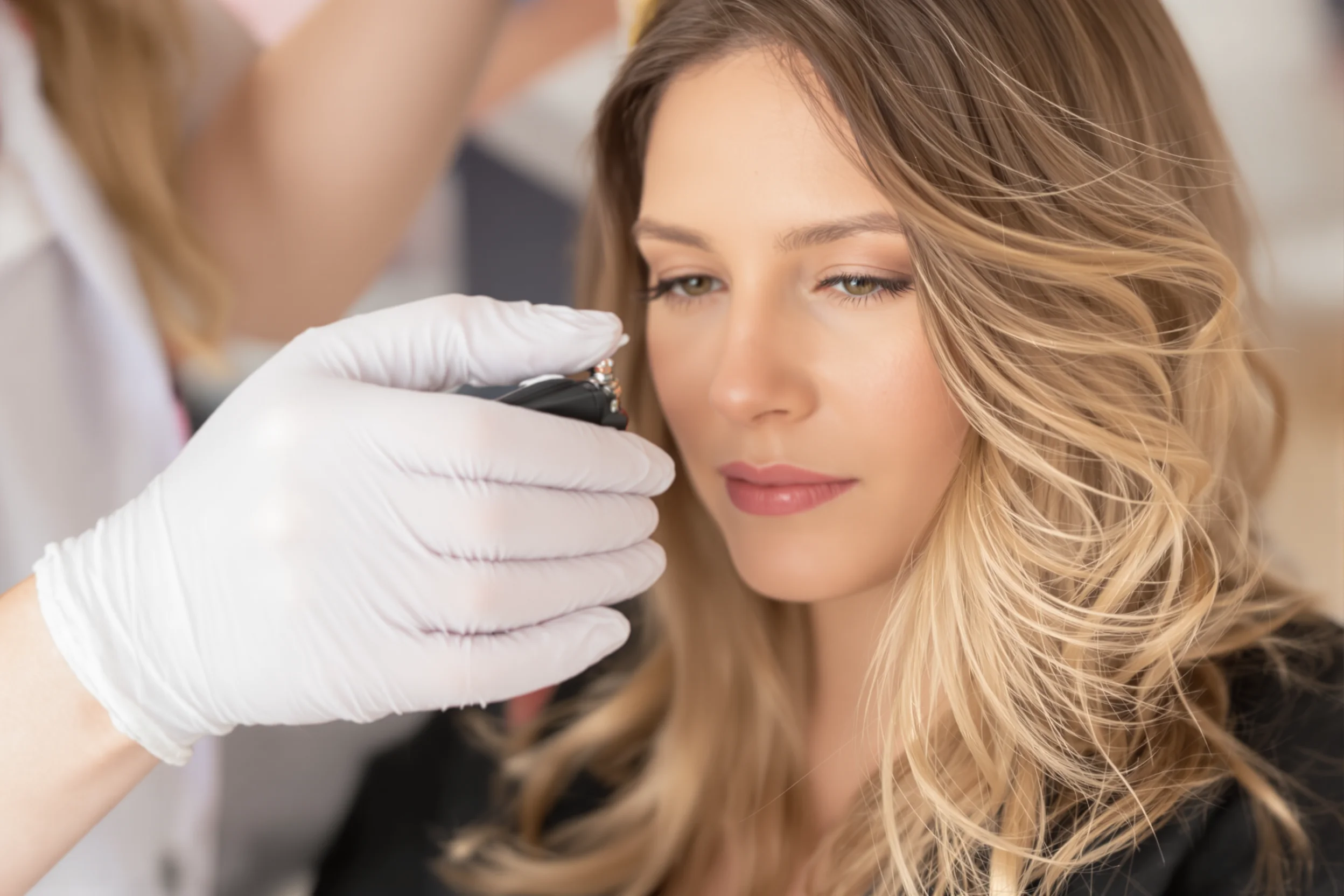
Hair thinning never comes alone, and it rarely has a single cause. Androgenetic alopecia, the technical name, progressively shortens the growth phase of the follicle due to the action of DHT, a derivative of testosterone. Women are not excluded: one in three deals with it after menopause, when the drop in estrogen unmasks the predisposition.
Then there are the temporary causes, the ones that can surprise you. A strong stressful event - a bereavement, surgery, childbirth - can trigger telogen effluvium. The good news? It usually grows back on its own in 6-12 months.
Hair thickening methods: a complete overview
Those who are dealing with progressive thinning often wonder where to start. The truth is that for hair thickening there is no single answer that works for everyone, but a fairly wide range of options. Some treatments act on the heart of the problem - the follicle - others aim to improve the aesthetic quality of what remains. The choice depends on how advanced the thinning is, the budget, and, not least, patience.
Topical and oral treatments
The starting point for many is minoxidil, a lotion to apply to the scalp once or twice a day. It works quite well on areas that are still active, less on completely bald areas. Finasteride comes as a 1 mg tablet per day. It blocks the conversion of testosterone into DHT, the hormone that in men reduces the hair's life cycle. A medical prescription is required, and side effects, rare but possible, should be discussed with a dermatologist. For women, finasteride is not indicated. Alternatives? Spironolactone or specific supplements.
Outpatient and regenerative procedures
PRP, platelet-rich plasma, involves a blood draw, centrifugation, and re-injection into the scalp. Usually 3-4 sessions are recommended in the first year. Results vary greatly: some see modest regrowth, others only notice a slowdown in thinning. Carboxytherapy and mesotherapy with growth factors share similar logic.
There is also low-level laser therapy (LLLT). Clinical evidence is limited. Some pilot studies show an increase in hair count after 6 months of daily use.
Transplant: the definitive method
If the thinning is stable and the affected areas are well-defined, the transplant remains the most durable solution. There are two main techniques: FUT, where a strip of scalp is removed, and FUE, where individual follicular units are extracted. Today, FUE is the most requested: the scars are pinpoint, almost invisible. After 12-18 months the final result is visible, and it is permanent.
And DIY?
Supplements (biotin, chelated zinc, vitamin D) only work if you have a documented deficiency. Without a deficiency, they don't work miracles. Anti-hair loss shampoo, in most cases, is just a cosmetic that doesn't reach the follicle.
Hair thickening requires realism. No method is universal, and combining multiple strategies, minoxidil, PRP, laser, sometimes gives a synergistic effect. The key is to intervene early: the more the follicle is in the miniaturization phase, the more margin you have.
In the next paragraph, we will look at costs in detail and how to navigate without being swayed by unrealistic promises.
Hair transplant (FUE and DHI): the definitive method?
FUE and DHI: two techniques compared
When it comes to hair transplants, the question I hear most often is: FUE or DHI? The answer, as often in medicine, is: it depends. There is no superior technique in absolute terms, but there are situations where one has concrete advantages. Let me try to explain with data in hand.
FUE (Follicular Unit Extraction) is the most established technique. Follicles are extracted one by one from the donor area (usually the back of the head) and re-implanted into micro-incisions on the recipient scalp. The procedure for 2500-3000 grafts lasts on average 6-8 hours, with an initial recovery of 7-10 days before you can cover the area with a hat.
With DHI (Direct Hair Implantation), a step forward is taken: follicles are extracted and implanted immediately with a special pen, the Choi pen, without having to trace the slits first. The time follicles spend in the open air is shortened, and in theory their vitality benefits. Surgeons who choose DHI say you can better control density, and achieve natural results even with 50-55 grafts per cm².
Table 1: FUE vs DHI - practical comparison
The case of Marco, 40 years old: from Norwood III to a natural head of hair
Marco, an engineer from Milan, came to us last year with stable frontal thinning, Norwood stage III. After the trichological visit, we opted for FUE with 2800 grafts. Why? His donor area was excellent, over 80 follicular units per cm². We wanted to maximize the cost-effectiveness ratio. Today he runs his hands through his hair without a second thought.
In similar cases, with a weaker donor area or requests for very high density, I would have recommended DHI. But for Marco, the choice was clear. After all, the best technique is the one that adapts to the patient, not the most advertised one.
Results: what to really expect
After the transplant, hair falls out in the first 3-4 weeks: it's the shock phase. It's normal. Many patients, however, get scared. Then, around the third month, it starts to grow back. The final result is appreciated between 9 and 15 months.
- For a good result, the donor area must have at least 60-70 follicular units per cm².
Non-surgical treatments: mesotherapy, PRP, and trichopigmentation
When thinning is still in its early or intermediate stages, many seek a solution that does not require surgery. The good news is that alternatives exist and, in certain cases, they work. Mesotherapy, PRP, and scalp micropigmentation: three very different paths. They are not mutually exclusive.
Mesotherapy: the vitamin cocktail
It involves micro-injections directly into the scalp, at a depth of about 1-4 mm. The mesotherapy cocktail usually contains B vitamins, zinc, biotin, amino acids, and sometimes low doses of finasteride or minoxidil. The theory is that delivering nutrients directly to the follicle can stimulate growth. The results, based on data, are variable. It is not miraculous, but for those seeking an extra boost, it can make a difference.
The costs? For maintenance, one session every 3-4 months.
PRP: using your own plasma
The Platelet-Rich Plasma procedure involves two phases. First, the patient's blood is drawn (like a normal test), then it is centrifuged to separate the platelet component, and finally, it is re-injected into the scalp. Platelets contain growth factors, proteins that signal tissues to repair and regenerate. PRP does not create new follicles, but it can awaken those that are slowing down.
Initial results appear after 6-12 weeks, with a peak around 6 months. How much does it cost? Each year, for maintenance, 1-2 touch-ups are needed.
Scalp micropigmentation: the optical illusion
It does not stimulate growth, but it solves the visual problem. Scalp micropigmentation deposits tiny points of pigment into the scalp, mimicking follicles. In practice, it is a medical tattoo, but with finer needles and specific pigments to avoid turning blue over time.
Ideal for those with short or shaved hair. A client with pronounced receding hairlines at Norwood stage 3 gets an immediate result that lasts 1-2 years before fading. The cost? One session lasts between 4 and 6 hours.
Daily solutions: keratin fibers and supplements
Not everyone has the time or desire to undergo clinic treatments. For those who want an immediate effect without too much commitment, keratin fibers are the fastest solution. They are sprayed onto thinning hair. They bind electrostatically to existing hair, creating volume and covering patches in seconds. The problem? They last until the first wash. Perfect for an event, less so for those seeking stability.
Then there is the front of hair supplements. They do not promise results in a day, but they act from within. They only work if the loss is due to nutritional deficiencies or a shorter-than-normal hair life cycle. Ingredients that matter: biotin, zinc, iron, and some actives like saw palmetto for hormonal thinning. The first results? If any, they appear after 3-6 months of consistent intake.
Honestly, I recommend them to those with fine hair but not advanced baldness. For visible and lasting hair thickening, supplements alone rarely suffice. But as support for a more structured treatment (like minoxidil or a transplant), they can make a difference. The choice depends on how much time you have and what you expect: fibers solve Sunday evening, supplements play a game over months.