


Can the crown be transplanted, or only the hairline?
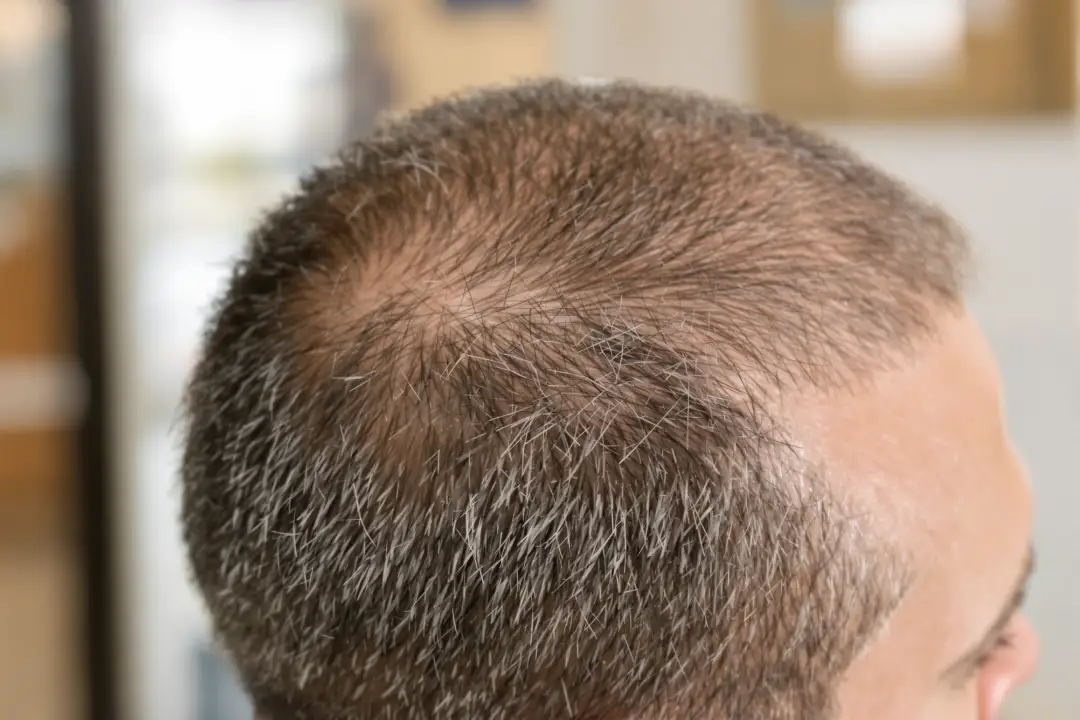
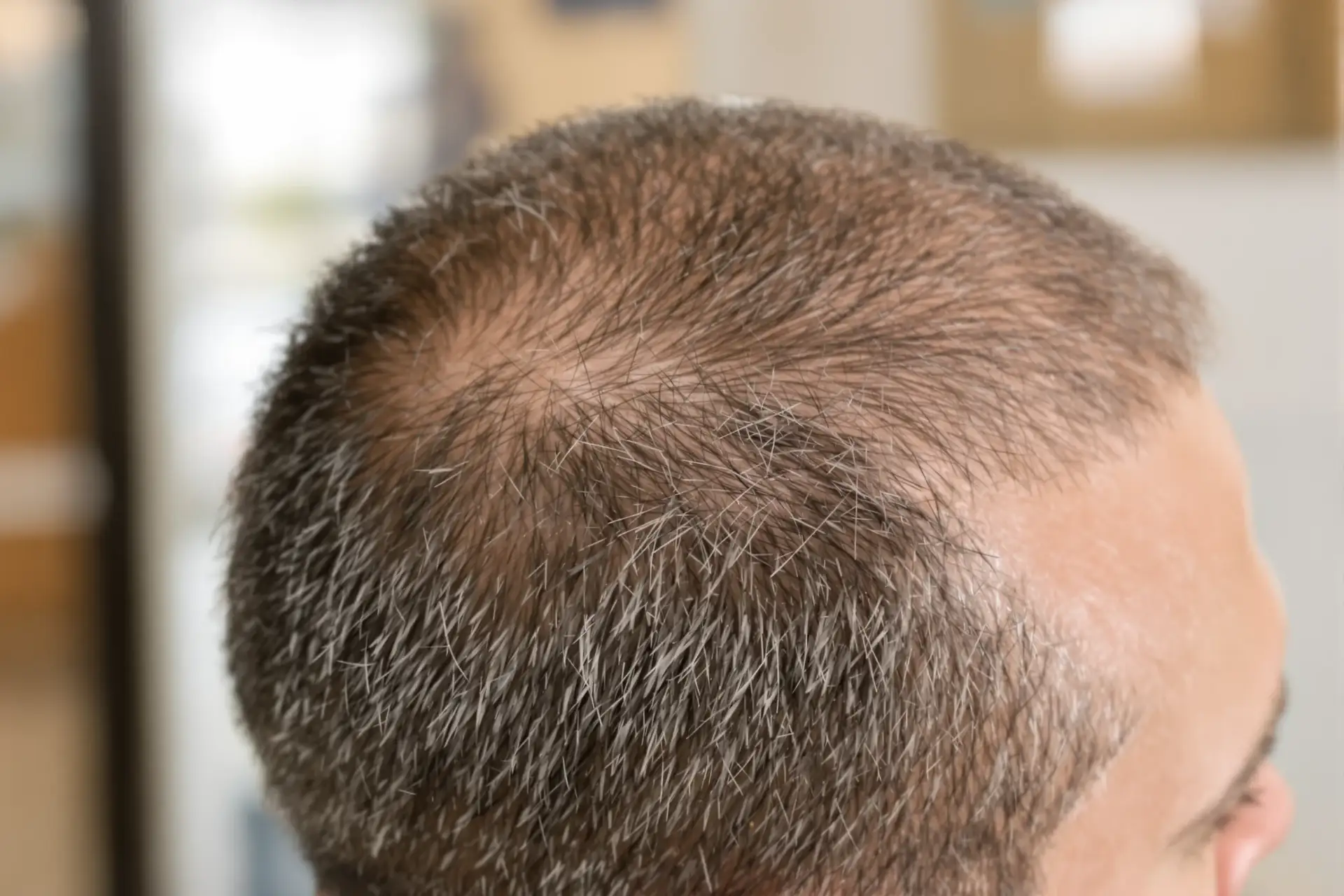
The crown can be transplanted, no question about that, and short answer: you're not limited to the hairline alone. But the crown, the vertex, has its own quirks. And your surgeon ought to be upfront about them.
A lot of patients bring this up because the before-and-after photos they see almost always focus on the hairline. Fair enough, the hairline frames the face, so it hogs the spotlight. But the crown matters too, especially as hair loss keeps creeping. So the real question isn't whether the crown can be done, it's how well the result holds up over time.
Two main challenges come with the crown, and first up: blood supply. The vertex sits where several vascular zones meet. That can make healing a bit less predictable than the front. Second: the whorl pattern. Hair on the crown grows in a circular, spiral direction. So grafts need to be placed at just the right angles to look natural. A surgeon who churns out one hairline after another might not have the same feel for that geometry. He got 2,000 grafts in the hairline, looked fantastic, but his crown spot? Untouched. Left him with a donut look. Don't let that be you
Crown thinning often continues, that's the real problem. If you transplant the crown without stabilizing your loss on finasteride or minoxidil, the native hair around the grafts may keep falling. You're left with a small island of transplanted hair on a bigger bald patch. That's why many surgeons prefer to wait until a patient is over 30 and their hair loss pattern is clearer. Frontal recession tends to slow down earlier, so for the hairline it's less of a concern.
So can you do both? Yes. Many single sessions split grafts between front and crown. But prioritization matters. With limited donor supply, say, 3000 grafts total, and needing both areas, the hairline usually comes first because it gives the most visual impact.
How many grafts does a crown hair transplant need?
The crown, often called the vertex, is a tricky area, and it's a circular patch that tends to widen over time. Because the scalp curves and hair grows in a swirling pattern, each graft must be placed at a precise angle. Graft counts for the crown usually run higher than for the hairline.
Restoring the full crown-the whole vertex-takes somewhere between 2,500 and 3,500 grafts. For advanced thinning (Norwood 6), you're looking at 3,500 to 4,000 grafts for the crown alone. Can you get away with fewer grafts and still look natural? That's probably the most asked crown hair transplant question . The short answer: no-not if you want coverage that actually holds up
Your natural hair density shifts that number up or down, and thick, coarse hair? 2,000 grafts might be enough to hide the thinning. Fine hair, on the other hand, might need 3,000 or more grafts just to fake fullness. The whorl pattern matters, too. Grafts have to follow the spiral direction, with no room for error. That curve usually chews up more grafts than a straight hairline would.
So does the technique- FUE vs FUT -change the number, and not really. The graft count stays the same whether you go FUE or FUT. What changes is how many you can do in one session . FUT can harvest up to 4,000 grafts in a single go. FUE typically maxes out at 2,500 to 3,000 per session. So for a big crown, one FUT surgery might replace two FUE sessions. Factor that in.
Patients ask me whether using finasteride or minoxidil first can cut the number of grafts needed. Meds may slow loss but won't fill a bare crown, and grafts are permanent. Think of medication as a supplement, not a substitute. Don't count on drugs to cut your graft count in half.
For most crown cases, expect 1,500 to 3,500 grafts, plan your budget and recovery around that.
Why does the crown look thinner than the hairline after a transplant?
That catches a lot of people off guard. Six months post-op, you look in the mirror: the transplanted hairline is dense, natural, solid. But the crown?
Still looks patchy.
That's not a mistake on the surgeon's part. It's biology and physics, honestly, doing exactly what they're supposed to.
Native follicle density is lower on the crown. Hairlines are typically packed at 40 to 50 grafts per cm². What about the crown, and 20-30 grafts. When you take grafts from the back and transplant them, the hairline gets a dense concentration right up front. The crown spreads the same number of grafts over a larger, more curved surface. A 2,000-graft session might cover the hairline well. Drop the same 2,000 grafts into the crown, and the picture changes. They simply spread thinner.
Blood supply plays a role too. Sitting at the back, the crown has weaker circulation than the fronto-temporal region.
Angle also comes into play, and hair at the hairline runs forward. It's relatively straight and grows at a predictable angle. Whorl pattern: hair spirals outward from a central point in the crown. Matching that natural swirl is technically challenging. Even skilled surgeons can end up with grafts that fall a little flat because the angle is off. Flat hair exposes more scalp.
Then they added crown work six months later and felt let down because the crown still had visible gaps. The solution isn't more grafts in one session. It's understanding that the crown often needs a second pass-a touch-up round six to twelve months later-to reach the density the hairline got in one shot. The hairline gets the star treatment. The crown plays the long game
A good surgeon will tell you this upfront. If they don't, that's a red flag.
Is the crown worth transplanting if I am still losing hair?
Frankly, that's the question that stops a lot of guys in their tracks. They see the bald spot widening and wonder if throwing money at it is just delaying the inevitable. That's the risk you need to weigh
The crown is a tough area. Male pattern loss usually follows the Norwood scale, and the crown is often the last region to stabilize. Transplanting the crown in your early 30s while still losing 50-80 hairs daily, without a plan for progressive loss, can produce a donut effect: dense transplanted hair surrounded by a fresh bald ring. That's not a good look.
So when is it worth it? Three things matter.
- Medication first. Without at least 12 months on finasteride or dutasteride, the crown should be left alone. You have to know your native hair is stable. Otherwise you're planting into quicksand.
- Donor supply. The crown can gobble up 2500-4000 grafts depending on the size. With an average donor (around 6000-8000 grafts total lifetime), using half on the crown might leave you short for the frontal area later. Prioritize the front and mid-scalp. The crown is cosmetic frosting.
- Realistic expectations. Density in the crown will never match what you had at 20. You're aiming for coverage, not thickness. A good surgeon will tell you that upfront. When a surgeon promises full, thick crown on a NW5 pattern with 2000 grafts, walk away.
They were happy. I've also seen the guy who skipped the meds, did the crown, and came back three years later asking for a repair. That repair costs double and the results are worse.
Which technique is best for the crown: FUE or DHI?
There's no single "best" technique that fits every crown. The vertex has a natural whorl-hair spirals in a specific direction. That makes angling every graft tricky, and fUE, and DHI each handle that differently.
Standard FUE: the workhorse
FUE punches a round hole, then grafts are inserted into a slit made with a blade. It works fine, but on the crown you lose some precision. The slit direction is controlled by the doctor's hand, and a round hole leaves a gap around the graft that can affect healing
FUE: sharper, smaller
FUE uses a harder, sharper blade that creates a smaller incision. That matters on the crown because you're packing grafts into a smaller area without crushing adjacent follicles. The harder tip lets the surgeon rotate the blade to match the whorl's curve. Still, if you need density and natural flow, it's a solid choice
DHI: tool-angle control
DHI (Direct Hair Implantation) uses an implanter pen-the graft goes directly into the scalp in one motion, without a pre-made slit. That gives the surgeon continuous angle control as they move around the whorl. For a crown with a tight spiral pattern, DHI can be a big win. But it's slower per graft, and some clinics push it as a premium upgrade without proven density advantages over good FUE. The real difference is less about final count and more about precision in that 2-3 cm area where the whorl turns sharply.
Standard FUE can still work if the doctor has steady hands and a microscope to check graft quality-but blades and DHI pens simply give more control. The trade-off is cost and time.