


Is a Hair Transplant in the Crown Area Successful?
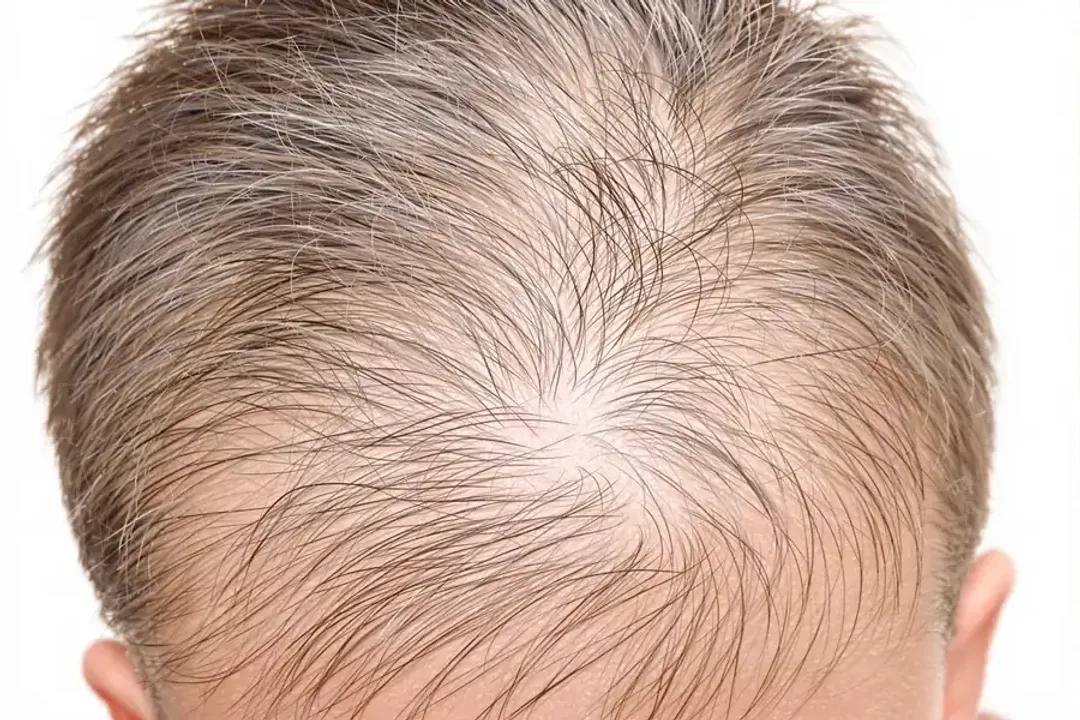
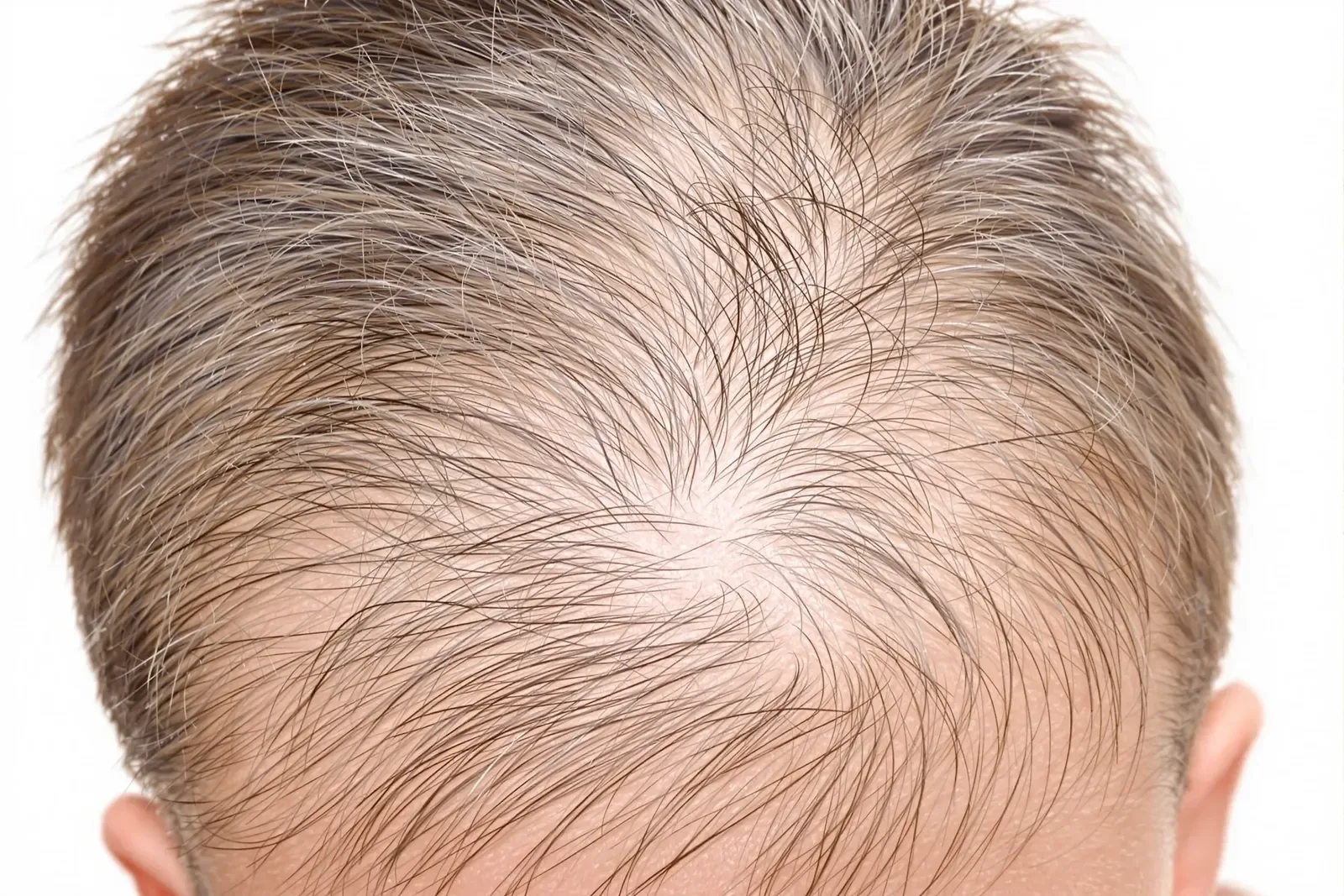
That sits only a few points behind the front of the scalp. But the crown is the one place where the answer comes with fine print. Grafts have to be placed into a whorl where hair spirals in several directions at once, and the blood supply there is thinner than the mid-scalp's. Any surgeon who claims the crown behaves exactly like the hairline is selling something
Keep a few realities in mind before you book:
- Transplanted crown hair sheds around weeks two to four. This is normal, not a sign of failure.
- Fresh growth shows around months three to four, and full density settles in by months twelve to eighteen.
- Most crowns take fewer grafts than people guess, roughly 1,500 to 2,500, because the whorl lies flat and masks early thinning.
Crowns aren't judged by the same standard as a hairline. You measure it by coverage and the way light falls on the whorl. Graft count per square centimeter matters far less.
What matters more is what happens behind the transplant five or ten years later. Male pattern baldness keeps advancing. If the loss moves past the grafted zone, you end up with an island of hair ringed by an expanding bald halo. Published figures mostly describe graft survival at 12 months. That 12-month figure says nothing about the cosmetic picture at year ten
Based on my experience reviewing patient results, those still satisfied at year five treated the crown as a long-term project. Staying on finasteride and planning a small touch-up were part of their routine. Most also accepted that the area behind the transplant could thin again.
How Many Grafts Are Needed for the Crown Area?
Fewer grafts are needed in the crown than the front, but the exact number depends on how much of that area is bare. If the crown is thinning but still has coverage, the typical graft total lands between 1,200 and 1,800. When the crown is completely bald in a Norwood class 5 or 6 pattern, the count climbs to 2,500 to 3,500.
Layout matters more than raw numbers. Unlike the front, the crown is a rounded zone whose size varies between men. In most cases it spans roughly 50 to 80 square centimeters. At the standard density for the back of the head, 25 to 35 grafts per square centimeter, that works out to about 1,500 to 2,800 grafts just for visible coverage. By comparison, the hairline gets 40 to 50 grafts per cm².
- A small crown with early thinning might need only 1,200 to 1,500 grafts.
- Moderate crown loss typically runs 1,800 to 2,200 grafts.
- Large or fully bald crowns need 2,500 to 3,500 grafts.
Why so much lower than the front? Two reasons. From above and at a distance, the crown reads differently, and hair here is usually styled over the area rather than parted. Density that would look thin at the hairline reads as perfectly normal on the crown. Whorl angle also helps, because hair lies flatter against the scalp and each graft covers more ground visually.
Here's the catch. Crown hair grows in a spiral, and each graft must follow that spiral's direction, or the result looks wrong from above
Progression is the second problem. Age brings more crown loss, and transplanted hair is permanent while the thinning around it keeps moving. Skip planning for that and you'll wind up with an island of dense hair surrounded by new bald spots. Competent surgeons factor this in, often keeping density modest to save grafts for later work.
One more thing worth knowing: most clinics cap a single session on the crown at 2,500 to 3,000 grafts. Pushing past that risks poor graft survival because the recipient area's blood supply gets overtaxed.
Prefer WhatsApp?
Send a photo of your hair on WhatsApp. A doctor replies with a free plan.
Crown Hair Transplant Growth Timeline: What to Expect at 8 Months and Beyond
Month eight is the quiet test for a crown transplant. By then, the frontal hairline usually looks settled and dense. The crown rarely does. That's normal
Why the difference? Of all scalp zones, the vertex is the slowest to respond. A good clinic tells you this before surgery: frontal growth shows around 3.5 months, crown growth closer to 4.5 or 5. Usually it's a timing problem, not a survival problem
Look at both zones in the same mirror and the crown seems to be failing. It isn't. Crown growth simply runs on a slower clock. There are two reasons the vertex answer slowly: it has a slender blood supply than the front hairline, and its whorl, your natural cowlick, scatters light in ways that make sparse growth look sparser
Here's what actually happens between month 8 and month 12:
- New shafts keep appearing, and they cluster mostly in the center of the bald patch.
- Existing grafts grow thicker in caliber, so each hair carries more visual weight.
- Curl and texture settle, and that alone adds coverage without a single new follicle.
- For a small number of patients, late growth still shows up at 14 to 18 months.
Shock loss complicates the picture further. If you lost native hairs around the vertex in the first weeks, those hairs can take until month 10 or 11 to fully recover, and they come back slowly. Save your concern for a crown that shows no new growth at all by the one-year mark
When grafts fail, they fail early. What looks like delayed failure at 8 months is almost always delayed growth
A common mistake is booking a repeat surgery at 9 or 10 months out of frustration. Doctors who agree to that are either rushing you or taking your money.
What Is the Regret Rate for Hair Transplants?
Regret rates aren't tracked the way complication rates are. No national registry keeps a tally of "I wish I had never done it" responses, so the number you see quoted depends entirely on who is counting. Independent reviews of patient-reported outcomes land in the same range. The true regret rate, meaning people who genuinely wish they'd skipped surgery, usually sits in the low single digits
For the crown specifically, the picture gets murkier. Growth is slower. Density gains are more modest. Beyond that, the balding pattern often keeps moving behind the transplanted area
That last point is where most late regrets are born: the so-called donut effect. With grafts placed in the crown, the native hair behind them continues to fall over the next five to ten years, leaving a ring of transplanted hair circling a bald patch. It is not a failed surgery. This is bad timing on top of a predictable progression.
What pushes someone from satisfied to regretful
- Picking a clinic on price per graft rather than on the surgeon's actual crown work.
- Demanding a density the crown can't safely support in one session.
- Undergoing the transplant too young, before the loss pattern has stabilized.
- Ignoring shock loss, which can temporarily look worse than the original thinning.
Realistic expectations take care of most of this before it turns into regret. Crown density rarely matches the hairline, and most men need a second session before the result feels adequate.
Crown Hair Transplant in Turkey: Packages at la clinica
The crown is the hardest zone on the scalp, and any surgeon who says otherwise is selling something. Hair here grows in a spiral called the whorl, while the blood supply is thinner than at the front of the head and grafts must be angled in several directions to match the natural swirl. That combination is why crown-area success rates run lower than the hairline
So what pushes a crown result toward the top of that range? Three things matter most.
- Whorl matching. A crown's cowlick spirals clockwise in most men. Implant the grafts at the wrong angle and you get dense, lifeless hair, a doll's head effect. At la clinica, teams mark the whorl's center first, then work outward from it, row by row.
- Graft count planning. Dense packing is a must here because the surrounding hair catches the light. Most crown sessions at la clinica run between 3,500 and 4,500 grafts. Under-fill the zone and you get a thin patch that never blends with the rest.
- Shock loss management. After surgery, the crown sheds more existing hair than the front does. That's normal
What the package actually includes
You won't see much at month 6. Real movement appears between month 10 and month 14, with final density taking up to 18 months
Standard crown packages cover the FUE extractions and implantation, a one-night stay with aftercare, airport transfers, and two PRP sessions six weeks apart. The PRP does real work here, supporting regrowth in a zone where blood supply is already weak. Follow-up checks run at month 6 and month 12 over video call.
Practical notes before booking:
- Ask for the whorl design plan before you pay. If the clinic cannot show you how they will map the spiral, walk away.
- Expect the crown to look worse before it looks better. Barely any growth at month 3 is normal.
- Confirm the package covers a second session if graft survival comes in below expectations. Reputable clinics price this in.