
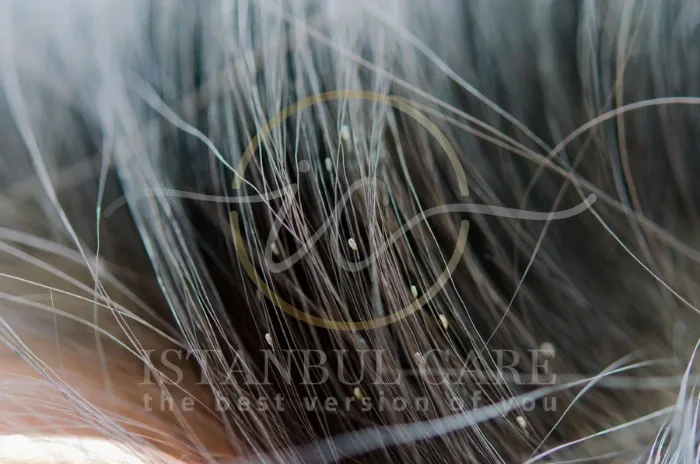


Head lice hair treatment starts with being sure that lice are really present, which means knowing what head lice and their eggs (nits) look like. The NHS says head lice are small insects, up to 3 mm long, that are picked up by head-to-head contact and are not caused by dirty hair. This guide describes how adult lice, nits and empty egg cases look and how treatment works, using NHS, American Academy of Dermatology (AAD), DermNet and MedlinePlus information, as of 26 November 2026. Decisions about treatment belong to your own pharmacist, doctor or dermatologist.
Key points
- Adult head lice are wingless insects about the size of a sesame seed. Nits (eggs) are yellow, brown or tan and cemented to the hair close to the scalp before hatching, and clear or whitish afterwards.
- The NHS says the only way to be sure someone has head lice is by finding live lice, using a fine-toothed detection comb.
- The NHS recommends wet combing and, if that has not worked, a medicated lotion or spray; it lists products containing permethrin, repellents, electric combs and plant oils as not recommended.
- The AAD says to use only one lice product at a time and to see a dermatologist if at-home treatment does not work.
- The AAD says mayonnaise, olive oil and petroleum jelly have not been found to be effective.
- Head lice are not known to spread disease and are not a sign of poor hygiene.
What do head lice look like?
MedlinePlus describes head lice as tiny insects that live on people's heads and says adult lice are about the size of sesame seeds. DermNet adds that the louse has a flattened, elongated grey body that becomes reddish after feeding, and clings to the hair shaft while moving rapidly from hair to hair. The NHS says lice can be difficult to spot in the hair. The table summarises how each stage looks.
| Stage | How it looks | Where it is found |
|---|---|---|
| Adult louse | A small, wingless insect, up to 3 mm long; grey to light brown, reddish after feeding; moves quickly | On the scalp and hair, most often at the neckline and behind the ears |
| Egg (nit) before hatching | Yellow, brown or tan and seed-like, with a dark area within the shell | Cemented to individual hairs, mostly within a few millimetres of the scalp |
| Empty egg case | Clear, transparent or whitish; not infectious | Can stay on the hair after successful treatment unless physically removed |
DermNet says eggs hatch after about 8 days and the nymph (young louse) reaches full maturity around 10 days after hatching. An adult louse survives on the scalp for about one month. The NHS says nits are brown or white and attached to the hair, and DermNet notes that white nits do not contain live eggs.
Prefer WhatsApp?
Send a photo of your hair on WhatsApp. A doctor replies with a free plan.
Symptoms and how to be sure
The AAD says head lice can make the scalp extremely itchy, that scratching can cause sores that may lead to an infection, and that some people lose sleep because the itch is so intense. MedlinePlus also lists a tickling feeling in the hair.
The NHS says the only way to be sure someone has head lice is by finding live lice, using a special fine-toothed detection comb that can be bought online or at pharmacies. The AAD says nits are more likely to be seen than adult lice because they are firmly attached to the hair and do not move.
How do head lice spread?
The NHS says head lice are picked up by head-to-head contact and are not caused by dirty hair. MedlinePlus and DermNet say lice cannot hop, jump or fly and spread by crawling. MedlinePlus adds that they can rarely spread through sharing personal belongings such as hats or hairbrushes. DermNet says lice die within one to two days away from the scalp if they cannot feed. The AAD says head lice are not known to spread disease.
Head lice hair treatment: what the NHS and AAD recommend
UK and US sources differ in some details, so this section names who says what. Product instructions and the advice of a pharmacist or doctor come first.
Wet combing (NHS)
The NHS says lice and nits can be removed by wet combing. Usually you wash the hair with ordinary shampoo, apply lots of conditioner (any conditioner will do) and comb the whole head of hair from the roots to the ends with the detection comb. It says it usually takes about 10 minutes to comb short hair and 20 to 30 minutes for long, frizzy or curly hair, and that the hair should be combed through a second time at the end. The NHS says to do wet combing on days 1, 5, 9 and 13 to catch any newly hatched head lice, and to check again that everyone's hair is free of lice on day 17. DermNet says nit combs used in wet hair are the most effective way of physically removing lice and nits, and that metal combs are best for thick hair while plastic is kinder on fine or long hair.
Medicated lotions and sprays
If wet combing has not worked or is not suitable, the NHS says you could try a medicated lotion or spray, which kill head lice in all types of hair and can be bought from pharmacies, supermarkets or online. It says head lice should die within a day, that some treatments need to be repeated after a week to kill newly hatched lice, and that the pack shows whether the product is suitable and how to use it. DermNet names 4% dimethicone (also spelt dimeticone) as the main suffocating agent used to kill adult and nymph lice and reports cure rates of 69–92% after two applications one week apart. The NHS advises speaking to a pharmacist about other treatments if lotions or sprays do not work.
Non-prescription and prescription products (AAD)
The AAD says lice products are available without a prescription. Its tips include following the directions, using only one product because using two can be harmful, using only the amount stated because more can be harmful, and using the lice comb that comes with the shampoo. It says to look at the hair 8 to 12 hours after treatment: if the lice seem as active as before, the medicine may not be working, and you should not treat again but talk with your dermatologist. It says retreatment is usually done seven to nine days after the first treatment, because no approved treatment can kill all the eggs during the first treatment. If at-home treatment does not work, it lists FDA-approved prescription medicines including benzyl alcohol lotion, ivermectin lotion, malathion lotion and spinosad suspension, and says malathion is very potent and must be kept away from eyes and flames.
Treatments that are not recommended
The NHS lists treatments that are not recommended because they are unlikely to work: products containing permethrin, head lice repellents, electric combs and plant oil treatments such as tea tree, eucalyptus and lavender oil. DermNet says resistance to permethrin, phenothrin and other pyrethrins has increased to the point that they are no longer recommended in the UK. The AAD says non-prescription lice shampoos and cream rinses can fail because lice have become immune to ingredients that have not changed for years.
The AAD says petroleum jelly, mayonnaise, butter, margarine and olive oil have not been found to be effective and may only make lice less active for a while. MedlinePlus says there is no clear scientific evidence that home remedies such as mayonnaise or olive oil suffocate lice, and that kerosene or gasoline must not be used because they are dangerous and flammable.
Why treatment can fail
DermNet lists an inactive infestation (white nits do not contain live eggs), reinfestation from another person, improperly applied treatment, resistance of lice to insecticides and misdiagnosis as reasons why head lice treatment fails.
Family, household and school
The NHS says to check everyone you live with or have close contact with and to start treating anyone who has head lice on the same day. The AAD says not to treat anyone who does not have head lice, but to check everyone every day for 10 to 15 days.
Advice on school and laundry differs. The NHS says there is no need to keep a child off school or to wash laundry on a hot wash. The AAD says to wash items that touched the person's head during the past two days in hot water and dry them in a hot dryer. MedlinePlus lists hot-water washing and hot-cycle drying, vacuuming, and sealing items that cannot be washed in a plastic bag for two weeks, and says to check school or daycare policies. A pharmacist, doctor or the school can help when sources disagree.
What this means for hair and scalp
DermNet says scratching can cause crusting and scale on the scalp and hair pulling can lead to small areas of hair loss. It says a heavy infestation can lead to dermatitis (red, scaly, itchy plaques), a secondary bacterial infection (impetigo) with crusted sores, and tender swollen lymph nodes.
When to see a doctor or pharmacist
- The NHS says head lice can be treated without seeing a GP, and that a pharmacist can advise about other treatments if lotions or sprays do not work.
- MedlinePlus advises checking with a health care provider first if the person is pregnant or nursing, or if a treatment is to be used on a young child.
- The AAD says to see a dermatologist if at-home treatment does not work, if you have trouble getting rid of the lice or if you have an infection from scratching.
- The AAD, citing the CDC, warns that using extra amounts of lice medication can be harmful and that this should only be done if a doctor or pharmacist recommends it.
Frequently asked questions
Do head lice spread disease?
No. The AAD says head lice are not known to spread disease, and MedlinePlus says they do not spread disease.
How long can head lice live away from the head?
DermNet says an adult louse survives away from the scalp for up to 48 hours.
Does an empty nit shell mean lice are still active?
Not necessarily. DermNet says hatched eggs are transparent or whitish, may persist after successful treatment unless physically removed, and are not infectious.
Can medicated lotions or sprays prevent head lice?
No. The NHS says not to use medicated lotions and sprays to prevent head lice because they can irritate the scalp.
Related reading
- Hair transplant procedures
- Hair loss: causes and treatments
- Hair transplant cost in Turkey
- Infected hair follicles
- Lice vs dandruff: a guide to prevention and treatment
Sources and further reading
- NHS: Head lice and nits
- American Academy of Dermatology: Head lice: Overview
- American Academy of Dermatology: Head lice: Diagnosis and treatment
- American Academy of Dermatology: How to get rid of head lice when treatment fails
- DermNet: Head lice
- MedlinePlus: Head lice
Medical information note: this article is general information prepared by the Istanbul Care editorial team from the sources listed above. It is not a diagnosis or a treatment plan and does not replace advice from your own doctor, pharmacist or surgeon, who know your medical history.