


What Is a No-Shave Hair Transplant
Take a guy in his late 30s, senior role, meetings back to back. He needs the work done, but walking into the office Monday looking like he tangled with a clipper? That's out.
That's the entire reason no-shave hair transplants exist.
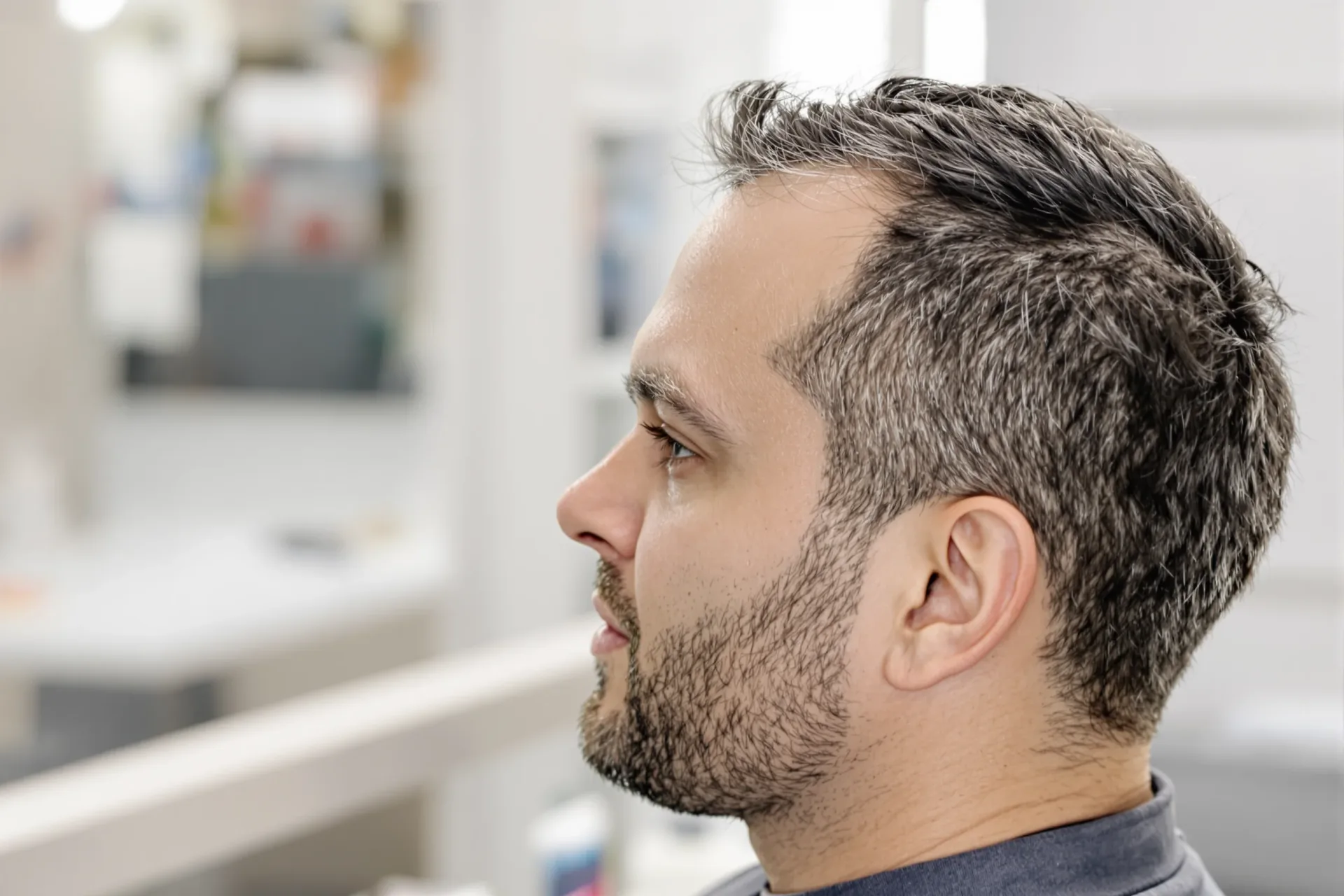
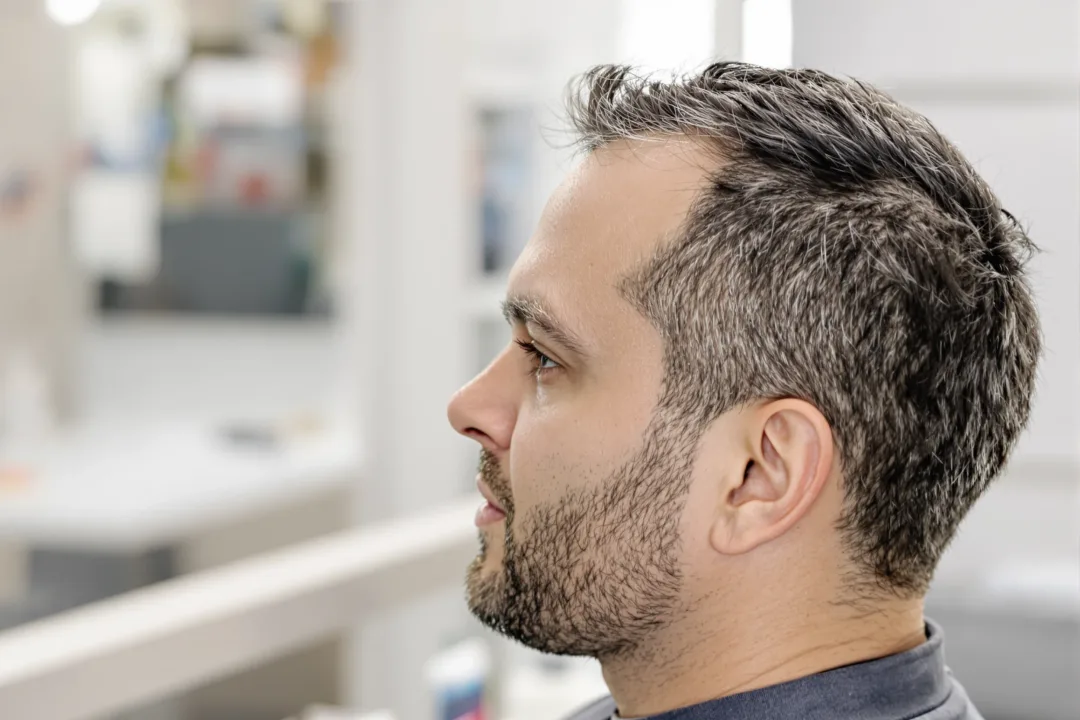
The technique is a variation on Follicular Unit Extraction, FUE for short. The core difference? The surgeon shaves only a narrow strip of the donor area, usually the back of the scalp, and leaves the rest of your hair at its normal length. The recipient area, where grafts go in, stays untouched. No one sees that shaved donor band unless you lift your hair. And even then, it's only about two centimetres wide, and it heals within days.
How it differs from standard FUE
In a classic shave FUE, the whole scalp gets buzzed down to 1-2 mm. That gives the surgeon perfect visibility, and speed. But it also puts your recovery on display for the world. With the no-shave method, extraction takes longer, the surgeon works through longer hair, which demands more care. You're looking at roughly 50 to 100 grafts per hour instead of maybe double that. But the trade-off is you walk out of the clinic looking like you just had a normal day.
The grafts themselves are the same. Each one gets pulled from that shaved strip and transferred into tiny incisions in the thinning or balding areas. The longer hair on top hides those little incisions almost right away. After the first wash, most people can head back to desk work without anyone clocking what happened.
Who it actually suits
Not everyone is a candidate. If you're looking at a high graft count-say, 3,000 or more-the surgeon will probably recommend the full shave. The no-shave method works best for shorter sessions, up to about 1,500 grafts. It also works well for touch-ups in the hairline or crown-places where the existing hair easily hides the recipient sites.
How It Differs From a Standard Shaved Procedure
Who Actually Qualifies?
Sitting for an unshaven session isn't for everyone. The surgeon needs stable donor density : at least 60-70 FU/cm², often higher. The reason? When the donor area is borderline, the extra extraction time-roughly three times longer-raises the transection risk. The rest either shaved or went elsewhere
- Donor density has to be thick enough to hide the extraction sites.
- Your existing hair length needs to be at least 3 cm to cover the work.
- Your first transplant, and ideal for no-shave. Scar revision cases? Those are trickier.
- Extensive balding, Norwood 5 and beyond, usually means two sessions.
- Prior strip scar? The no-shave technique makes dodging it tougher.
Consider a patient I know: 40 years old, Norwood 3a with a thinning crown, hair never below 5 cm for work. He wanted 1,500 grafts. Two London clinics quoted him prices that required shaving. Day one, he went to dinner without a hat. That's the real appeal
Timeline and Results - What Changes?
The shedding phase is the same: grafts fall out around 2 to 4 weeks after surgery. The difference? With a shave, you hide a bald patch on the back while you wait. With a no-shave transplant, your donor hair grows straight through, and part your hair differently, and the scabs stay hidden. Growth kicks in the same way, 3 to 4 months for vellus hairs, 9 to 12 months for full density.
Stage Shaved FUE Unshaven FUE Day of procedure Visible shaved patch Donor looks untouched Week 1 Redness + scabs on shaved area Scabs hidden in existing hair Month 1-2 Shedding + awkward regrowth Shedding, but donor still normal Month 9-12 Full coverage Full coverageNo weeks of hiding under hats. That's a big deal for client-facing professionals, or anyone who'd rather skip the conversation
Prefer WhatsApp?
Send a photo of your hair on WhatsApp. A doctor replies with a free plan.
Who Is Suitable and Who Is Not
A no shave hair transplant isn't for everyone. The technique requires specific conditions from both your hair and your goals. To keep your length visible during the procedure, you need enough donor coverage to hide the extraction sites, usually meaning decent density of longer hair around the back and sides.
Ideal candidates tend to share a few traits:
- Small to moderate graft counts. Most surgeons cap unshaven FUE at around 2,000-2,500 grafts per session. Beyond that, the tiny extraction marks become too noticeable to hide, even with longer hair brushed over them. If you need 3,000+ grafts, a shave-based or partial shave approach is usually the realistic route.
- Donor hair at least 3-4 cm long, and shorter donor hair won't cover the extraction points well. The longer your donor hair, the easier it is to style over the treated area
- Flexibility with styling. You'll likely need to keep your hair down or slightly parted for the first week or two after surgery. If your job or social life demands a very neat, swept-back look, that might be harder to manage.
On the other side, a no shave transplant is less suitable for:
- People with very fine or thin donor hair. Weak coverage means the tiny extraction spots are more visible, and the effect can look patchy.
- Those expecting a quick, low-fuss procedure. Unshaven FUE runs longer, 6 to 8 hours a session, since the surgeon works around existing hair instead of cutting it. That makes it slower, and a lot more meticulous.
- For patients with advanced baldness, Norwood 5 to 7, that's the downside.
Graft Limits and Why They Are Lower
Let's be clear from the outset. If you're eyeing a no shaving transplant hoping for 4,000 grafts in one go, reset those expectations. Simple math is against you.
Why the ceiling drops
In a shaved FUE, the surgeon can use nearly the whole back and sides. The donor area is exposed and fully accessible. They work fast, 500 to 700 grafts an hour, without fussing over surrounding hair. So 3,000 to 4,000 grafts in a long day is realistic.
Unshaven FUE flips that entirely. A surgeon can't just grab the closest follicular unit. It means parting through long hair, isolating each graft, extracting cleanly, then moving on, all without nicking the hair that stays. Time adds up. Real time.
Extraction slows to 200-350 grafts per hour, and faster surgeons on good days might push 400. But that's still a fraction of the shaved pace. A 1,500-graft session runs four to six hours under the best conditions. Pushing beyond that risks fatigue, sloppy extractions, and higher transection rates - damaged follicles that won't grow.
The practical numbers
Most reputable clinics cap unshaven sessions at 1,500 to 2,000 grafts. Some go as low as 1,000 if the patient's donor density is average or the hair is fine. Why? Because the available donor strip - the safest zone for extraction - hasn't grown. It's still roughly the same surface area as a shaved procedure. But the usable grafts, given the access limitations, are fewer.
Here's a comparison that makes it concrete:
Factor Shaved FUE Unshaven FUE Typical grafts per session 2,500 - 4,000 800 - 1,800 Extraction time per 100 grafts ~10 minutes ~20-30 minutes Number of sessions needed 1-2 for most cases 2-3 for moderate loss Best for High-density, large areas Small to moderate thinning, crown work, touch-upsSo if you have advanced Norwood stage 4 or higher balding - say, you're losing the whole front half and the crown - a single no shave hair transplant session isn't going to cover it. You're looking at two or three procedures spaced eight to twelve months apart. That's the trade-off for keeping your hair hidden during recovery.
I've spoken to patients who were dead set on the unshaven route, then did the math on grafts and timing. Some switched to a partial shave - trimming the donor zone short while leaving the top long - just to bump the session size closer to 2,500. That hybrid approach splits the difference.
Simple takeaway, really. Unshaven FUE delivers. But it delivers in smaller batches. If your loss is substantial, plan for multiple visits, and budget for the extra time per graft. You're paying for precision, not speed. That's the cost of walking out of the clinic looking like nothing happened.
Recovery and Concealment
Here's the main selling point of a no shave hair transplant : no one has to know you had one. Recovery looks different here compared to the shaved version, mostly because your existing hair acts as a built-in cover from day one.
Visually, the first 48 hours are the most obvious. Tiny scabs form around each graft, they look like small red or dark dots at the recipient site. Under 3x magnification they're noticeable to you in the mirror, but at conversational distance? I've had patients walk into a coffee shop on day 2 and no one blinked. Your donor area, typically the back of the head, stays completely hidden unless you're sporting a very short crop.
Days 3 through 5 bring some swelling. Settling usually around the forehead and eyes, it peaks in the morning and fades by evening. Ice packs help a lot. By day 5, most people feel comfortable enough to head back to desk work. Grafts are secure by this point, but gentle washing is still a must.
Week two, and that's the turning point. Scabs fall off on their own, don't pick at them. The recipient area might stay pink for another week or two, but your existing hair covers it. By day 10 or 12, I've noticed even close friends rarely catch on. They figure you got a haircut or a new product.
Three weeks out, most people have the redness fade away, and shedding kicks in around here, normal. Just the dormant phase before regrowth starts. Externally, your hair looks exactly like before, except the donor area might look thinner for a short while.
Concealment tips that actually work: