


What Is Norwood 2 Hair Loss?
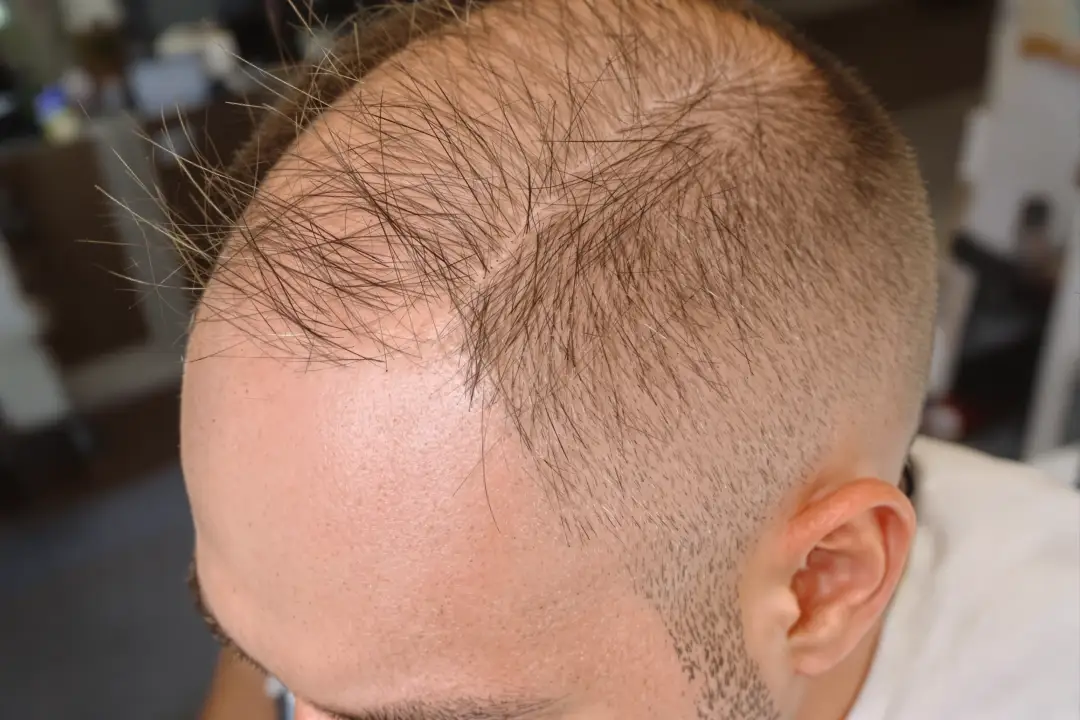
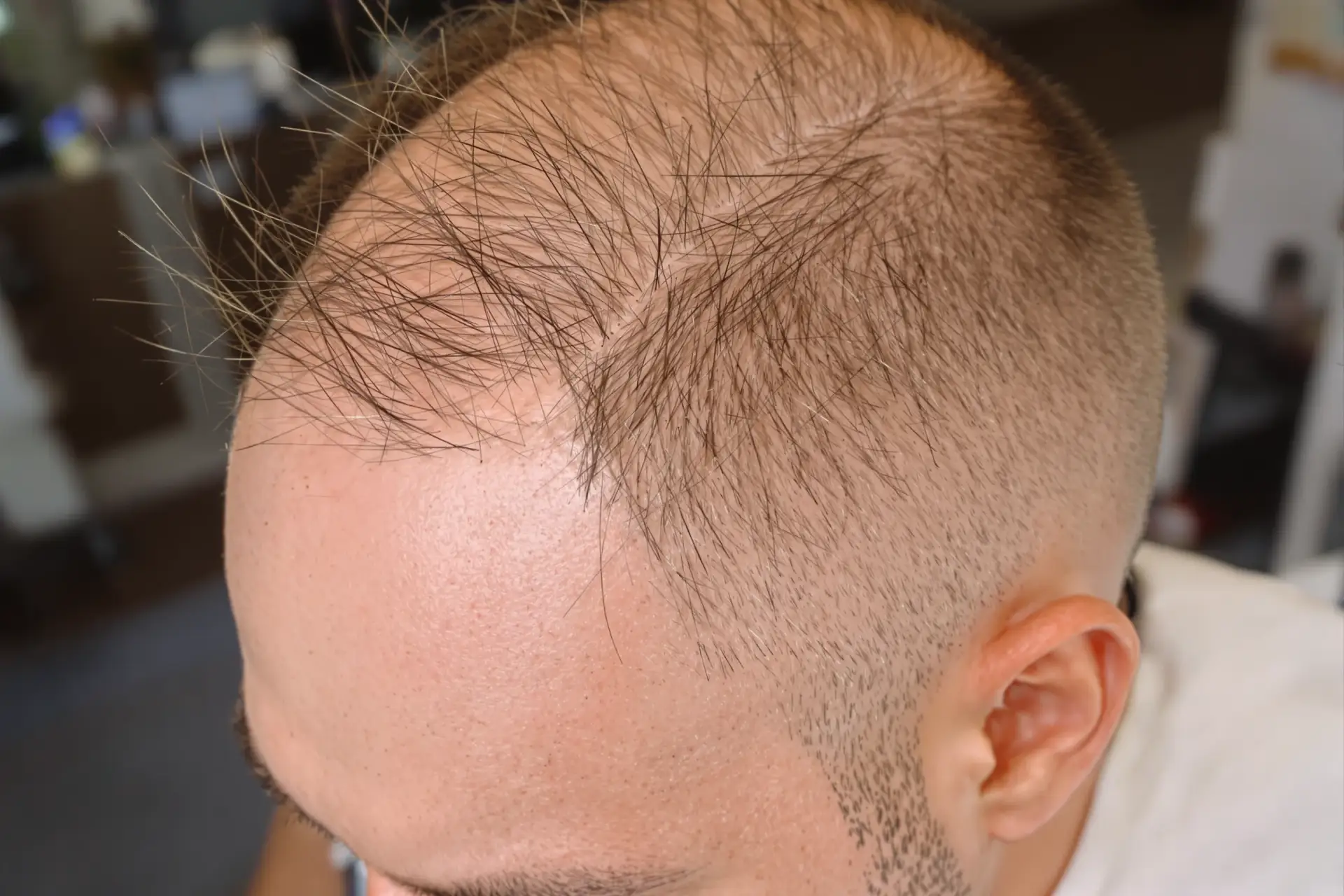
Norwood 2, that's the first point where male pattern hair loss becomes visibly noticeable. At the temples, the hairline pulls back symmetrically, leaving a shallow triangular shape. The front hairline holds firm. The crown? No sign of thinning. It's a subtle shift, most people wouldn't call it balding. Many men at this stage have a hairline that simply matured, moving from a straight juvenile line to the adult V-shape. It doesn't always keep progressing.
So how do you know if Norwood 2 is real hair loss or just a mature hairline? The key sign is miniaturization, thinner, shorter hairs along the receding edge. A dermatologist confirms it with a quick trichoscopy. If a man in his 20s sees steady recession over a couple of years, it's usually early androgenetic alopecia
Surgery at this stage is rarely a medical necessity. Most surgeons ask first: 'Is the loss stable?' If the loss is still active, transplanting into receding territory leaves unnatural gaps down the road. That's why a Norwood 2 transplant is typically reserved for men with clearly stabilised loss, or for those seeking very minor refinement, like lowering a temple peak by a few millimeters. The general graft range is 800-1,500, depending on how much temple fill is wanted and the density of the donor area. But no responsible clinic will promise a fixed number without a scalp exam.
For the right candidate, the aesthetic gain is subtle but real.
The hairline looks slightly fuller without appearing transplanted.
It's a refinement, not a reconstruction.
Is Norwood 2 Too Early for a Hair Transplant?
Quick answer: For most men, Norwood 2 is not too early - but it depends on your pattern and age. Norwood 2 shows minimal recession at the temples, often symmetric. Many men at this phase are simply maturing rather than balding. If your hair loss has been stable for 1-2 years (no further thinning at the crown or mid scalp), a small refinement can be reasonable. The typical graft range is 800-1,500 grafts, individual-dependent - never a fixed promise. Jumping in too young (under 25) or without stabilising medication (finasteride/minoxidil) often leads to a second, larger surgery later. So yes, Norwood 2 can be treatable, but only with the right context.
Want to see realistic before-and-after results for this stage? We have a gallery of Norwood 2 cases at la clinica. You can request a personalised assessment - just share a few photos, and our medical team will tell you if you're a good candidate now or should wait. Every case is different.
What to Expect
The transplanted hairs will shed within 2-4 weeks - that is normal, not a failure. New growth starts around month 3-4, gradually thickening, and full density usually appears around month 12. That is when trustworthy before-and-after photos are taken. The temple points and hairline shape take the longest to settle. Be patient. The first six months can feel like a rollercoaster, but the outcome at one year is usually stable and natural-looking.
If you're considering a Norwood 2 hair transplant, make sure your donor area is healthy (mid-to-good density) and that you have realistic expectations. A Norwood 2 procedure is a subtle restoration - it lowers and refines the hairline, not a full coverage job. Most transplant patients at this stage report high satisfaction because the change is noticeable but not dramatic. The key is honest planning with your surgeon, and no one wants to fix a botched hairline later.
How Many Grafts Are Needed for Norwood 2?
Quick answer: For a Norwood 2 pattern, the typical graft count falls between 800 and 1,500 grafts. This is one of the smallest sessions in hair restoration because only the temple peaks need subtle rebuilding and the frontal hairline is usually still intact. The exact number depends on your hair thickness, desired density, and whether you want a slightly lower hairline or a more conservative fill.
Norwood 2 is the earliest point on the scale where a transplant is worth considering. Temple recession is limited, and the hairline shape stays mostly normal. At la clinica, roughly one in four transplant patients falls into this category. Most of them are between their late 20s and early 40s. A smaller procedure, a typical session runs 900-1,200 grafts and is completed in 4-6 hours. Since the donor area is untouched, healing is fast-scabs clear in 10-12 days
But not everyone at Norwood 2 involve a transplant, and many men at this stage have stable hair loss. They're maturing, not balding. Good surgeons check family history, examine hair density under a microscope, and ask about medication (finasteride or minoxidil). The smarter move: monitor for 12 months, then decide. If the recession keeps progressing, a transplant can still be done once the pattern settles
Graft Count Factors: Hair Thickness and Desired Look
Two patients with the same Norwood class can need very different graft counts. Main variables are hair calibre and target density. Someone with fine, thin hair (say, 50 microns in diameter) might need 1,400 to 1,500 grafts to achieve visible fullness. A person with coarse hair, 80 microns or thicker, can hit the same visual effect with 800 to 1,000 grafts. The table below pulls together the common scenarios we've seen at la clinica over the last two years.
Real Case: A 40‑Year‑Old Norwood 2 Patient
Take a patient we'll call Mehmet, he came to la clinica in 2024.
What to Expect After a Norwood 2 Hair Transplant
Quick answer: After a Norwood 2 transplant, you'll shed those transplanted hairs within 2 to 4 weeks, totally normal. Growth starts around month three, and the final look settles in around month twelve. The procedure adds density to the temples and drops the hairline by a bit, but since Norwood 2 is only a small recession, the result looks natural, not dramatic. Most people won't notice you had anything done, and they just notice something looks better.
If you're curious how subtle the change really is, ask the clinic for Norwood 2 before-and-after photos at the 12-month mark. That's the only honest way to judge. Then book a free assessment, a doctor has to check your donor density and current miniaturization to tell if you're a good candidate this early on.
What to Expect
Weeks 1-2, and tiny crusts form around each graft. They fall off on their own by day 10. The recipient area will look pink and slightly bumpy. No heavy scabbing if the team was careful. After 5-7 days, you can return to work.
Weeks 2-4, and this is the shedding phase. Almost every transplanted hair falls out. It looks like nothing's left. Don't panic, the follicle is alive under the skin. Itch can be maddening. Resist the urge to scratch.
Months 3-4. New hairs push through. They come in thin and wispy, often in patches. Some patients see a shadow of density. Others feel impatient. That's normal. The new hair will match your native hair texture over time.
Months 6-9. Noticeable improvement. Your temples fill in, and the hairline looks less recessive. But the hairs are still finer than mature hair. Don't jump to conclusions about the final result just yet.
Month 12. Full density settles in. The transplanted hairs thicken to match your natural caliber. Clinics use this point to take their official after photos. Compare a Norwood 2 hair transplant before and after at 12 months and the difference is clean: a restored temple point, a softer transition, no more V-shaped recession.
Norwood 2 is about refinement. With standard hair-loss medication, the result holds for life if you need it
Norwood 2 Hair Transplant Results: What’s Realistic?
Quick answer: How realistic is it? That's a tricky question. Norwood 2 is so early that most men at this stage are just maturing, not balding. A small transplant, commonly in the 800-1,500 graft range, can refine an uneven hairline or fill a slight temple hollow. But the result looks like a subtle adjustment, not a transformation. Many patients end up wondering whether they needed it at all. That's why we're honest about it: if you're Norwood 2, you might be better off waiting six months and taking photos to track whether the loss is actually progressing.
To see what an 800-graft temple refinement looks like at month 12, browse the real Norwood 2 results in our patient gallery. Every photo you'll see here was taken one year after surgery, the point when transplanted hair is fully grown and the before-and-after comparison finally makes sense. Once you've looked through a few examples, request a personal assessment . We'll look at your photos and tell you straight, yes, this could work, or no, let's hold off until the pattern shows itself more clearly.
What to Expect
The timeline is standard. Transplanted hairs shed somewhere between week 2 and week 4 (that's normal)not a bad sign. New growth starts poking through around month 3-4, and it'll look thin for a bit. By month 6, you'll see real coverage.