
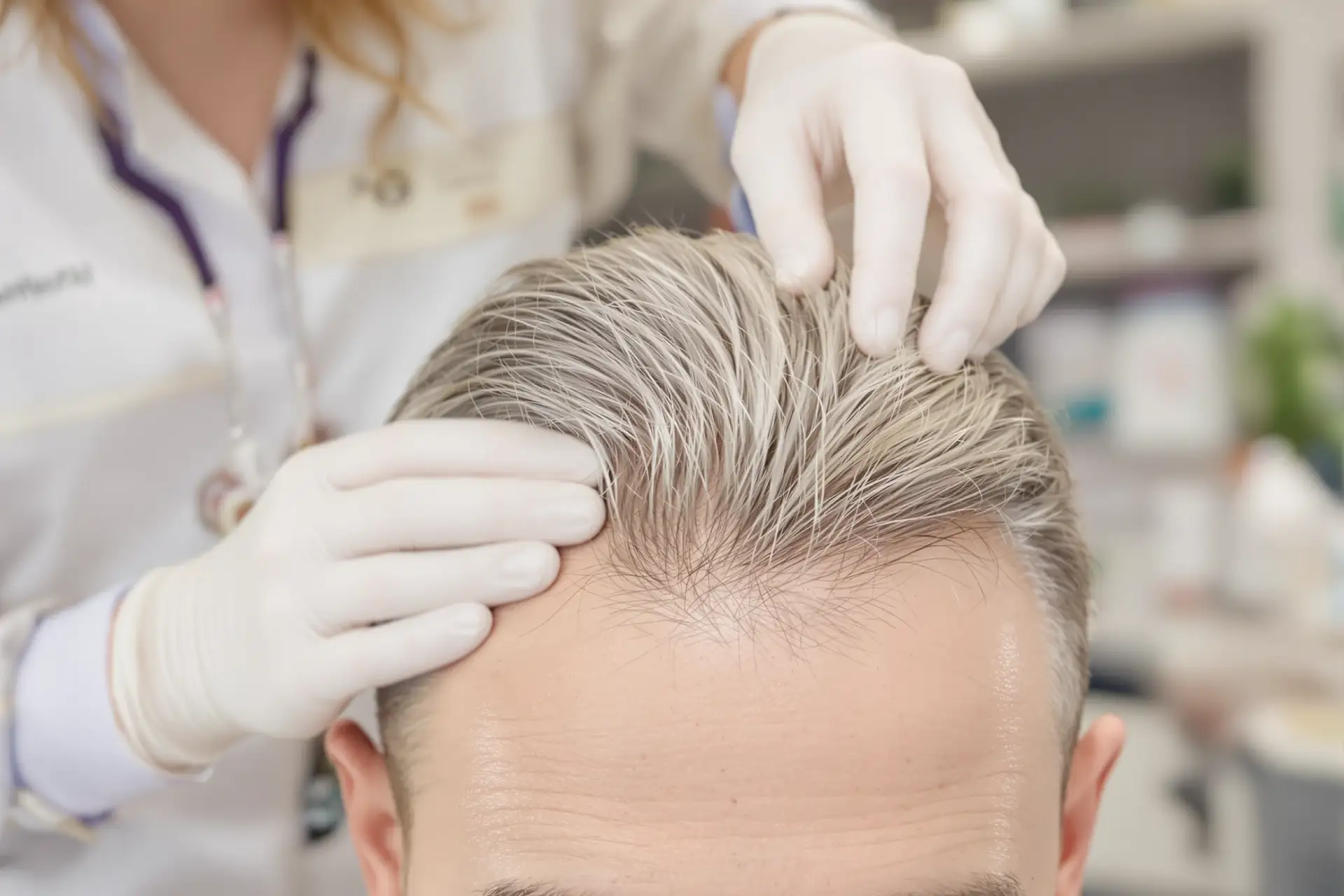



Crown Transplant Basics
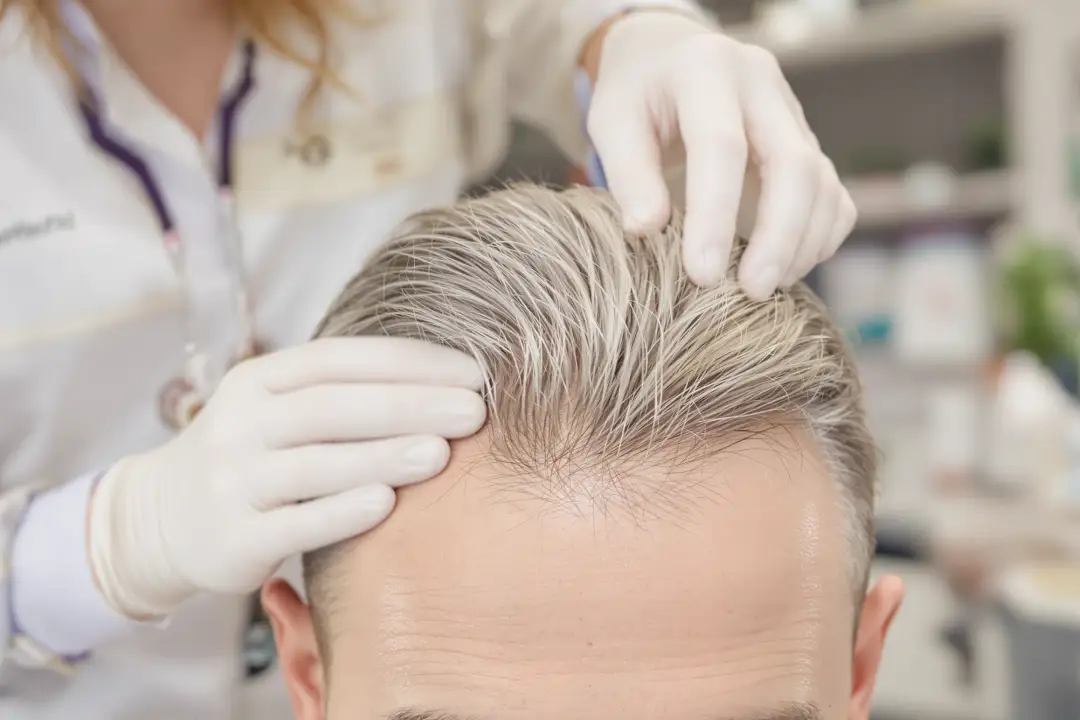
When researching crown restoration, a common question is how the back of the head differs from the front. The crown-or vertex-has a spiral hair pattern, thinner blood supply, and a tendency to expand over time. So any transplant there must consider future balding. A solid plan can mean the difference between natural coverage and a bald spot that keeps growing.
How many grafts does a crown transplant typically need?
It depends on the Norwood class and the size of the area. A small vertex loss (Norwood 3V) might need 1,200-1,800 grafts. A larger crown (Norwood 5 or 6) can require 2,500-3,500 grafts just for the vertex. Many clinics suggest starting conservatively, with around 1,500 grafts, then reassessing after 12 months. Donor supply is the real limit. If a patient has only 6,000 grafts total, spending half on the crown could limit future restoration of the front.
Is crown transplant harder than the front?
Yes, for a few reasons. The whorl pattern requires grafts to be angled precisely to follow the swirl. Otherwise, it looks unnatural. Shock loss is more common in the crown because blood vessels are fewer. Crown hair often grows slower, so final results can take 12-18 months, compared to the usual 8-12 months for the hairline. That is why some surgeons recommend tackling the front first and revisiting the crown later.
Does FUE or FUT work better for the crown?
Both methods can work, but FUE is more popular for crown restoration because it leaves tiny dot scars instead of a linear strip scar. With FUT, the linear scar can become visible if crown balding expands and the scar ends up in a thinning area. FUT can harvest more grafts in one session, which helps when 3,000+ grafts are needed. The trade-off involves a linear scar and a longer recovery. Some patients choose FUE for the crown and FUT for the front, splitting the approach.
What density can you realistically expect on the crown?
Crown coverage is almost never as dense as natural, unaltered hair.
Planning Your Crown Transplant
Planning a crown transplant differs from restoring the front hairline, and the crown has a natural whorl pattern. This natural swirl makes graft placement more challenging. If the angle is missed, the result looks matted or unnatural.
How many grafts does the crown usually need?
Most patients need 2,000 to 3,500 grafts for full coverage. A smaller crown, such as Norwood class 4 vertex, may require as few as 1,500 grafts. It is best not to guess, and a surgeon will measure the bald area in cm². About 25-35 grafts per cm² are needed for moderate density. That adds up quickly. Others budget for 1,800 grafts and later learn they actually need 2,800.
Does the crown heal differently from the front?
Yes, and the scalp at the crown has a denser blood supply. Healing is slightly faster, but swelling is more pronounced. Scabbing typically lasts 7-10 days. Patients can shower normally around day 10. Redness may persist for 3-4 weeks. Visible new growth appears around month 4. Full density develops around months 12 to 14.
Should I choose FUE or FUT for the crown?
Both techniques are effective, but FUE is typically preferred for crown procedures. Why, and no linear scar appears with FUE. If patients later shave their heads, a strip scar on the crown is difficult to hide. Dot scars from FUE are tiny and fade into the whorl. Also, FUE allows the surgeon to select the strongest follicles from a wider donor area. Clinics sometimes claim FUT offers better graft survival from cooler extraction. Below is a quick comparison.
Crown Transplant Recovery & Results
How long does crown transplant recovery take?
Crown recovery follows a standard timeline, and for the first week, expect scabbing, minor swelling, and some numbness. By day 7 to 10, most scabs shed, and patients can return to light office work. Two weeks after surgery, the extraction sites (if FUT) or tiny red dots (if FUE) are mostly healed. Full healing of the scalp surface takes about three weeks. Beneath the surface, grafts settle over months.
When will I see actual results after a crown transplant?
No visible growth appears until month 3. Around month 3 to 4, fine new hairs begin to emerge. Growth accelerates between months 6 and 9. Because of its spiral growth pattern and weaker blood supply, the crown often takes longer to reach full results. Peak results typically occur at 14 to 18 months, and some patients notice improvement even into year two.
Does the crown heal slower than other scalp areas?
Yes, it does. The crown has a thinner vascular network compared to the frontal scalp. Oxygen and nutrients arrive a little slower. Redness can last a few extra weeks. The healing process isn't painful, just slower. For FUT patients, the linear scar sits lower and heals fine, but the recipient zone in the crown can stay pink for up to three months. FUE patients usually see redness fade faster - around 4 to 6 weeks.
What about shock loss - is it worse on the crown?
Shock loss (temporary shedding of existing weak hairs around the transplant) is more common in the crown because the native hair there is often already miniaturized. It looks alarming - the area gets thinner before it gets thicker. But the shed hairs almost always regrow by month 5 or 6. It's temporary. Don't panic.
Can I wear a hat after a crown transplant?
You can wear a loose hat after the first 72 hours, but most surgeons advise waiting a full week. Any friction or compression can dislodge grafts. After day 7, gently place a loose baseball cap over the recipient area - but avoid anything tight that rubs the crown. If you're back at work and need to cover up, an elastic‑backed cap works fine.
Are there any crown‑specific restrictions during recovery?
It takes a few days. Steer clear of anything that puts tension on your scalp: heavy weightlifting, contact sports, or repeated bending over. The crown sits in a spot that gets pulled when you lean back, so sleeping with your head slightly elevated, two pillows, for the first week helps keep swelling down. Also, skip any scalp products, gels, sprays, or minoxidil, until your surgeon gives the go‑ahead, typically at the two‑week mark. Use only the prescribed shampoo and nothing else.
FUE vs FUT Comparison
When comparing FUE and FUT for a crown hair transplant, the main difference lies in how grafts are harvested. FUE (Follicular Unit Extraction) removes individual follicles one by one. FUT (Follicular Unit Transplantation) takes a strip of scalp from the back of the head, then dissects it into grafts. Each method has trade‑offs, especially for the crown.
AttributeFUEFUT TechniqueIndividual punches, 0.8-1.0mmStrip excision, 1-2cm wide ScarringTiny dot scars, hidden with buzz cutLinear scar, visible if hair is short RecoveryDonor heals in about 7 daysSuture line takes 10-14 days to close Graft yield per session2,500-4,000 grafts typicalUp to 3,000-4,500+ grafts possible Crown suitabilityGood - no linear scar risk in crown areaGood - higher graft count for broader baldnessFor the crown specifically, a few factors come into play. The crown's whorl pattern demands careful angulation. FUE gives the surgeon more flexibility to work around the natural swirl because each graft is placed individually without a strip line restricting access. That matters when covering that top‑central zone. On the other hand, if you have advanced baldness on the crown and need a large session, FUT can deliver more grafts in one go, sometimes 4,500 or more. That can save you a second surgery. Scarring is the biggest personal decision. With FUE, you get tiny scattered dots. Most men with a #2 or #3 guard can't see them. With FUT, a thin line runs from ear to ear. If the head is shaved short, that line becomes visible. The crown area itself doesn't have the scar-the donor site is at the back-but FUE is better for those who want to keep options for very short hair. Recovery time also differs. FUE leaves small scabs that crust and fall off within a week. FUT requires stitches and involves a bit more tenderness for two weeks. Often, the choice depends on what the patient prioritizes. Patients who choose FUT usually want maximum grafts in a single session and don't mind a scar they can hide with longer hair. FUE patients prioritize freedom to wear shorter styles. In crown hair transplant FAQ discussions, the choice often hinges on how much crown needs to be covered and how short the patient plans to keep their hair. Both methods work-just different trade-offs.
Candidacy After Previous Surgery
Can you get a crown transplant if you've already had surgery elsewhere?
It comes down to donor supply and scalp condition. People who've had one or two previous procedures often still qualify. The surgeon needs to assess how much healthy donor hair remains-typically the strip along the back and sides. If the area was harvested before, especially with FUT, the linear scar tissue may limit what can be done.
FUE leaves dot-like scars. They're smaller, but a dense harvest can thin the donor zone noticeably. In some cases, the dorsum of the scalp looks patchy after two FUE rounds. For a crown, that's a problem. The crown demands a high density of grafts to look natural-it's a round surface that catches the eye.
Healing time, donor elasticity, and scar tissue all factor in. Most reputable clinics want at least 12 to 18 months between surgeries. That allows the scalp to recover and provides an accurate picture of the final yield from the last session.
Does a prior FUT rule out a crown transplant?
A prior FUT doesn't outright rule out the possibility, and but the surgeon has to work around the linear scar. If the strip was wide-say 1.5 cm or more-the scar might be tight. Extracting FUE grafts too close to that scar can cause poor healing or shock loss. An experienced doctor will map out a safe margin, usually 1 to 2 cm away from the scar line.
Sometimes patients come in with old FUT scars from a decade ago. Over time, the scalp softens, and this can expose additional donor area. A consult remains valuable even if the patient was told years ago that they were 'done'.
What about a failed previous transplant?
Unrealistic expectations are common after a bad result, and a revision crown transplant is possible. The key question is why the first one failed. Possible causes include poor graft survival, low density, or a mismatched hairline. If the crown simply didn't grow, the donor area may still be intact. A good surgeon will check the patient's remaining grafts with a densitometer - a small handheld microscope that counts hairs per square centimeter.