



Non-Surgical Ways to Fix a Receding Hairline
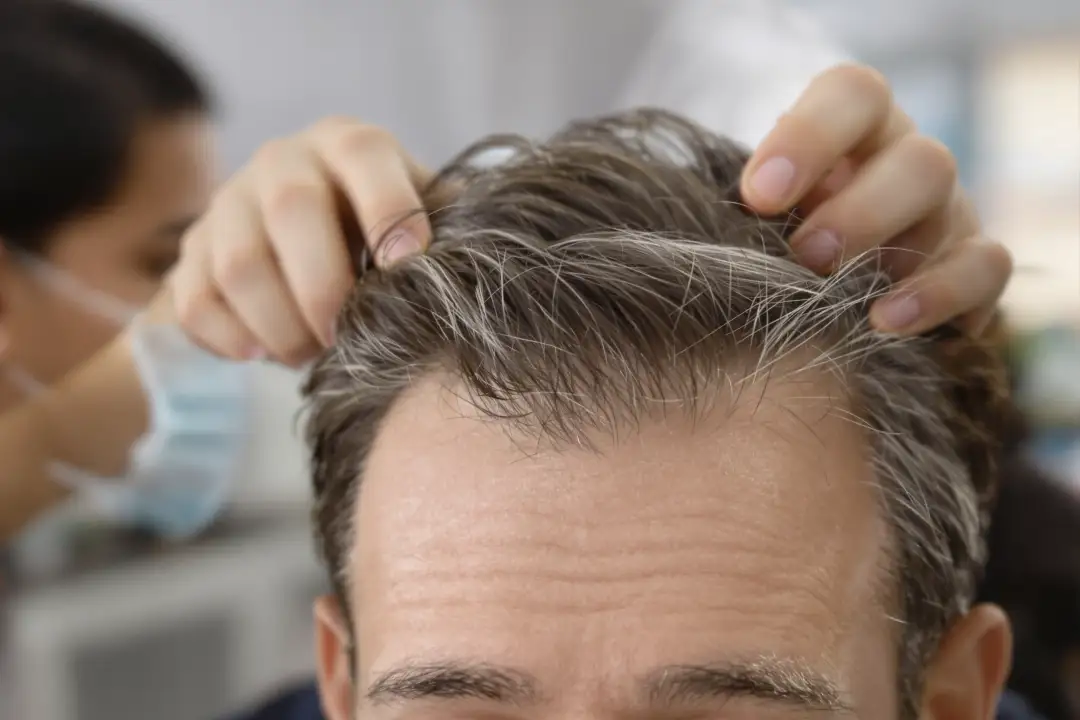
If your hairline's already crept back, here's the honest truth: no cream or pill is going to rebuild a full hairline that disappeared years ago. Drugs like finasteride and minoxidil can slow things down or stop further loss, and in some lucky cases they'll coax a bit of fuzz back along the temples. But for a defined, natural-looking hairline that looks like it never budged? Non-surgical camouflage is the real answer.
Cosmetic concealment options
Hair fibers (keratin fibers). These are statically charged microfibers that cling to existing hairs, making thin spots look thicker instantly. They work best when you've still got some hair to attach to. On a fully bald temple, and they won't do much. Brands like Toppik or Caboki are common
Scalp micropigmentation (SMP). This is a cosmetic tattoo that deposits tiny pigment dots on the scalp, recreating the look of shaved hair follicles. It won't grow hair, but it can create the illusion of a fuller hairline if you keep the rest short. Downside: it fades over 3-5 years and needs touch-ups
Medical approaches with limited regrowth
Oral finasteride 1mg cuts DHT and can halt further loss, but temple regrowth is less reliable than crown regrowth. Neither gives you a surgically reconstructed hairline.
When non-surgical "fix" is enough
If your recession is mild, Norwood stage 1-2, and you're okay with a softer, less defined hairline, fibers or SMP work as a daily fix. When your hairline has receded more than an inch behind your original line, or you have bald patches that no fiber can anchor to, a hair transplant is the only permanent way to fix a receding hairline .
Non-surgical methods buy time and improve your appearance, and they don't grow back hair that's already gone. That's the honest trade-off.
Hair Transplant: The Surgical Solution
Once minoxidil and finasteride have slowed the loss but your hairline still sits higher than it did five years ago, you start wondering if surgery can pull it back down. It can, but the window matters.
FUE vs. DHI: Two Closely Related Techniques
Both FUE and DHI extract individual grafts from the donor zone, usually the back of the scalp, and place them into thinning or bald areas. The difference is mechanical. In FUE, the surgeon makes tiny incisions across the recipient area first, then inserts the grafts one by one. DHI relies on a Choi implanter to combine incision and placement into one motion. Neither technique is universally better. DHI is faster for small sessions and offers more control over depth and angle, while FUE gives the surgeon a clearer view of the incision pattern before insertion. Most clinics, including la clinica, use both depending on the case.
Designing a Hairline That Doesn't Look Fake
This is the part most people miss. A natural hairline isn't a straight line. It has a slight temporal recession, a soft 'lazy M' shape, plus micro‑irregularities along the front edge. Surgeons map this out before the procedure, often with a marker while you're sitting upright-gravity changes how the hair falls. A good design accounts for your face shape, future loss pattern, and the fact hair thins more over time-so they leave a buffer zone behind the hairline for later recession.
TechniqueIncision methodGraft placementTypical session sizeScarring FUEScalpel‑blade cuts firstInserted after incisions2,000-4,500 graftsPinpoint dots in donor area DHIImplanter makes channel and places graft in one stepSimultaneous1,500-2,500 grafts (more efficient for smaller areas) Same as FUEHow Many Grafts Does a Receding Hairline Need?
Rough numbers: restoring a Norwood 2-3 pattern-the classic receding temples with some frontal thinning-usually takes between 1,500 and 2,500 grafts. 3,000 to 4,500 are run by A full Norwood 4 - 5. The clinic bases the count on your donor density, hair thickness, the bald area's size, and how conservative you want the result. Fewer grafts with good design almost always look better than a dense but unnatural‑looking transplant.
Recovery in a Nutshell
Day 1-3: small scabs around each graft, some swelling. By day 7-10 the scabs flake off and the transplanted hairs fall out-that's normal. Growth starts around month 3-4, becomes visible by month 7, and the final result settles at month 12-18. You'll be back at work in 5-7 days if you're careful not to bump the grafts.
When Surgery Trumps Medication Alone
When to See a Specialist
Most hair loss creeps up on you gradually. You notice a little more in the shower drain, the temples pulling back a fraction over years. Medication and monitoring can handle that type of slow change. But clear signals tell you it's time to stop Googling and book an appointment. Red flags you should not ignore. First, speed. If your hairline has moved noticeably in under six months, the loss is probably accelerating, could be telogen effluvium, alopecia areata, or an underlying health issue. Second, patchiness. Receding hairline that follows the typical Norwood pattern is uniform. Seeing round bald spots or hair falling out in clumps? That's not standard male pattern loss. Itching, burning, or tenderness on the scalp along with hair loss points to inflammation, think scarring alopecia or a fungal issue. Third, physical symptoms. Fourth, hair loss paired with fatigue, weight changes, or skin issues. That combination can signal a thyroid problem, hormonal imbalance, or autoimmune condition. Fifth, family history plus early onset. Family history with early onset: if your father went bald by 22 and you're 19 and seeing the same pattern, the earlier you get evaluated, the more hair you can keep.
What actually happens at a consultation.
Good specialists do more than glance at your head. A dermoscopic exam follows-that magnifying camera reveals miniaturization, the telltale sign of active androgenetic alopecia. Photos are taken to track progression. If the pattern looks unusual, blood work is standard: ferritin, vitamin D, thyroid panel, sex hormones. After that, they map your hairline and crown, then talk about what's realistic. For early loss, medication alone can do the job.
What to Expect from Hair Transplant Recovery
Hair transplant recovery isn't just before and after-there's a messy middle those photos skip. The first 48 hours are the most fragile, and tiny grafts sit on the scalp like freshly planted seeds. They have to stay put. You'll have a bandage overnight, and the clinic provides a saline spray to keep grafts moist. Swelling typically shows up on day two or three-sometimes it drifts down to the eyes. That's normal. It clears up in a few days.
By day five to seven, the crusts around each graft start flaking off. Don't pick at them. Let the shower water or a gentle spray do the work. From day three onward, most clinics give you the green light to wash your scalp gently. The donor area-back and sides of the head-will feel tight for about a week or two. Stitches or staples come out around day ten if that's what your surgeon used-many now use a no-stitch punch method that heals faster.
Around week two to four, something catches most people off guard: the transplanted hair falls out. This is the shedding phase-and it's completely normal. The hair shaft drops out, but the follicle stays alive beneath the skin. For the next two or three months, the recipient area can look thinner than before-exactly the opposite of what you were hoping for. Patience matters more at this stage than in any other step of the process.
Real growth starts around month three to four, and fine, vellus hairs push through first. By month six, you'll see density start to build. The final result-full thickness and texture-settles around month 12 to 18 for most patients. If you're using finasteride or minoxidil to stop receding in the non-transplanted areas, keep taking them.