



What a receding hairline actually is — and what it is not
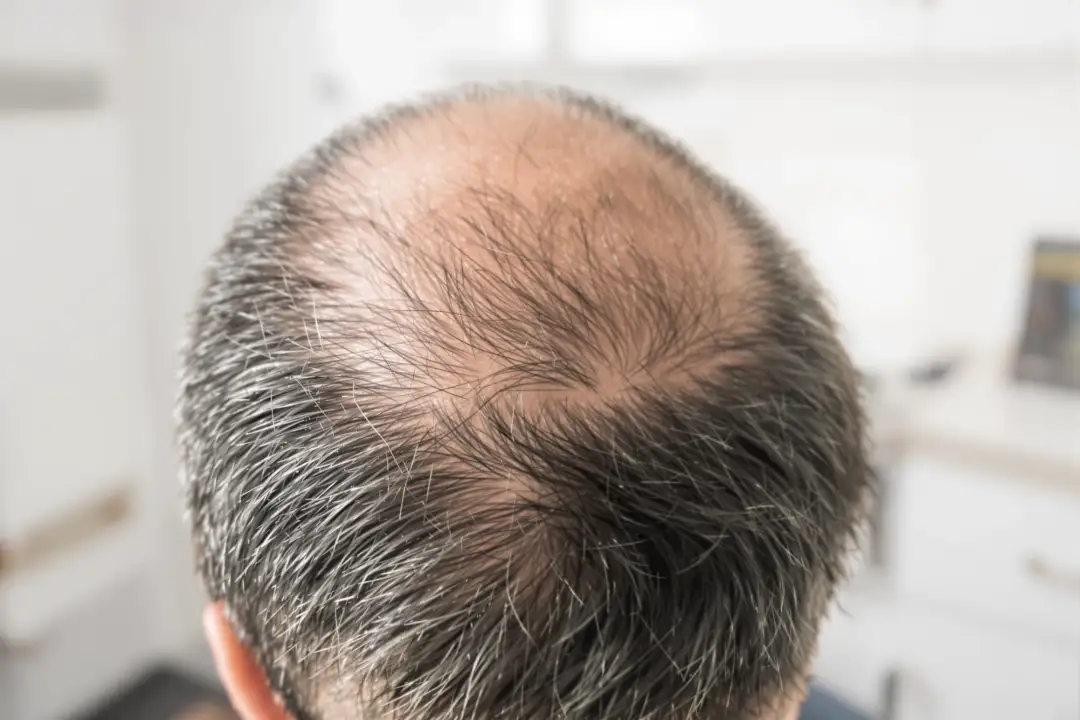
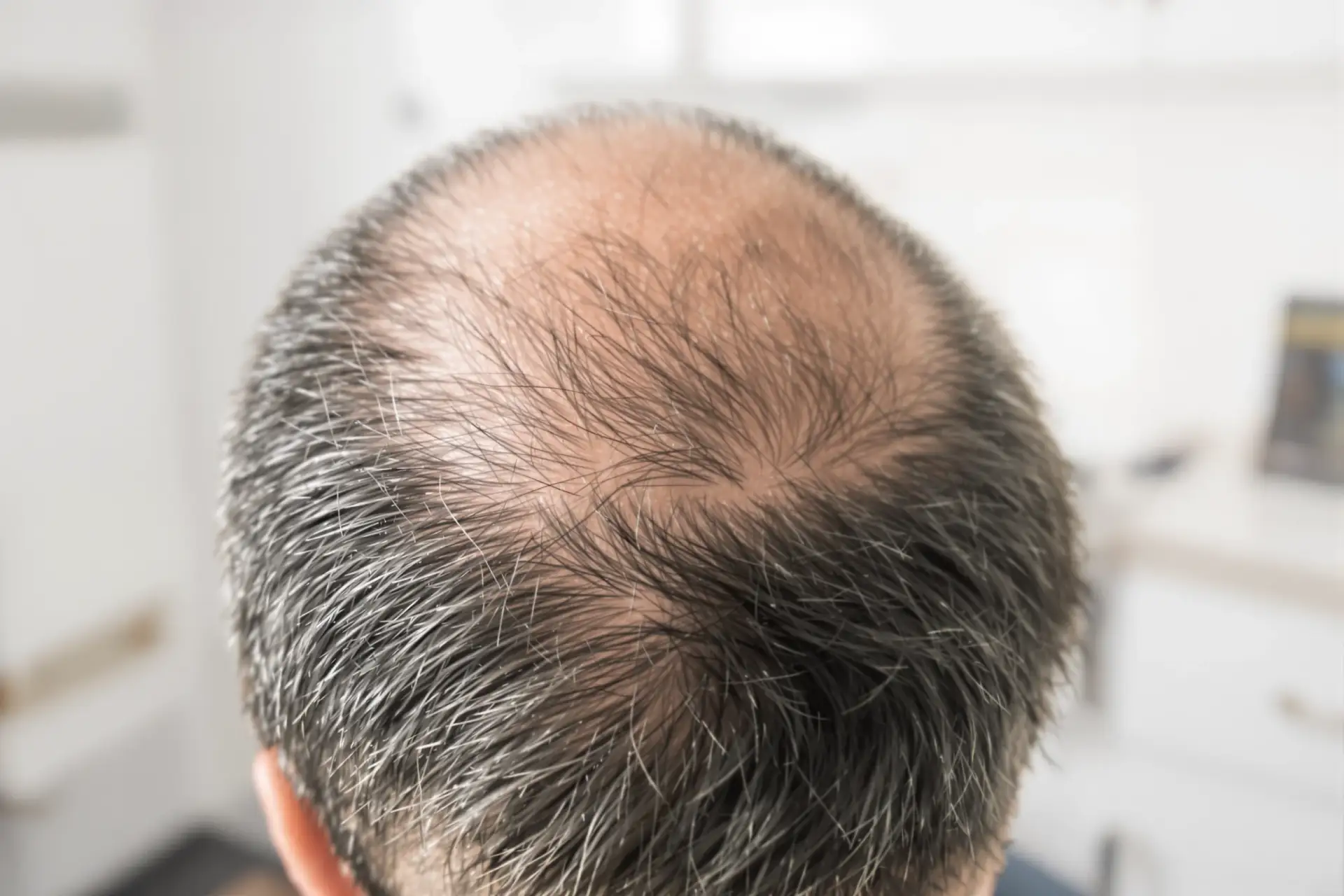
At its simplest, a receding hairline is one that moves backward over time. It usually begins at the temples, which is why early stages often show as an M across the forehead. In most men, the cause is androgenetic alopecia (male pattern baldness), driven by dihydrotestosterone (DHT) binding to hair follicles and shortening their growth cycle. Each cycle then produces a thinner, shorter hair, until the follicle goes dormant.
That's the mechanical picture. Because the pattern sets the stage, what matters for treatment is the pattern. Hairline recession is graded on the Norwood scale, where stage 1 means little to no loss and stages 2 through 3 are the clearest early recession. Stage 2 is a slight dip at the temples, barely noticeable. By stage 3, the classic M or U has formed, and that's usually when most people finally book a consultation.
Now, the "is not" half.
A receding hairline isn't the same as general thinning. General thinning spreads across the crown or the entire scalp. Hair gets sparser all over, yet the front hairline holds its ground. Nor is it diffuse shedding. Telogen effluvium, a temporary shed after a stretch of stress or a crash diet, can drop hundreds of hairs a day for a few months, and the hairline never retreats. And it's not a mature hairline. Somewhere between 18 and 25, many men watch their hairline pull back a quarter to half an inch, and then it holds. So that's a mature hairline. It stays put.
The line between that and a receding hairline decides treatment timing. That kind won't progress, so it doesn't need finasteride or a transplant. One that keeps moving does. Stage and rate of change alone tell you half the story. Family history fills in the rest, and the two together set up the treatment comparison that follows.
The stages of a receding hairline, from mature to advanced loss
Most hair loss tracking runs on the Norwood scale, a seven-stage system dermatologist James Hamilton sketched out in 1951 and Dr. O'Tar Norwood refined in 1975. Clinics still use it to grade a receding hairline. For practical purposes, the seven stages come down to three bands: the maturing hairline, true recession, and advanced loss. At each boundary, what treatment can realistically do changes.
The maturing hairline (Norwood I-II)
Though it's constantly mistaken for hair loss, a mature hairline isn't hair loss. Between roughly ages 20 and 30, the hairline drifts back a short distance (usually under an inch) and the corners soften. Then it settles. That's the tell. A mature hairline stays put for years, whereas a receding one keeps inching back. Compare photos two years apart. No movement signals maturation, not balding.
Early recession (Norwood II-III)
Real recessional begins at the temples. The hairline forms an M, and the corners pull back a little more each year. By stage III, the recessed points sit an inch or more behind the original line. Genetics matters most here, and androgens do the pushing. This is the stage where action counts most. If the goal is to stop receding before it deepens, finasteride at 1 mg daily is the best-documented option, in a five-year clinical study, it halted further loss in roughly 9 in 10 men. Applied twice daily to the temples, minoxidil nudges regrowth in about 6 in 10 users. Both require ongoing use. Quit, and the loss returns within months.
Moderate loss (Norwood IV-V)
At stage IV, the recession is hard to miss. That M deepens, and the crown often thins at the same time. Stage V is where the two bare zones nearly connect, leaving a band of hair across the top. Medications at this stage hold what remains more than they regrow what is gone. For most men at this stage, rebuilding the front hairline comes down to a hair transplant.
Advanced loss (Norwood VI-VII)
By stages VI and VII, only a thin horseshoe of hair remains along the sides and back. That permanent rim usually still provides enough grafts for a transplant, but the goal changes. The expectation at this point is natural coverage, not a dense 25-year-old hairline.
Widow's peak, Gen Z hair loss, and the age question
Widow's peaks get blamed for more than their share of hairline anxiety. Many people are born with a V-shaped hairline, also called a widow's peak. It stays put for decades. A receding hairline, on the other hand, is progressive: temple hair thins and falls, and the hairline slowly pushes backward. This distinction drives every treatment decision. If your hairline hasn't changed since college, odds are you're looking at genetics, not male pattern baldness.
Gen Z hair loss: panic or pathology?
I see a good number of patients in their late teens and early twenties. Almost all of them compare selfies from three years ago and conclude the worst. Hairline recession typically starts in the late teens to early twenties when androgenetic alopecia runs in the family. But rapid shedding at that age calls for a real evaluation. Also worth ruling out: traction alopecia from tight hairstyles and stress-related telogen effluvium, both of which can mimic early stages but resolve once the trigger stops.
The age question and what it means for treatment
Age shapes which stage you're at and what's worth doing. A stage 1 or 2 hairline, where the corners are just barely softening, can often be managed with topical minoxidil and a straightforward routine. At stage 2 (many dermatologists consider finasteride for younger men)though it requires a prescription and a discussion about side effects. By the time the hairline forms a deep M at stage 3, combination therapy is usually the next step: minoxidil plus finasteride, sometimes with monthly microneedling sessions. The earlier you act, the more you're doing to stop receding rather than trying to grow back tissue that's already gone.
Why hairlines recede: the process behind it
Every receding hairline starts the same way: a hormone called DHT . DHT, short for dihydrotestosterone, forms when the enzyme 5-alpha-reductase converts testosterone. Most of the body runs fine on DHT, and the hairline is different. Follicles along your temples and crown carry receptors that are genetically coded to react badly when DHT docks on them. That reaction is what turns a full hairline into a receding one.
What follows is a slow downsizing. A normal scalp hair grows for three to six years before shedding, a phase called anagen. Under DHT's influence, that growth window shrinks to a few months, and the loss compounds with every cycle:
- The new hair comes back finer and shorter, with less pigment each time.
- Repeated cycles shrink the follicle itself.
- Eventually only vellus fuzz remains, then nothing.
The temples usually show it first. The hairline shifts into an M shape, then deepens as it meets thinning at the crown. This is why doctors represent hair loss on the Norwood scale rather than guessing. The stages follow a predictable path, so a man at stage 2 can look five years ahead and see roughly where his hairline is heading. Genetics is the dominant hairline cause, but stress and tight hairstyles can trigger temporary shedding that exposes the pattern sooner.
That mechanism also determines what actually works. Minoxidil stirs follicles back into the growth phase, but it doesn't touch DHT. Used together, they are the most reliable way to slow or stop receding. Neither can reopen a follicle that has already closed. The stage you catch it at decides which route makes sense. That's the practical value of staging: it tells you whether medication is still an option or whether a transplant is the realistic endgame
Receding hairline treatments compared: what works, what doesn't
Here is the short version before we get into drug names and graft counts: treatment results hinge on the Norwood stage you're at when you start. Catch a receding hairline at stage 2 or 3 and medication can hold the line for years. Wait until the temples reach stage 4 and the crown is thinning, and topicals alone will not rebuild what is gone. That distinction drives every choice we cover below.
The treatments with evidence behind them
Two medications carry real trial evidence. Finasteride 1 mg (Propecia) takes a different approach. It blocks the enzyme that converts testosterone into DHT, the hormone that shrinks hair follicles. Dutasteride is the stronger off-label cousin, but a longer half-life and a similar side-effect profile keep most dermatologists starting with finasteride.
Procedures that cost more and do more
Evidence is mixed, but it performs better alongside minoxidil or finasteride. Low-level laser caps produce modest density gains after 6 to 12 months, but they won't rebuild a temple. A transplant does. The part nobody likes to hear: transplanting into a scalp that is still shedding leads to a clean hairline with thin patches behind it. I keep seeing patients skip the drugs, go straight for surgery, and end up back in the chair two years later
What wastes your money
Unless a blood test confirms a real deficiency, biotin is a waste, and true deficiencies are rare. Trial data for saw palmetto and pumpkin seed oil is thin and contradictory. Don't bother with scalp massages or inversion poses. Same goes for any serum sold with a single before-and-after photo