



What Is Telogen Effluvium?
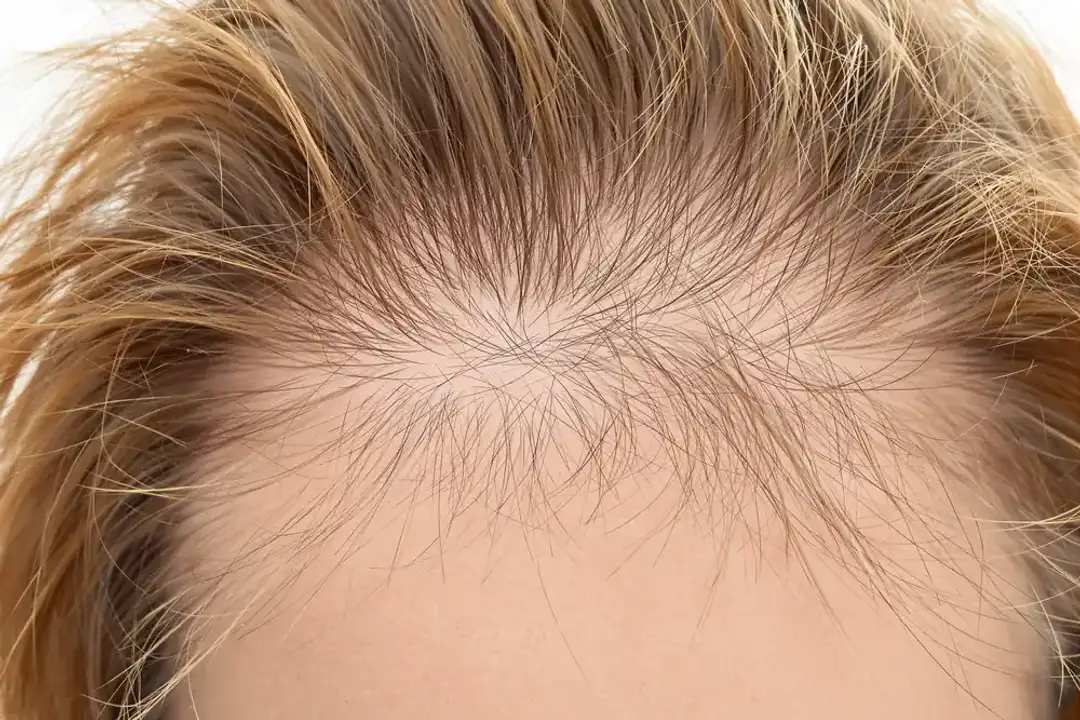
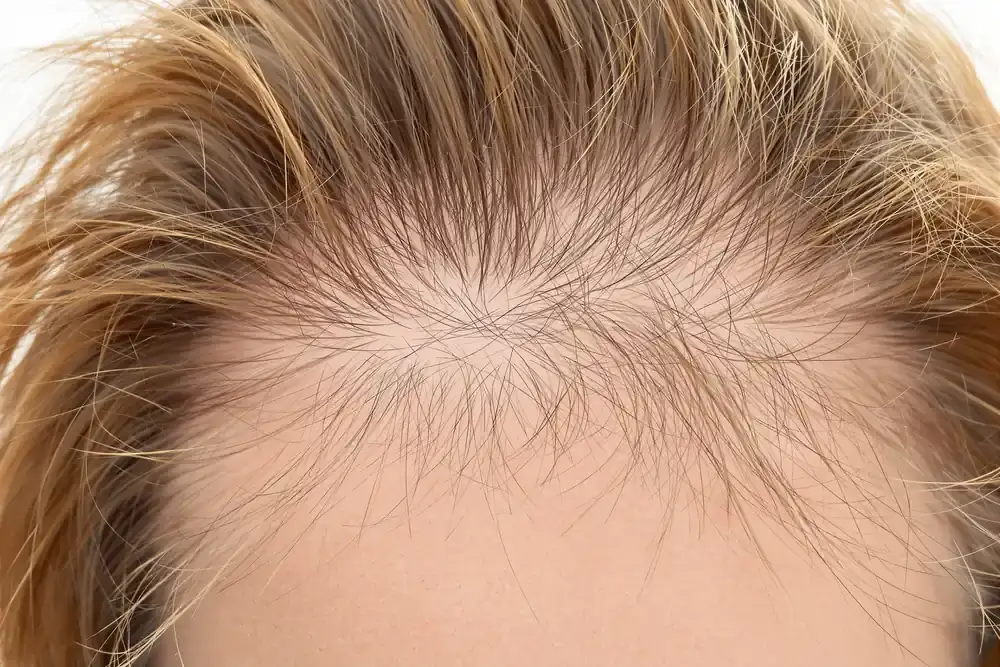
Telogen effluvium is a temporary form of hair shedding that begins a few months after the body experiences a significant stressor. It's not permanent and doesn't cause scarring. It is a delayed reaction that often surprises those who experience it. Common triggers include high fever, major surgery, rapid weight loss, and severe emotional strain.
The sequence is straightforward. Two to three months later, those hairs fall out, and that is when it becomes noticeable. People see hair in handfuls in the shower, clumps on the pillow, or a visibly thinner ponytail.
The hallmark of telogen effluvium is diffuse thinning across the entire scalp, not bald patches. Daily hair loss may reach 200-300 strands instead of the typical 50-100. This may appear concerning, but the hair follicles aren't damaged.
Recovery usually takes 6 to 12 months. Once the trigger is removed or resolved, the hair cycle returns to normal. Most people notice regrowth within a few months, often appearing as fine new hairs along the hairline. Some patients are convinced they're going bald when they experience this. This condition does not lead to permanent baldness, and time and a little patience was all they needed.
What Triggers Telogen Effluvium?
Common Triggers You Might Not Expect
Telogen effluvium usually appears 2-3 months after the triggering event, and that lag often catches people off guard. She blamed shampoos, then stress at work. It turned out the operation itself was the cause. Surgery, even minor, sends the body into survival mode. Hair follicles enter a resting phase
The most common triggers fall into a few categories. Based on clinical experience:
- Data from a 2024 Istanbul clinic shows shedding starts at week 8 post-op.
- A single 3-day fever above 39°C from flu, COVID-19, or severe infections can disrupt the hair cycle for up to 6 months.
- Extreme emotional stress, such as divorce, job loss, or grief. This is not the stress of a bad week, but sustained trauma lasting 4-6 weeks or more.
- Stopping or switching hormonal medications-birth control pills, thyroid meds, or corticosteroids-disrupts the hair cycle timing.
When Emotional Stress Shows Up on Your Scalp
She believed she was handling it well. Then her hair started coming out in clumps. Each morning, she found 80-100 strands on her pillow-far above her usual 20-30. Lab tests showed nothing abnormal. There were no deficiencies, thyroid issues, or autoimmune signs. It was purely stress-induced telogen effluvium
Psychological stress raises cortisol levels. Cortisol pushes hair follicles into a resting state prematurely.
Recognizing the Symptoms of Telogen Effluvium
Telogen effluvium does not sneak up quietly. It shows up in the shower drain, on the pillowcase, wrapped around the hairbrush. The hallmark is diffuse shedding: hair comes out from all over the scalp, not just in patches or a single bald spot.
What does the shedding actually look like?
Patients ofttimes describe handfuls of hair in the shower, and a normal scalp sheds 50 - 100 hairs daily. With telogen effluvium, that number jumps to 200, 300, sometimes 500 strands per day. The hair you lose will have a tiny white bulb at the root - that's the telogen (resting) club hair coming out cleanly. No broken shafts, no scaly patches.
The timing is the big clue. TE typically hits 2-3 months after a triggering event. Had a high fever in February? Expect the shedding to start around April or May. Gave birth in June? The heavy loss often begins in August or September. That delay catches people off guard - they've already recovered from whatever set it off, and then the hair starts falling.
Which areas are affected?
It's the whole scalp, but the crown and temples tend to feel it most. You might notice your part widening or your ponytail thinning out. The hairline usually stays intact - that's different from male pattern baldness. TE doesn't create a receding hairline or a coin-sized bald spot. It's evenly spread, like someone turned down the volume on your hair density.
How can you tell it's TE and not something else?
Three things separate TE from other hair loss conditions:
- The scalp feels normal. No itching, burning, redness, or flaking. Androgenic alopecia often comes with a greasy or inflamed scalp. TE doesn't.
- The hair pulls out easily. A gentle tug on a strand near the scalp - if it comes loose without resistance, that's a sign of TE hairs in the shedding phase. A dermatologist calls this the "hair pull test."
- You can identify a trigger. Illness, surgery, rapid weight loss, extreme stress, childbirth, stopping birth control pills. No trigger makes TE less likely, and more on causes in the next section.
Does the hair ever fall out completely?
Rarely, and tE doesn't progress to total baldness. The shedding cycle pushes more hairs than normal into the resting phase, but the follicles stay alive. You lose density, not the capacity to regrow. Patients often report their hair feels "thinner than usual" rather than "gone." That's a comforting distinction when you're watching strands pile up in the brush.
How long do the symptoms last?
Acute TE runs its course in 3-6 months. The shedding typically peaks around months 2 to 3, then gradually tapers off. Patients often notice fewer hairs in the shower drain and new baby hairs sprouting along the hairline. That represents a minority, not the norm
Telogen effluvium symptoms do not include fatigue, skin changes, or nail problems. If these symptoms appear alongside hair loss, a different condition-such as thyroid issues or autoimmune disease-may be responsible, and a blood test is advisable.
How Is Telogen Effluvium Diagnosed?
Diagnosis of telogen effluvium begins with a detailed medical history and a physical examination. Doctors investigate a trigger event occurring six to sixteen weeks before the shedding started. They inquire about recent illness, major surgery, childbirth, extreme dieting, or severe stress. A pull test helps assess active shedding: the clinician grasps 40 to 60 hairs and tugs gently. If more than 3 to 5 hairs come out, the test is considered positive. This test is not foolproof. It only detects active cases and may miss early or late stages.
Clinical Examination and History
A thorough history alone often confirms the diagnosis. The sudden onset of diffuse thinning across the scalp, with the frontal hairline preserved, is a classic pattern. Shedding typically lasts three to six months and then resolves without treatment. Doctors may ask patients to collect shed hair daily for a week, and daily counts above 100 frequently point to telogen effluvium. A hair pull test performed at several scalp locations offers additional clues.
Specific Diagnostic Tests
When a patient's history and pull test results are unclear, doctors rely on trichoscopy. Trichoscopy is a magnified examination of the scalp using a dermoscope or a handheld device. Short regrowing hairs with tapered ends, known as exclamation-mark hairs, are absent, helping to rule out alopecia areata. A scalp biopsy may be necessary if shedding continues beyond 9 months or if the hair loss is patchy
How Long Does Telogen Effluvium Shedding Usually Last?
For most people, the heavy shedding phase of telogen effluvium resoluteness on its own within 3 to 6 months. That is the typical window. But the clock does not start ticking the day you observe extra hair in the shower drain. It set out about 2 to 3 months after the trigger - such as a major illness, rapid weight loss, childbirth, or intense stress.
This delay matters for understanding the condition's timeline, and your hair follicles operate on a delayed schedule. A triggering event pushes a large percentage of follicles into the telogen (resting) phase all at once. But they don't fall out immediately. They remain in place for 8 to 12 weeks before shedding. So if you had a significant case of COVID in January, the shedding from that event typically shows up around March or April. Understanding this delay can prevent unnecessary alarm.
The shedding curve: what to expect month by month
Phase Timeline (post-trigger) What you see Trigger event Week 0 Illness, surgery, crash diet, major stress Onset of shedding Weeks 8-12 Sudden increase - 200-300+ strands daily Peak shedding Weeks 12-20 Thinning becomes visible. showers are alarming Recovery begins Weeks 20-28 Shedding slows. tiny regrowth hairs appear Full recovery 6-9 months Density returns for most peopleSome people experience shedding that extends beyond six months. If the underlying trigger doesn't resolve, for example, chronic stress keeps cortisol high or an autoimmune condition isn't managed, the shedding can linger. This is known as chronic telogen effluvium, which is less common. Still, a recognized condition. In those cases, daily hair loss might stay elevated for a year or more with periods of fluctuation.
Fortunately, for most patients the shedding is self-limiting, and for the vast majority, the shedding resolves without intervention. The body eventually resets its hair cycle. Regrowth often starts before the shedding fully stops, which can be confusing. You are losing old hairs and growing new ones at the same time. Around 10 weeks of continuous regrowth usually indicates the system has turned the corner.