
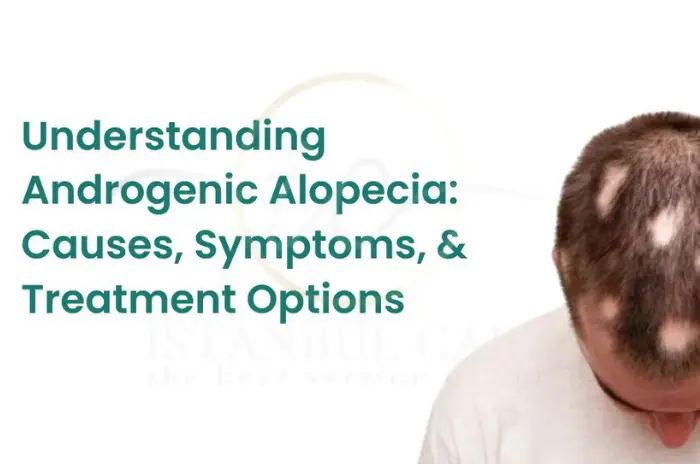
Androgenic Hair Loss, commonly known as pattern hair loss, is the most prevalent form of hair loss affecting both men and women worldwide. This hereditary condition accounts for approximately 95% of male hair loss and significantly impacts female hair density as well. Understanding the complex mechanisms behind androgenic alopecia is crucial for developing effective treatment strategies and managing expectations for those experiencing this condition.
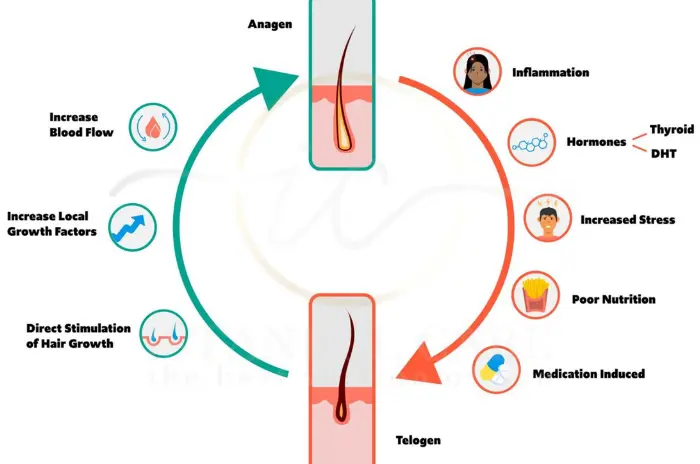
What androgenetic alopecia is and why it happens
Androgenetic alopecia is a genetically predetermined condition characterized by the progressive miniaturization of hair follicles in response to dihydrotestosterone (DHT), a potent androgen hormone. Key Mechanisms of Androgenetic Alopecia:
- Genetic Predisposition: Inherited sensitivity to DHT determines susceptibility
- Hormone Conversion: Testosterone converts to DHT via 5-alpha reductase enzyme
- Follicle Miniaturization: DHT binding causes progressive follicle shrinkage
- Shortened Growth Cycle: Anagen phase becomes progressively shorter
- Eventual Follicle Death: Complete cessation of hair production in affected areas
Androgenetic Alopecia Progression Timeline:
| Stage | Male Pattern | Female Pattern | Typical Age Range |
|---|---|---|---|
| Early | Temple recession | Subtle crown thinning | 20-30 years |
| Moderate | Crown involvement | Widening part | 30-40 years |
| Advanced | Significant balding | Diffuse thinning | 40+ years |
| Severe | Extensive loss | Noticeable scalp visibility | 50+ years |
The severity and progression rate vary significantly among individuals, influenced by genetic factors, hormone levels, and environmental considerations. Some people experience rapid progression within a few years, while others maintain relatively stable hair density for decades.
Medical and Non-Medical Treatments for Hair Loss
Treatment options for androgenetic alopecia have expanded significantly, offering both medical interventions and non-medical approaches to slow progression and stimulate regrowth. The key to successful treatment lies in early intervention and consistent application of proven therapies. FDA-Approved Medical Treatments: Minoxidil remains the cornerstone of topical treatment, available in 2% and 5% concentrations for men and women. This vasodilator improves blood flow to hair follicles and can extend the anagen growth phase, resulting in increased hair density and thickness. Treatment Effectiveness Comparison:
| Treatment | Success Rate | Regrowth Potential | Suitable For |
|---|---|---|---|
| Minoxidil 5% | 60-70% | Moderate | Men and women |
| Finasteride | 80-90% | Modest | Men only |
| Dutasteride | 85-95% | Good | Men (off-label) |
| Hair Transplant | 90-95% | Excellent | Advanced cases |
Non-Medical Approaches:
- Low-Level Laser Therapy: FDA-cleared devices showing modest improvement
- Platelet-Rich Plasma: Emerging treatment with promising results
- Scalp Massage: May improve circulation and follicle health
- Nutritional Support: Addressing deficiencies that impact hair growth
- Stress Management: Reducing factors that can accelerate hair loss
Combination Therapy Benefits: Most intermediary organizations recommend combining treatments for optimal results. Using minoxidil with finasteride, for example, addresses hair loss through different mechanisms, often producing superior outcomes compared to monotherapy.
Who gets pattern hair loss and when it starts
Androgenetic alopecia affects a substantial portion of the population, with prevalence increasing dramatically with age. Understanding demographic patterns helps individuals assess their risk and plan appropriate interventions. Age-Related Prevalence: The condition can begin as early as the late teens, though most people notice initial signs in their 20s and 30s. By age 50, approximately 50% of men and 25% of women show significant signs of pattern hair loss. Gender Differences in Onset: Men typically experience earlier onset and more aggressive progression due to higher testosterone levels and greater 5-alpha reductase activity. Women often notice changes during hormonal transitions such as pregnancy, menopause, or when discontinuing oral contraceptives. Risk Factors and Demographics:
| Factor | Risk Level | Impact on Progression |
|---|---|---|
| Family history | High | Strong predictor of development |
| Male gender | High | Earlier onset, faster progression |
| Age over 40 | Medium | Increased likelihood |
| Hormonal changes | Medium | Can trigger or accelerate loss |
| Certain medications | Low | May contribute to progression |
Ethnic Variations: Caucasian men show the highest prevalence of androgenetic alopecia, followed by Asian and African populations. However, the condition affects all ethnicities, with variations in pattern and severity. Early Warning Signs:
- Increased hair shedding during washing or brushing
- Gradual recession of hairline
- Widening of natural part in women
- Decreased hair density at crown
- Changes in hair texture or thickness
Recognizing early signs enables prompt intervention, which significantly improves treatment outcomes and may prevent extensive hair loss.
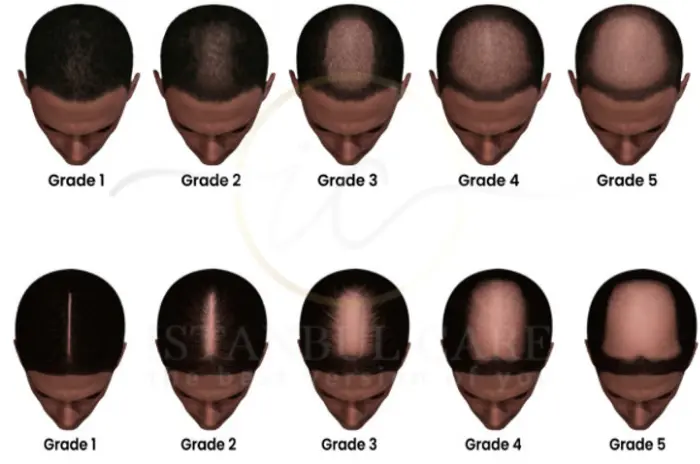
How Hormones Like DHT Affect Hair Growth
Dihydrotestosterone (DHT) serves as the primary culprit in androgenetic alopecia, systematically attacking genetically susceptible hair follicles. Understanding DHT's mechanism of action provides insight into both the problem and potential solutions.
DHT Formation Process:
Testosterone converts to DHT through the enzyme 5-alpha reductase, which exists in two forms. Type I is found throughout the body, while Type II is concentrated in hair follicles and prostate tissue. DHT is approximately 10 times more potent than testosterone in binding to androgen receptors.
DHT's Effects on Hair Follicles:
Once DHT binds to androgen receptors in follicles, it triggers a cascade of events leading to follicle miniaturization. The growth phase shortens progressively with each hair cycle, producing increasingly fine and short hairs until the follicle becomes dormant.
Hormonal Influences by Gender:
| Hormone | Male Impact | Female Impact | Hair Loss Mechanism |
|---|---|---|---|
| DHT | Primary driver | Significant factor | Direct follicle attack |
| Testosterone | High levels | Lower but still relevant | Converts to DHT |
| Estrogen | Minimal | Protective effect | Counteracts androgens |
| Progesterone | Minimal | Mild protective | Competes with DHT |
Hormonal Fluctuations and Hair Loss:
Women experience unique challenges due to hormonal fluctuations during menstrual cycles, pregnancy, and menopause. Declining estrogen levels during menopause can unmask underlying genetic predisposition to androgenetic alopecia.
Targeting Hormonal Mechanisms:
Understanding DHT's role has led to targeted therapies that either block 5-alpha reductase activity or prevent DHT from binding to follicle receptors. These approaches form the foundation of effective medical treatment for pattern hair loss.
The Key Differences Between Male and Female Pattern Hair Loss
While both sexes experience androgenetic alopecia, the presentation, progression, and underlying mechanisms differ significantly between men and women. These differences influence diagnostic approaches and treatment strategies.
Pattern Recognition:
Male pattern baldness follows the Hamilton-Norwood scale, typically beginning with temple recession and crown thinning before progressing to more extensive balding. Female pattern hair loss follows the Ludwig scale, characterized by diffuse thinning across the crown with preservation of the frontal hairline.
Hormonal Differences:
Men produce significantly more testosterone and DHT, leading to more aggressive hair loss patterns. Women have protective estrogen that partially counteracts androgenic effects, resulting in more gradual and diffuse thinning patterns.
Comparative Analysis:
| Aspect | Male Pattern | Female Pattern |
|---|---|---|
| Onset age | Earlier (20s-30s) | Later (40s-50s) |
| Progression rate | Faster | Slower |
| Pattern | Distinct balding areas | Diffuse thinning |
| Frontal hairline | Often affected | Usually preserved |
| Complete baldness | Possible | Rare |
Diagnostic Challenges:
Female pattern hair loss can be more challenging to diagnose due to its subtle presentation and potential overlap with other conditions such as telogen effluvium, thyroid disorders, or nutritional deficiencies.
Treatment Considerations:
Women have fewer treatment options due to safety concerns with certain medications during pregnancy. Minoxidil remains the primary topical treatment, while anti-androgen medications may be prescribed for post-menopausal women.
Psychological Impact:
Hair loss often creates greater psychological distress in women due to societal expectations and the central role of hair in female identity. This emphasizes the importance of early intervention and comprehensive support.
Diagnosing Androgenetic Alopecia in Men and Women
Accurate diagnosis of androgenetic alopecia requires systematic evaluation combining clinical assessment, family history, and sometimes laboratory testing. Proper diagnosis ensures appropriate treatment selection and rules out other treatable causes of hair loss.
Clinical Assessment Components:
Physical examination focuses on hair loss pattern, hair pull tests, and dermoscopy to evaluate follicle health. The distribution and characteristics of hair loss often provide clear diagnostic clues for experienced practitioners.
Diagnostic Criteria:
- Characteristic pattern of hair loss for gender
- Family history of similar hair loss
- Gradual onset and progression
- Absence of inflammation or scarring
- Normal laboratory values (when tested)
Laboratory Testing Indications:
| Test | When Indicated | Purpose |
|---|---|---|
| Thyroid function | Atypical patterns | Rule out thyroid disorders |
| Iron studies | Rapid onset in women | Exclude iron deficiency |
| Hormone panel | Young women | Assess for PCOS or other disorders |
| Complete blood count | Diffuse loss | Screen for systemic conditions |
Differential Diagnosis:
Several conditions can mimic androgenetic alopecia, including alopecia areata, telogen effluvium, trichotillomania, and various inflammatory scalp conditions. Careful evaluation helps distinguish between these possibilities.
How Genetics and Hormones Contribute to Hair Thinning
The development of androgenetic alopecia results from complex interactions between genetic predisposition and hormonal factors. Understanding these relationships provides insight into individual risk factors and potential preventive strategies.
Genetic Inheritance Patterns:
Androgenetic alopecia follows polygenic inheritance, meaning multiple genes contribute to susceptibility. While often described as maternally inherited, recent research indicates both parents contribute genetic risk factors.
Key Genetic Factors:
- Androgen receptor gene variations affecting DHT sensitivity
- 5-alpha reductase gene polymorphisms influencing enzyme activity
- Multiple contributing loci identified through genome-wide studies
- Epigenetic factors that may modify gene expression
Hormonal Contributions:
Beyond DHT, other hormones influence hair growth cycles and follicle health. Insulin-like growth factor, thyroid hormones, and cortisol all play supporting roles in maintaining healthy hair growth.
Gene-Environment Interactions:
| Factor | Genetic Component | Environmental Influence |
|---|---|---|
| DHT sensitivity | Androgen receptor variants | Hormone levels, age |
| Enzyme activity | 5-AR gene polymorphisms | Lifestyle, medications |
| Hair cycle regulation | Multiple genetic loci | Stress, nutrition |
| Follicle survival | Complex inheritance | Overall health status |
Predictive Factors:
Family history remains the strongest predictor of androgenetic alopecia development. However, genetic testing for hair loss risk is not yet clinically practical due to the condition's polygenic nature.
Future Directions:
Research continues to identify additional genetic factors and potential gene therapy approaches. Understanding individual genetic profiles may eventually enable personalized treatment strategies and more effective interventions.
We’re ready to answer your questions
Androgenetic alopecia is caused by a combination of genetic predisposition and hormonal factors, primarily DHT (dihydrotestosterone). Inherited genetic variations make hair follicles sensitive to DHT, which gradually miniaturizes them over time.
DHT affects hair growth by binding to androgen receptors in genetically susceptible hair follicles, triggering a miniaturization process.
The most effective treatments include FDA-approved medications like minoxidil (for men and women) and finasteride (for men only). Minoxidil improves blood flow to follicles and can stimulate regrowth, while finasteride blocks DHT production. Hair transplantation offers excellent results for advanced cases.
Pattern hair loss typically begins in the 20s and 30s for men, though it can start as early as the late teens. Women usually notice changes later, often in their 40s and 50s, particularly during hormonal transitions like menopause.
Follow us on social media for updates, tips, and patient success stories: