


Jeremy Piven's Hairline Transformation: What We Know
So Jeremy Piven. The Ari Gold guy. If you've watched anything he's been in over the last 20 years, you've probably noticed his hair situation has changed. A lot.
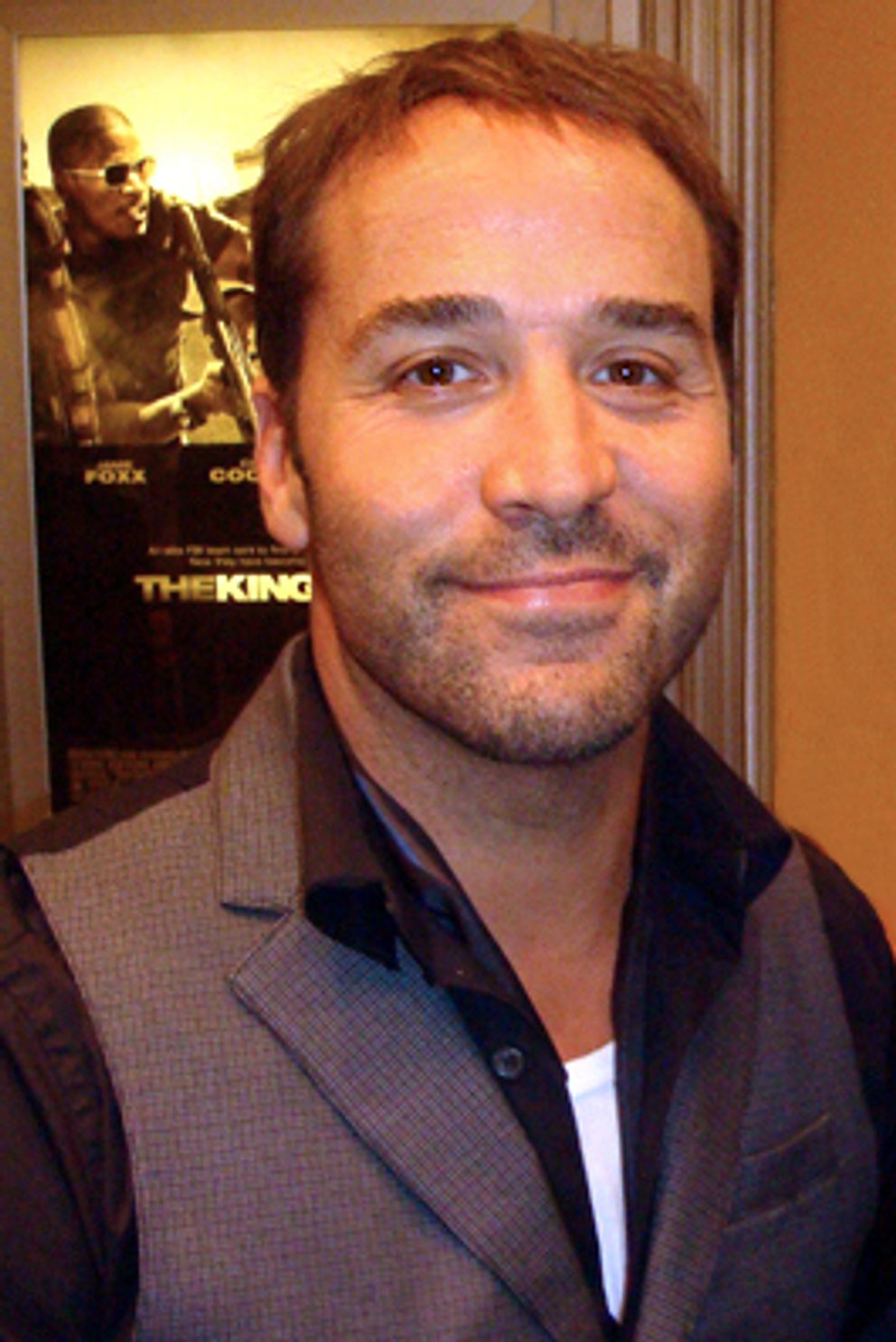
Short, front-lit and face-on. Frames like this carry more information than any long-lens candid, and there are far fewer of them.
Back in the early Entourage days — we're talking 2004, 2005 — his hairline was already retreating. Pretty visibly. There are paparazzi shots from around that era where the thinning at the crown and the receding temples were hard to miss, especially under harsh outdoor light. Then somewhere between 2007 and 2010, things started looking different. Fuller. Lower. The kind of difference you don't get from a new shampoo.
Has Piven ever publicly confirmed a hair transplant? No. He hasn't denied it either, which is sort of telling on its own.
What we can actually look at is the photographic timeline. And the timeline tells a pretty clear story.
The visual evidence
Compare red carpet shots from roughly 3 windows:
1999-2003: Hair is there, but the temples are creeping back. Classic early Norwood 2 to 3 territory.
2004-2008: Noticeable thinning through the mid-scalp. Some photos show scalp visible under stage lighting.
2010-present: A denser, lower hairline. The temples filled in. The crown looks thicker than it did when he was 10 years younger, which — biologically — shouldn't happen on its own.
That last point is the giveaway. Hair loss is progressive. Without intervention, hairlines don't reverse course at 45. They just don't.
What surgeons have speculated
Several hair restoration doctors have weighed in on Piven's transformation in interviews and trade publications, mostly pointing to FUE — follicular unit extraction — as the likely method. The reasoning? No visible linear scar in any photo, even when his hair is shorter on the sides. FUE leaves tiny dot scars that fade and blend, which fits what's visible (or rather, not visible) in his case.
Honestly, the work looks decent. Not flawless — a few photos from around 2012 show a hairline that sits a touch low for his face shape, which some surgeons consider a rookie design choice. But the density is convincing and the growth pattern looks natural. No pluggy clusters. No obvious "doll hair" gaps.
Estimates from clinics commenting on the case suggest he likely had somewhere between 2,500 and 3,500 grafts spread across one or two sessions. That's a typical range for someone restoring a Norwood 3 pattern with some crown coverage thrown in. Cost-wise, that kind of work today runs about $8,000 to $20,000 depending on the clinic and country.
Why it matters for patients
Here's the thing — Piven's case is useful precisely because it's not perfect. It shows what good (not great) celebrity work looks like, and it shows that even at the celebrity budget level, you can spot subtle giveaways if you know where to look. The hairline design. The density gradient. How it ages over a decade.
For anyone considering the same procedure, that's actually more helpful than the airbrushed before-and-afters clinics put on Instagram.
Photo of Jeremy Piven: Keith Middlebrook at https://www.flickr.com/ — Wikimedia Commons, CC BY-SA 3.0. Used under licence; the photographer does not endorse this page, and the image is not evidence of any procedure.
Hair Transplant or Hairpiece? Examining the Evidence
So you're losing hair and you've narrowed it down to two roads. Surgery, or something you put on your head every morning. Both work. Both have people who swear by them and people who quietly regret their choice. The honest answer about which one fits you depends on stuff most websites skip over.
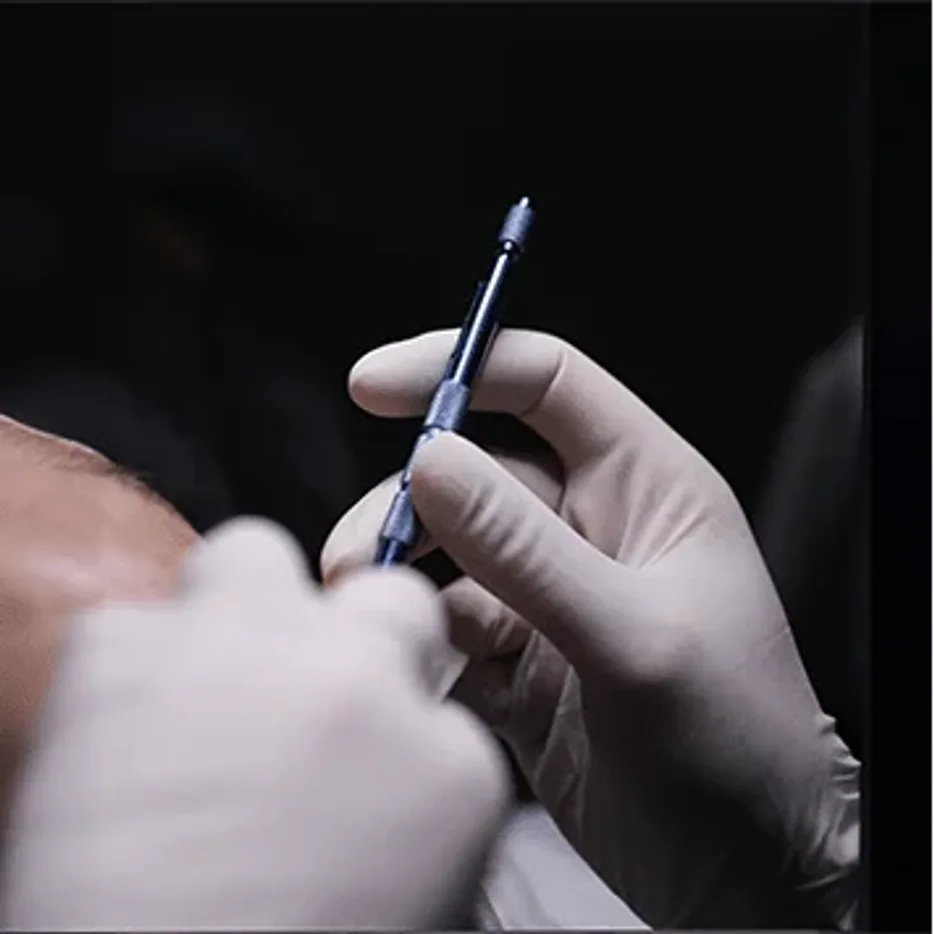
The tool decides the size and angle of each channel, and those two things decide whether the result reads as hair or as a pattern.
Let's look at what the actual data says.
What the numbers actually show
Hair transplants — specifically FUE and FUT — have a graft survival rate somewhere between 90% and 95% when done by a competent surgeon. That's the real ceiling. Not 100%. A 2019 review in the Journal of Cutaneous and Aesthetic Surgery put average patient satisfaction at around 75%, which sounds high until you realize 1 in 4 people walked away unhappy. Cost in the US runs $4,000 to $15,000 depending on graft count, and Turkey clinics will do it for $1,800–$3,500 if you're willing to fly.
Hairpieces are a different math problem. A good custom human-hair system costs $800 to $2,500 upfront, lasts 6 to 12 months, and needs maintenance every 4–6 weeks at $80–$150 a pop. Run that out over ten years and you're looking at $15,000–$25,000. Sometimes more than surgery. Nobody mentions that part.
Permanence isn't the simple win people think
Yeah, a transplant is "permanent." But your native hair around the grafts keeps thinning. Which looks weirder than just being bald. That's why surgeons push finasteride after surgery — to slow what's still happening underneath.
A hairpiece doesn't care about your progressive hair loss. The system covers what it covers. Lose more hair next year? The piece still works. There's a flexibility there people underrate.
What the studies leave out
Most clinical research measures graft count and density at 12 months. It doesn't measure how you feel at year five when the hairline you paid for sits above an aging face. It doesn't measure the guy who wore a system for three years, got tired of the glue, and then went for surgery anyway. Real outcomes are messy.
A 2021 patient survey out of the UK found something interesting. Around 38% of hairpiece wearers said they'd consider surgery within five years. Around 22% of transplant patients said they'd want a second procedure. Neither group is fully done after the first decision.
Here's the thing nobody in the industry will tell you straight: the "best" option is the one that matches your hair loss pattern, your budget over a 10-year window, your tolerance for medical procedures, and how much you care about not thinking about your hair every morning. Surgery sells the dream of forgetting. Hairpieces sell the dream of choice. Both dreams come with fine print.
Hair Restoration Lessons from Jeremy Piven's Journey
Look, watching a celebrity's hairline shift over two decades teaches you more than any clinic brochure ever will. Piven's whole arc — from thinning Ari Gold to whatever he's running with now — is basically a public case study. And there's stuff in there worth paying attention to before you book a consultation.
Don't wait until panic sets in
One thing his timeline shows pretty clearly: early action beats late action. By the time someone hits visible Norwood 4 or 5, the donor area has fewer grafts to spare, and density expectations have to come down. Piven seemed to address things while he still had usable coverage up top, which is exactly when results look most natural.
Most surgeons I've talked to say roughly 70% of men who come in already past Norwood 5 can't get the density they're picturing. Not because the surgeon is bad. The math just doesn't work. You've got maybe 6,000-8,000 viable donor follicles total, and once a chunk are gone, they're gone.
So if you're 28 and noticing temple recession? That's the conversation to have. Not at 45 when half the lawn is missing.
Choose the surgeon, not the city
People fly to Turkey for $2,500 packages and sometimes it works out fine. Sometimes it doesn't. The lesson from Piven and other celebrities who've quietly fixed botched work isn't "avoid Turkey" — it's pick the actual hands doing the cutting.
Things worth asking before you commit:
Who is doing the extraction — the surgeon or a tech?
How many cases per day does the clinic run? More than 4 is a red flag.
Can you see uncut, unfiltered 12-month results from real patients?
What's the plan if you keep losing native hair around the transplant?
That last one matters. A transplant doesn't stop genetic hair loss. If the surgeon doesn't bring up finasteride or minoxidil during consultation, walk out.
Manage the in-between phase
Here's the part nobody talks about. The first 3-4 months after a transplant, you look worse. Shock loss, scabbing, that weird patchy stage. Piven, like most public figures, clearly leaned on hats, hairpieces, or just laying low during recovery.
Plan for it. Seriously. If you have a wedding in May, don't book surgery in March. The transplanted hairs shed around week 2-3, then sit underground for months before pushing through. Final density shows up at month 12-14, not month 6.
Accept the trade-offs
A transplant is permanent surgery on your face. Tiny scars in the donor area, even with FUE. A hairline that has to be designed for the 60-year-old version of you, not the 30-year-old one. And ongoing maintenance to protect what's left.
Is it worth it for the right candidate? Yeah, often. The Piven takeaway isn't that hair restoration fixes everything — it's that smart, gradual choices age better than dramatic ones. A conservative hairline at 40 looks normal at 55. An aggressive one looks weird forever.
Pick the boring option. Future you will be grateful.
Jeremy Piven Hair Transplant: Common Questions
Did Jeremy Piven Have a Hair Transplant?
No one beyond Jeremy Piven's inner circle has confirmed a hair transplant, and the actor himself has consistently denied it. When asked directly about his noticeably thicker hairline in interviews around the Entourage years, Piven blamed clever styling and a good barber. During a 2023 podcast appearance, a fan question about his hair drew a flat "no surgeries" response.
Speculation persists for one reason. Piven's hair looked visibly different between his early Ellen gigs in 1998 and his Entourage run starting 2004. That hairline filled in and stayed. A typical hair transplant leaves subtle scarring in the donor area (the back of the scalp). Piven has been photographed with short crops and wet hair on multiple red carpets since 2010. No obvious linear scar has surfaced in any paparazzi shot.
Beverly Hills hair restoration specialist Dr. Ryan Zarin pointed out in a 2022 YouTube analysis that the two key signs, a donor scar or a "pluggy" frontal look, simply aren't visible on Piven. This pushes the evidence toward a non-surgical explanation.
A leading theory suggests Piven wears a partial hairpiece, specifically a lace-front wig or system . Such pieces can recede naturally at the temples and mimic a real hairline. His hair thickness appears photo-consistent over the last fifteen years, even as men his age (born 1965) typically lose more ground. For a man his age, natural retention at that density is unusual without some kind of intervention.
It remains unclear whether Piven himself wears a hairpiece. He has never said so publicly.
The Norwood Scale: Where Did Jeremy Piven Stand?
In clinics, the Norwood Scale is used daily. It serves as a shorthand for describing male pattern baldness. The scale runs from Type I (no real hair loss) through Type VII (severe balding). Jeremy Piven, based on paparazzi shots from 2022 and 2023, consistently appeared to fall between Type IV and early Type V. That means a distinct receding hairline at the temples, plus a noticeable bald spot on the crown. The two areas haven't merged into one horseshoe shape yet, but they're close.
Crown loss was about the size of a palm. Frontal recession had pulled his hairline back about two inches from where it sat in his college photos. This placed him right at Norwood 4.5-smack between the clear categories. That's common, and real scalps rarely fit perfect textbook examples
What Norwood Level Did Piven Reach Before His Procedures?
Photos from his 2010s appearances show him closer to Norwood Type 3. Some temple recession was present, but the crown was mostly intact. By 2020, the crown thinning became visible. That progression-about one Norwood level every 5-7 years-is exactly what dermatologists expect with untreated androgenetic alopecia. Without treatment, Piven would likely have reached Norwood Type VI by now, with the bald crown joining the receding front.
Men in their 40s saw a median progression of 0.8 Norwood levels per year. Piven (born 1965) was in his late 50s when his balding became apparent, and his rate of loss was slower than in younger men. Hair loss linked to testosterone often speeds up in a man's 30s and levels off by his 50s
Why the Norwood Scale Matters for Your Hairline
The Norwood scale does more than classify baldness. The scale also predicts surgical outcomes. Men at Norwood Type 3 to 4 typically make good FUE candidates, as they still have sufficient donor hair at the back. By Type 6, the donor supply is often limited. That is the optimal window for FUE. Piven's hair loss fell within that zone.
If you are wondering about your own pattern, wet your hair and part it with a comb. Then observe the scalp from above.
Hair Transplant vs. Hairpiece: Which Looks More Natural?
Seeing Jeremy Piven on Entourage or in recent public appearances raises a common question: did he have a transplant or is he wearing a hairpiece? The debate over whether Jeremy Piven hair transplant rumors are true or he wears a hairpiece goes beyond celebrity gossip. It gets at a real question anyone facing hair loss wants answered. Which option actually looks real?
What gives a transplant its natural edge
A well-done FUE transplant moves individual follicles from the back of your scalp to the thinning areas. The surgeon places each one at specific angles and densities, and that matters. Real hair doesn't grow in a uniform grid. It swirls (changes direction around the crown)and sits differently over the hairline. Those patterns are recreated by A good transplant. The hair keeps growing (falling out)and regrowing on its own cycle. No one needs to glue it down or take it off at night.
The downside? It takes months to see full results. And if the surgeon is inexperienced, the hairline can look pluggy or too straight. That's the dead giveaway people spot from across the room.
How hairpieces try to compete
Modern hair systems aren't your grandfather's toupee. Thin-skin bases (lace fronts)and realistic shading have come a long way. A skilled stylist can blend the edge so thoroughly that even barbers fail to notice. Maintenance is the main challenge, and patients need bi-weekly refits, adhesive remover, and careful cleaning. Humidity, sweat, and time gradually weaken the bond. The illusion is ruined if a corner lifts in bright sunlight.
From a distance of ten feet, a hair system may look convincing. Close inspection reveals the hair doesn't move naturally, and it sits with an unnatural stillness. Real hair has movement (flyaways)and slight messiness. Hairpieces rarely replicate that, regardless of cost. Under controlled lighting, no wind, and distant viewing, a quality hairpiece can pass for natural.
Which one fools the eye better
But for daily life, a transplant offers superior naturalness, and the hair belongs to the patient. Transplanted hair grows (grays)and thins at the same rate as the rest of the scalp. There is no seam (no tape)and no worry about someone touching the hair at the gym or in bed. There's no seam, no tape, no worry about someone touching your head at the gym or in bed.
With Jeremy Piven, his hair has looked different over the years. The texture (the density shifts)the way it moves - all consistent with a transplant that settled in over time rather than a snap-on system that stays the same every day. That consistency is the real tell.
How Much Does a Hair Transplant Like This Cost?
That might sound broad, but the final number depends heavily on how many grafts are needed and who does the work
Most top-tier clinics charge a flat fee for the first 1,000 to 1,500 grafts, then a lower rate for each additional graft after that. A typical session runs 2,000 to 3,000 grafts for someone with moderate thinning who wants full density across the frontal and mid-scalp
Piven's case looks like it was spread over two procedures. I'd guess he needed around 4,500 to 5,500 grafts total to achieve that coverage - the frontal zone (the mid-scalp)and some crown work. That includes the surgeon's time, the extraction and implantation teams, and follow-ups
Here's a rough breakdown of what different graft counts run in the US:
GraftsPrice rangeTypical coverage
What people forget is the hidden costs. Travel and lodging if you go out of state, time off work (two to three weeks if you're camera-ready), and any touch-up work down the line. Piven is an actor who works on camera, so he probably factored in at least one free week for the shedding phase.
A transplant requires a larger upfront cost but is a one-time expense, assuming the follicles survive
Piven clearly paid for a premium result. His hairline avoids a pluggy or unnaturally straight appearance (indicating the surgeon used a soft)irregular graft placement: the kind of artistry that commands a higher price.
Is a Hair Transplant Permanent?
Yes, a hair transplant is permanent for the specific grafts moved to thinning or bald areas. Those follicles come from the donor zone (usually the back and sides of the scalp), which is genetically resistant to dihydrotestosterone (DHT). Once transplanted, they keep that resistance for life, and so the transplanted hair remains permanently.
But there is a catch. The existing hair around the transplanted grafts (the native hair that hasn't fallen out yet)can still thin over time. That's why surgeons stress that a transplant doesn't stop male pattern baldness in the rest of the scalp. Patients who get a transplant in their late 20s or early 30s often need a second session a decade or more later, as the surrounding hair recedes and creates new gaps.
For someone like Jeremy Piven, whose hair has drawn speculation for years, if he did receive a transplant, the transplanted hair itself would be permanent. Density and natural look depend on the surgeon's artistry, not on the longevity of the follicles. A well-done FUE or FUT can last 20 or more years without issue. But if maintenance treatments like finasteride or minoxidil were skipped, the ongoing hair loss around the grafts could eventually make the repair appear less uniform.
This is a key reason why the choice between a hairpiece and a transplant is significant. A hairpiece is reversible and temporary. A transplant, even a small one, creates a permanent structural change. It cannot be reversed.
Photo of Jeremy Piven: Keith Middlebrook at https://www.flickr.com/ — Wikimedia Commons, CC BY-SA 3.0. Used under licence; the photographer does not endorse this page, and the image is not evidence of any procedure.
This page is part of our wider look at celebrity hair transplants — what public photos show, what has and has not been confirmed, and what the same techniques mean for an ordinary donor area.
Readers who move from celebrity speculation to their own research usually start with the numbers. We break down what a hair transplant costs in Turkey and list the all-inclusive hair transplant packages available.
Photo of Jeremy Piven: Keith Middlebrook at https://www.flickr.com/photos/19786782@N07/ — Wikimedia Commons, CC BY-SA 3.0. Used under licence; the photographer does not endorse this page, and the image is not evidence of any procedure.