
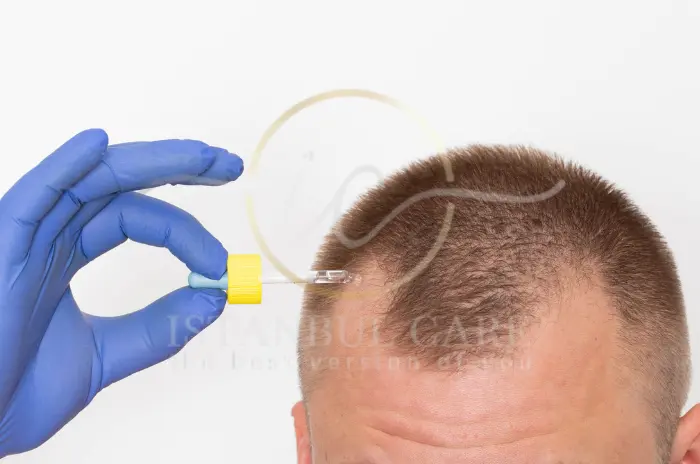
Minoxidil remains one of the most effective FDA-approved treatments for hair loss, with millions of users worldwide experiencing significant hair regrowth and retention. At Istanbul Care intermediary organization, we understand that successful minoxidil treatment depends not only on the medication itself but also on how it's used. This comprehensive guide will help you maximize your minoxidil results while avoiding the mistakes that prevent many users from achieving their hair growth goals.
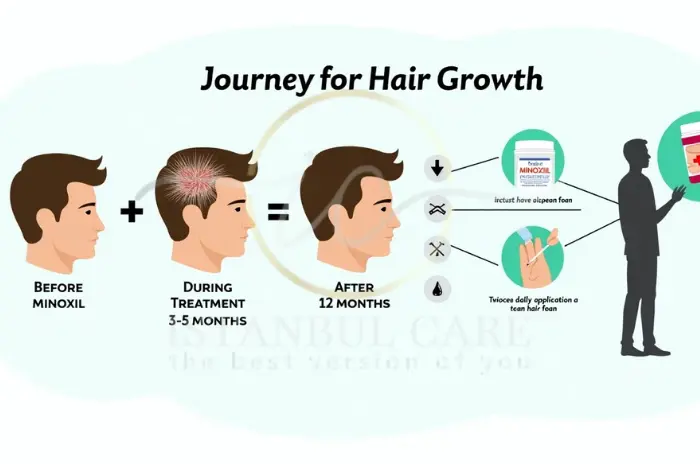
How to Apply Minoxidil for Maximum Hair Growth
Proper minoxidil application is crucial for achieving optimal results and minimizing potential side effects. The correct technique ensures maximum absorption and follicle stimulation while preventing waste and irritation. Essential Application Guidelines:
| Application Factor | Recommendation | Reason |
|---|---|---|
| Scalp condition | Must be dry and clean | Ensures optimal absorption |
| Amount per application | 1ml for liquid, half-cap for foam | Prevents overuse and side effects |
| Application frequency | Twice daily (morning and evening) | Maintains consistent medication levels |
| Massage duration | 30-60 seconds | Improves distribution and circulation |
| Post-application waiting time | 4-6 hours before washing | Allows complete absorption |
Common Mistakes to Avoid When Applying Minoxidil
Understanding and avoiding common application errors can significantly improve treatment outcomes and prevent frustrating setbacks in your hair growth journey. Critical Application Mistakes:
- Applying to wet hair or scalp: Reduces absorption by up to 50%
- Using too much product: Causes side effects without improving results
- Irregular application timing: Disrupts consistent medication levels
- Applying to hair strands instead of scalp: Wastes product and reduces effectiveness
- Washing hair too soon after application: Removes medication before absorption
Timing and Frequency Errors:
| Mistake | Impact | Correct Approach |
|---|---|---|
| Skipping weekend doses | Reduces overall effectiveness by 30% | Maintain daily routine regardless of schedule |
| Applying once daily only | Significantly lower results | Use twice daily as recommended |
| Inconsistent timing | Fluctuating medication levels | Set specific times and stick to them |
| Stopping during initial shedding | Missing the growth phase | Continue use through temporary shedding |
Product Handling Mistakes: Many users unknowingly reduce minoxidil effectiveness through improper product handling. Storing the product in bathroom medicine cabinets exposes it to heat and humidity, degrading the active ingredient. Instead, store minoxidil at room temperature in a dry location away from direct sunlight.
How Long Does Minoxidil Take to Show Results
Understanding minoxidil's timeline helps set realistic expectations and prevents premature discontinuation during the crucial early treatment phases. Minoxidil Timeline Overview:
| Time Period | Expected Changes | User Experience |
|---|---|---|
| 0-2 weeks | Initial shedding may begin | Some concern about increased hair loss |
| 2-8 weeks | Shedding typically peaks | Continued concern, requires persistence |
| 8-16 weeks | Shedding slows, new growth starts | First signs of improvement may appear |
| 16-24 weeks | Visible improvements emerge | Increased confidence and motivation |
| 24+ weeks | Maximum benefits achieved | Significant hair density improvements |
Initial Shedding Phase: Many users experience increased hair loss during the first 2-8 weeks of treatment. This temporary shedding occurs because minoxidil pushes dormant follicles into active growth phases, causing weak existing hairs to fall out and make room for stronger new growth.
Minoxidil Dosage and How Often to Use
Proper dosing is essential for balancing effectiveness with safety, ensuring optimal results while minimizing potential side effects.
Standard Dosage Recommendations:
- Men: 5% solution or foam, 1ml twice daily
- Women: 2% solution (may advance to 5% if needed), 1ml twice daily
- Application frequency: Every 12 hours for consistent medication levels
- Maximum daily dose: 2ml total (1ml per application)
Dosage Adjustment Guidelines:
| Patient Category | Starting Dose | Maintenance Dose | Special Considerations |
|---|---|---|---|
| Men under 40 | 5% twice daily | Continue same dose | Monitor for side effects |
| Women under 40 | 2% twice daily | May increase to 5% after 3 months | Pregnancy considerations |
| Users over 65 | 2% twice daily | Increase cautiously if needed | Enhanced monitoring required |
| Sensitive scalp | 2% once daily | Gradually increase frequency | Focus on tolerance building |
Concentration Selection: The 5% concentration is generally more effective than 2% but may cause more side effects. Starting with 2% allows users to assess tolerance before advancing to higher concentrations. Women who don't respond adequately to 2% after 6 months may benefit from carefully supervised transition to 5%.
Application Timing Optimization: Space applications approximately 12 hours apart for consistent medication levels. Popular timing includes morning application after showering and evening application before bedtime. Avoid applying within 4 hours of washing hair or engaging in activities that cause excessive sweating.
Dosage Mistakes to Avoid: Never exceed the recommended 2ml daily maximum, as higher doses don't improve results but significantly increase side effect risks. Using more product than recommended can cause scalp irritation, unwanted facial hair growth, and systemic effects.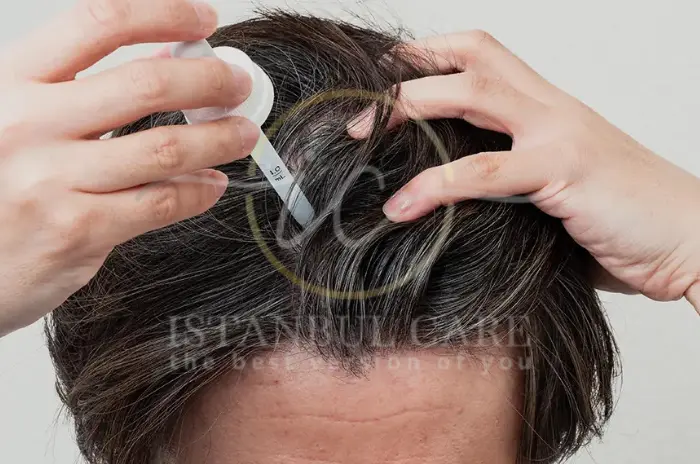
Tips to Use Minoxidil for Better Results
Implementing strategic approaches can enhance minoxidil effectiveness and accelerate your hair growth journey. Enhancement Strategies:
- Combine with scalp massage: Improves circulation and product absorption
- Use dermarolling weekly: Enhances follicle stimulation when done safely
- Maintain proper nutrition: Support hair growth with adequate protein and vitamins
- Manage stress levels: Reduce cortisol impact on hair follicles
- Protect from sun damage: Use SPF on scalp to prevent follicle damage
Lifestyle Optimization for Better Results: Regular exercise improves overall circulation, including blood flow to the scalp. Adequate sleep allows for proper cellular repair and growth hormone release. Staying hydrated supports nutrient transport to hair follicles and helps maintain scalp health. Complementary Treatments: Many users achieve enhanced results by combining minoxidil with other approved treatments. Low-level laser therapy can provide additional follicle stimulation. Prescription medications like finasteride address different aspects of hair loss when used alongside minoxidil. Application Environment Optimization: Apply minoxidil in a well-lit area where you can clearly see the scalp. Use a mirror to ensure even distribution across all affected areas. Keep application tools clean and replace them regularly to prevent bacterial growth. Tracking Progress Effectively: Document your progress with monthly photographs taken in consistent lighting and angles. Keep a treatment diary noting application times, any side effects, and observations about hair growth.
Minoxidil Foam vs Liquid: Which Is Better for You
Understanding the differences between minoxidil formulations helps you choose the option that best fits your needs and preferences. Formulation Comparison:
| Factor | Foam | Liquid |
|---|---|---|
| Ease of application | Easier, less messy | Requires more precision |
| Scalp irritation | Lower risk | Higher risk due to propylene glycol |
| Hair appearance | Less greasy, better styling | May leave residue, affects styling |
| Absorption rate | Faster absorption | Slower, more thorough penetration |
| Effectiveness | Equivalent when used properly | Equivalent when used properly |
| Cost | Generally more expensive | Usually less expensive |
Foam Advantages: Minoxidil foam is generally easier to apply and causes less scalp irritation due to the absence of propylene glycol. It dries quickly without leaving residue, making it more compatible with daily styling routines. The foam format also reduces the risk of accidental application to unwanted areas. Liquid Benefits: The liquid formulation may provide more thorough scalp penetration due to its thinner consistency. It's typically less expensive than foam and may be more readily available. Choosing Based on Hair Type: Users with fine or thin hair often prefer foam because it doesn't weigh down hair or create a greasy appearance. Those with thick or coarse hair may find liquid easier to distribute through their hair to reach the scalp effectively. Switching Between Formulations: You can switch between foam and liquid formulations based on preference or circumstances. Some users prefer foam for morning applications (due to faster drying) and liquid for evening use (when appearance is less critical).
How Long Before You See Results from Minoxidil
Setting appropriate timeline expectations prevents premature treatment discontinuation and helps maintain motivation during the crucial early treatment period. Realistic Timeline Expectations: Most users begin seeing initial improvements around 3-4 months of consistent use, with significant results becoming apparent at 6-8 months. Maximum benefits typically occur at 12-18 months of continued treatment. Early Response Indicators:
- Reduced hair loss: Often the first noticeable change around 6-8 weeks
- Scalp health improvement: Better circulation and reduced inflammation
- Fine hair appearance: New growth starts as barely visible baby hair
- Gradual thickening: Existing hair may become stronger and more robust
Factors Influencing Response Time: Age plays a significant role, with younger users typically responding faster than those over 50. The extent of existing hair loss affects timeline - early intervention generally produces faster results than treatment of advanced baldness. Genetic factors and family history of hair loss also influence individual response patterns. Managing Expectations Effectively: Progress photos taken monthly in consistent lighting help track gradual improvements that might not be noticeable day-to-day. Realistic expectations prevent disappointment and support long-term treatment adherence. Remember that hair growth is naturally slow, and meaningful changes require patience and persistence.
We’re ready to answer your questions
The best application method involves ensuring your scalp is completely dry, parting hair to expose thinning areas, applying 1ml of product directly to the scalp (not hair), and gently massaging for even distribution. Wait at least 4 hours before washing hair and maintain twice-daily applications for optimal results.
Initial results typically appear around 3-4 months of consistent use, with significant improvements visible at 6-8 months. Maximum benefits usually occur at 12-18 months.
Both formulations are equally effective when used properly. Foam is easier to apply, causes less scalp irritation.
Common mistakes include applying to wet hair or scalp, using too much product, irregular application timing, applying to hair instead of scalp, washing hair too soon after application, and discontinuing use during initial shedding.
Follow us on social media for updates, tips, and patient success stories: