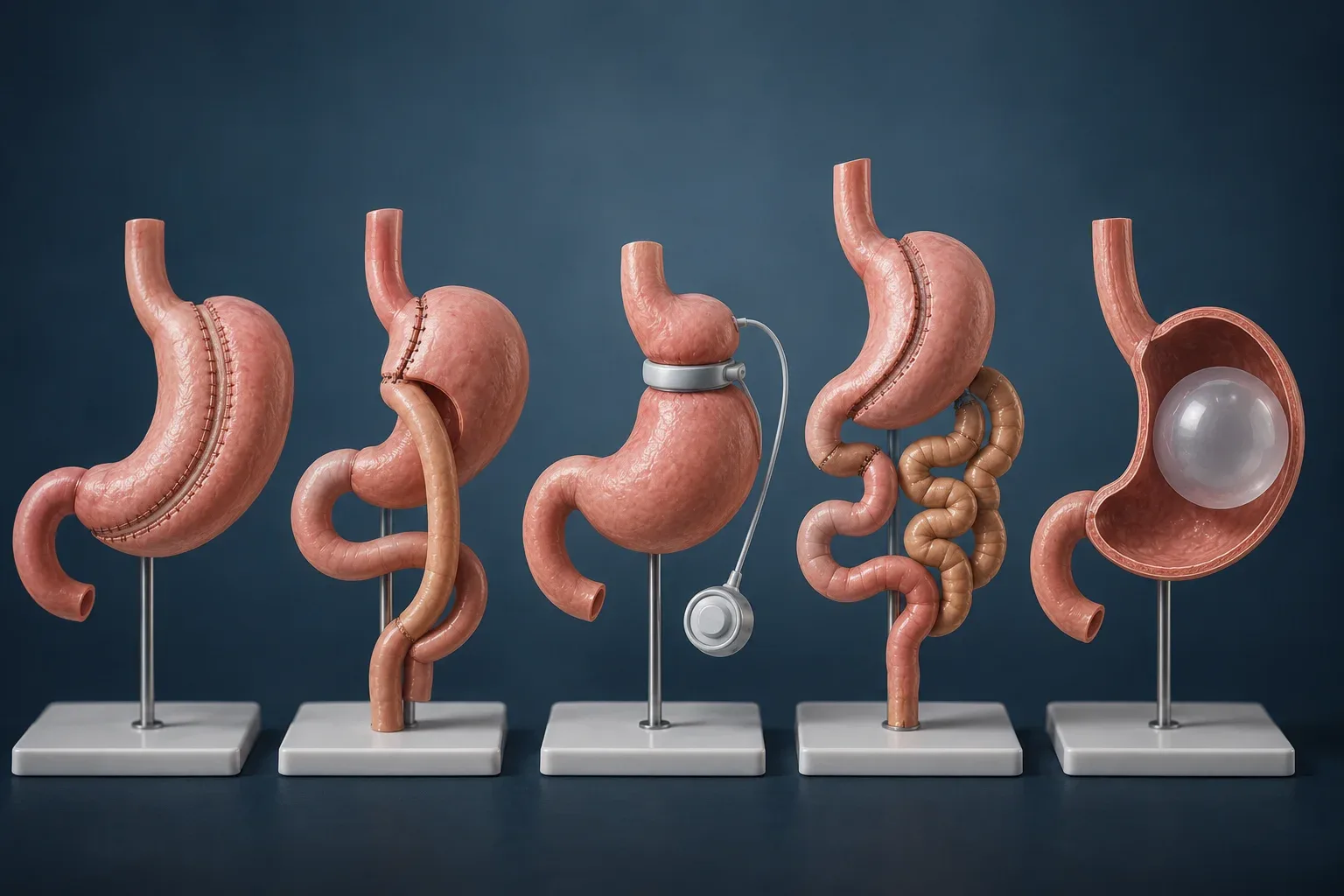
So obesity surgery, it's not one thing. It's a whole set of operations that rewire how your gut processes food. Goal? Not just weight loss. In practice, what it actually does is reset how your body handles hunger, fullness, and metabolism, in ways no diet ever could.
Patients have told me they spent decades fighting their own biology. Willpower? Works for a bit. But hormones like ghrelin (that's the hunger hormone)and GLP-1 keep pushing back. Surgery flips those signals directly. You end up eating less because your body just stops screaming at you to eat. That's a whole different game.
The Two Main Mechanisms
So these procedures, they generally fall into two camps. Restrictive surgery shrinks your stomach's capacity (think gastric sleeve)where roughly 80% of the stomach gets removed. A few ounces of food and you're full already, and malabsorptive or combination surgery reroutes part of your small intestine. So fewer calories get absorbed. Gastric bypass handles both: it builds a small pouch and bypasses a gut section.
Hormonal shifts are triggered by both approaches. That's why patients often notice their "food noise" (the constant mental chatter about eating) quiets down within days. Long before any weight loss happens. It's not magic. Look, it's physiology.
Who Actually Qualifies?
The ASMBS guidelines are clear: a BMI of 35 or higher with an obesity-related condition like type 2 diabetes, high blood pressure, or sleep apnea qualifies you. BMI 40 or above? No co-morbidities required. These numbers aren't pulled from thin air, they come from large-scale studies that show surgery cuts mortality risk by 40-50% for severe obesity compared to non-surgical management.
But numbers only tell part of the story. Truth is, i've personally seen patients with a BMI of 32 whose diabetes was completely out of control despite three medications. Surgery shifted their trajectory, something lifestyle alone couldn't manage. A thorough evaluation is key, covering your body, eating habits, mental health, and support system.
Look, major surgery, no question, and recovery runs 2-4 weeks. But for the right person? It's the most effective option.